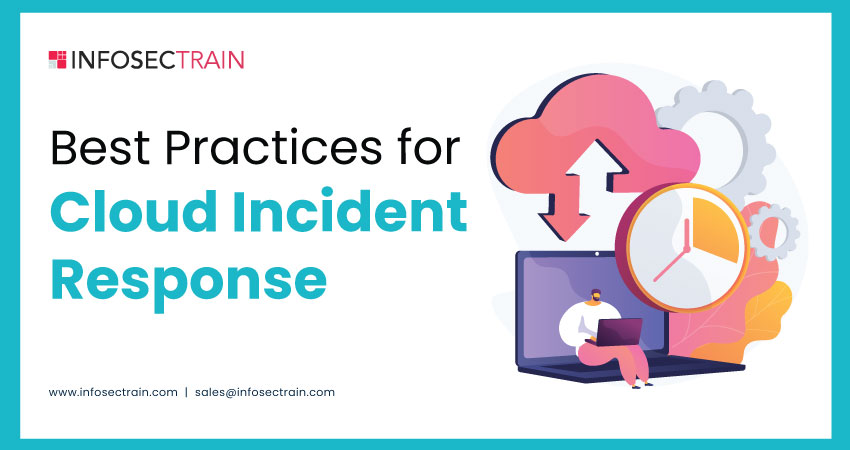
Best Practices for Cloud Incident Response
An effective incident response plan is the gatekeeper in the evolving cybersecurity world where organizations trust the cloud with their sensitive data. The CompTIA Security+ certification establishes a strong base for securing a cloud environment. Organizations with a robust incident response strategy and awareness of emerging trends can weather challenges and emerge stronger.
What is Cloud Incident Response?
Cloud Incident Response (CIR) is the strategic process of swiftly identifying, containing, eradicating, and recovering from security incidents within cloud environments. CIR stands out in cloud security due to its ability to address the challenges of prompt incident detection and response caused by cloud installations’ increased complexity and dynamics. Additionally, the shared nature of cloud spaces increases the complexity of collaboration among numerous organizations. Despite these difficulties, CIR is essential for organizations employing cloud computing since it offers a systematic approach to securing data and applications. It also lowers the risk of unauthorized access, assuring speedy recovery during a security incident.
Key Steps Involved in Cloud Incident Response
- Preparation: During this phase, a CIR strategy is created, important stakeholders are identified, and necessary tools and resources are acquired.
- Detection: During this stage, cloud environments are actively watched for any indications of unauthorized activity or security issues.
- Analysis: This step thoroughly investigates security incidents to determine their root causes and potential effects.
- Containment: This phase focuses on quickly isolating the compromised systems and preventing the incident from spreading.
- Eradication: This phase aims to remove the incident’s primary cause, and return impacted systems to a secure state.
- Recovery: This phase focuses on restoring data and software to ensure they are fully functional.
- Post-Incident Review: The last step involves a detailed analysis of the incident to determine the significant insights learned and to strengthen the CIR plan for ongoing improvement.
Best Practices for Cloud Incident Response
1. Have a Plan in Place: Establish a proactive strategy before any potential incidents by creating a cloud incident response plan. This plan should outline the sequential phases for detection, containment, eradication, and recovery, along with defining responsibilities, communication protocols, and escalation procedures for efficient coordination.
2. Monitor Your Cloud Environment: Maintain an active check on your cloud environment and actively scan for any indications of suspicious behavior or security incidents. To improve monitoring capabilities, various tools and services, such as native cloud security services, cloud security information and event management tools, and Cloud Security Posture Management (CSPM) tools, must be used.
3. Use the Principle of Least Privilege: Using the least privilege principle, give users only the access they need to complete their tasks. This improves overall security by reducing the possibility of unauthorized access and lowering the risk of privilege escalation. Best practices for access control recommend just granting rights for necessary tasks.
4. Regularly Back Up Your Data: Regularly back up your data to protect against loss or corruption. This procedure also applies to data stored in cloud storage. As a robust mechanism, routine backups ensure data integrity and prompt recovery during unplanned events. This proactive approach is essential for maintaining data security and dependability.
5. Test Your Incident Response Plan: Test your incident response strategy frequently to determine its effectiveness and identify potential flaws. This proactive testing ensures availability and enables improvement, fixing any shortcomings before an incident occurs. A tested and effective incident response plan enhances an organization’s resilience to unforeseen challenges.
6. Respond to Incidents Quickly: By isolating impacted systems, changing passwords, and restoring data from backups as necessary, events should be handled quickly to limit damage. Quick reactions are essential in minimizing the damage and swiftly restoring normality in case of a security issue. Efficient damage control and recovery are made possible by prompt actions.
7. Learn From Incidents: Use post-incident reviews to identify the underlying causes of incidents, identify preventive measures, and gain insight. Seeking improvement in resilience, this reflective process draws insights from past events and promotes a proactive approach to prevent recurring problems. Through ongoing improvement and rigorous examination, the organization’s security posture is strengthened.
Conclusion
Best practices for cloud incident response involve thorough planning, regular training, and robust monitoring to promptly detect and mitigate potential threats. Establishing clear roles and responsibilities within the incident response team, leveraging automation for rapid response, and conducting post-incident reviews for continuous improvement are crucial elements. By implementing these strategies, organizations can efficiently handle and reduce the impact of security incidents within their cloud environments, promoting resilience and upholding trust among users and stakeholders.
About InfosecTrain
InfosecTrain is a prominent figure in delivering top-notch information technology and cybersecurity consulting services, certifications, and training. Our team comprises certified and seasoned instructors dedicated to facilitating a comprehensive understanding of cybersecurity and skill enhancement. Whether you’ve set your sights on certification, our services, such as the CompTIA Security+ and CEH certification training courses, are tailored to equip you with the knowledge and expertise crucial for a thriving career in cybersecurity. Enrolling in these courses is a calculated move to build a strong foundation for a fruitful and satisfying professional career.

TRAINING CALENDAR of Upcoming Batches For Security+ Training
| Start Date | End Date | Start - End Time | Batch Type | Training Mode | Batch Status | |
|---|---|---|---|---|---|---|
| 28-Nov-2026 | 03-Jan-2027 | 19:00 - 23:00 IST | Weekend | Online | [ Open ] | |
| 09-Jan-2027 | 14-Feb-2027 | 09:00 - 13:00 IST | Weekend | Online | [ Open ] | |
| 13-Feb-2027 | 21-Mar-2027 | 19:00 - 23:00 IST | Weekend | Online | [ Open ] | |
| 13-Mar-2027 | 18-Apr-2027 | 09:00 - 13:00 IST | Weekend | Online | [ Open ] |

Contact Us