 AI Powered Course
Red Team Operations Training
Become a Red Team Operations Professional
 05 Dec




Program Highlights
InfosecTrain’s Red Team Operations Training focuses on practical, hands-on experience with real-world attack simulations. From crafting phishing campaigns to deploying C2 frameworks and evading advanced defenses, participants learn how adversaries think and operate. The highlight of this course is its lab-driven approach, enabling learners to practice persistence techniques, lateral movement, and data exfiltration in controlled environments, preparing them to handle complex red team engagements with confidence.
 60-Hour of Instructor-led Training
  Adversary Simulation Mastery
  Advanced Attack Lifecycle Execution
  Operational Security and Tradecraft Discipline
  Threat-Driven Engagement Design
  Detection Evasion & Counter‑Defense Techniques
  Adaptive Threat Intelligence Integration
  Practice with 50+ Latest Red Team Tools
  Access to Recorded Sessio
Training Schedule
- upcoming classes
- corporate training
- 1 on 1 training
| Start - End Date | Training Mode | Batch Type | Start - End Time | Batch Status | |
|---|---|---|---|---|---|
| 26 Sep - 05 Dec | Online | Weekend | 09:00 - 13:00 IST | BATCH FULL | |
| 05 Dec - 13 Feb | Online | Weekend | 19:00 - 23:00 IST | BATCH OPEN | |
| 06 Mar - 08 May | Online | Weekend | 19:00 - 23:00 IST | BATCH OPEN |
Why Choose Our Corporate Training Solution
- Upskill your team on the latest tech
- Highly customized solutions
- Free Training Needs Analysis
- Skill-specific training delivery
- Secure your organizations inside-out
Why Choose 1-on-1 Training
- Get personalized attention
- Customized content
- Learn at your dedicated hour
- Instant clarification of doubt
- Guaranteed to run

About Course
The Red Team Operations Training course by InfosecTrain blends theory and practical labs to help professionals master the art of red team operations while adhering to strict legal and ethical guidelines. Through structured modules, learners explore the entire red team engagement lifecycle—planning, exploitation, persistence, C2 operations, and advanced tradecraft. The program emphasizes real-world adversary emulation, operational security, and collaboration with blue teams, ensuring participants walk away with skills to execute impactful, stealthy, and professional red team engagements.
Course Curriculum
- Module 1: Red Teaming Fundamentals and Ethics (Theoretical)
- Introduction to Red Teaming
- What is Red Teaming?
- Red Teaming vs. Penetration Testing
- Benefits of Red Teaming for Organizations
- Types of Red Team Engagements (e.g., Full Scope, Specific Objective)
- Red Team Engagement Lifecycle:
- Planning and Scoping (Understanding Objectives, Constraints, ROE)
- Reconnaissance (OSINT, Passive, Active)
- Initial Compromise
- Establish Foothold and Persistence
- Internal Reconnaissance and Privilege Escalation
- Lateral Movement
- Data Exfiltration
- Post-Engagement Activities (Reporting, Lessons Learned)
- Legal and Ethical Considerations
- Importance of Written Authorization (Get out of Jail Free card)
- Ethics in Offensive Security
- Understanding Legal Frameworks (e.g., CFAA, GDPR, Mention Local Regulations for India if Relevant, Though the Course is General)
- Professionalism and Responsible Disclosure
- Operational Security (OPSEC) for Red Teams
- Protecting your Tools, Infrastructure, and Identity
- Maintaining Stealth and Avoiding Detection
- Tradecraft Considerations
- Module 2: Reconnaissance and Open Source Intelligence (OSINT) (Practical)
- OSINT Methodologies
- Public Records, Social Media, News Archives
- Google Dorking, Shodan, Censys
- Whois, DNS Records
- Company Websites, Employee Profiles (LinkedIn)
- Dark Web Monitoring (Brief Overview, Ethical Considerations)
- Passive Reconnaissance
- DNS Enumeration (Dig, Host, nslookup, Fierce, dnsenum)
- Subdomain Enumeration (sublist3r, assetfinder, Amass)
- Email Gathering (theHarvester, hunter.io)
- Web Application Reconnaissance (Wappalyzer, builtwith)
- Active Reconnaissance (Stealthy Approaches)
- Port Scanning
- Vulnerability Scanning (Introduction to Nessus)
- Network Mapping (Maltego, Custom Scripts)
- Module 3: Initial Access and Exploitation (Practical)
- Client-Side Attacks
- Phishing and Spear Phishing (Payload Delivery, Social Engineering)
- Malicious Documents (Macros, OLE Objects)
- Browser Exploitation (Drive-by Downloads, Ethical Warning)
- Watering Hole Attacks (Conceptual)
- Web Application Exploitation (Red Team Focus)
- OWASP Top 10 Revisited (Focus on Initial Compromise Vectors)
- SQL Injection for Initial Access (Blind SQLi, Out-of-band)
- Cross-Site Scripting (XSS) for Cookie Stealing/Credential Harvesting
- File Upload Vulnerabilities
- Deserialization Vulnerabilities
- Network-Based Exploitation
- Exploiting Vulnerable Services (SMB, RDP, SSH, FTP)
- Metasploit Framework (Advanced Usage, Custom Modules)
- Exploiting Public-facing Vulnerabilities (CVE Research, PoC Adaptation)
- Bypassing Defenses (Introduction)
- Antivirus Evasion Techniques
- Firewall Bypass (Port Forwarding, Tunneling)
- IDS/IPS Evasion (Fragmentation, Encryption)
- Client-Side Attacks
- Module 4: Establishing Foothold and Persistence
- Windows Persistence
- Registry Run Keys
- Startup folders
- Scheduled Tasks and Services
- WMI Event Subscriptions
- DLL Hijacking
- Linux Persistence
- Cron Jobs
- Systemd Services
- Startup Scripts (/etc/rc.local, init.d)
- SSH Authorized Keys
- Rootkits (Conceptual, Ethical Considerations)
- Cross-Platform Persistence Techniques
- Backdoored Executables
- Web Shells (for Web Server Persistence)
- Implant Deployment (C2 agents – e.g., Covenant, Empire, Sliver)
- Covert Channels for C2
- DNS Tunneling (iodine, dnscat2)
- ICMP Tunneling
- Windows Internal Reconnaissance
- Active Directory Enumeration (BloodHound, PowerView)
- Local User and Group Enumeration
- Network Share Discovery
- Installed Software and Patches
- Firewall Rules and Network Configurations
- Kerberoasting and AS-REP Roasting
- Linux Internal Reconnaissance
- Kernel Vulnerabilities
- SUDO Misconfigurations
- SUID/SGID Binaries
- Cron Job Misconfigurations
- Writable Files and Directories
- Password Reuse
- Common Privilege Escalation Techniques
- Unquoted Service Paths
- Insecure Service Permissions
- Kernel Exploits
- Credential Harvesting (Mimikatz, LaZagne)
- Token impersonation
- Pass-the-Hash/Pass-the-Ticket
- Windows Lateral Movement
- SMB (PsExec, wmiexec, CrackMapExec)
- WMI
- RDP
- Scheduled Tasks
- Service Creation
- Domain Controller Attacks (Golden/Sliver Tickets)
- Linux Lateral Movement
- SSH (sshpass, SSH Tunneling)
- Exploiting Shared Directories
- Pivoting and Tunneling
- SSH Tunneling (Local, Remote, Dynamic Port Forwarding)
- SOCKS Proxies (proxychains)
- Chisel, Ligolo-ng
- Port Forwarding (socat, netcat)
- Double Pivoting Scenarios
- Evading Network Defenses
- Network Segmentation Bypass (Conceptual)
- Traffic Obfuscation
- Low-and-slow Techniques
- Windows Persistence
- Module 5: Data Exfiltration Impact
- Identifying Sensitive Data
- Financial Data, PII, Intellectual Property
- Configuration Files, Source Code
- Password hashes, credentials
- Exfiltration Techniques
- Direct HTTP/S Transfers
- DNS Exfiltration
- ICMP Exfiltration
- Covering Tracks and Anti-Forensics (Ethical Considerations)
- Clearing Logs (Event Logs, Shell History)
- Timestamp Manipulation (Touch)
- Shredding Files
- Emphasis on Understanding These for Blue Team Defense
- Impact Simulation
- Ransomware Simulation (No Actual Encryption, Just Demonstrating Capability).
- Data Manipulation/Deletion
- Identifying Sensitive Data
- Module 6: Command and Control (C2) Frameworks and Infrastructure
- Introduction to C2 Frameworks
- Types of C2 (HTTP, DNS, SMB, Custom)
- Common C2 Frameworks: Cobalt Strike, Mythic, Covenant, Empire, Sliver
- Metasploit (Multi/Handler)
- Choosing the Right C2 for the Engagement
- C2 Infrastructure Setup
- Domain Fronting
- Redirectors (Apache, Nginx, Haproxy)
- Malleable C2 Profiles
- Cloud C2 Infrastructure (AWS, Azure, DigitalOcean, Ethical Considerations and Cost)
- Obfuscating C2 Traffic
- Advanced C2 Evasion
- Customizing C2 Implants
- Network Indicator Removal (Removing Unique Strings)
- Payload Encryption and Obfuscation
- Domain Name Registration and Reputation
- Using Legitimate Services for C2 (e.g., Slack, GitHub, High Risk, Ethical Discussion)
- C2 Post-Exploitation Modules
- Leveraging C2 Built-in Features for Recon, Lateral Movement, Persistence Scripting within C2 Frameworks
- Introduction to C2 Frameworks
- Module 7: Adversary Simulation and Advanced Tradecraft
- Develop an Adversary Emulation Plan Based on Real-world Threat Actors
- Implement Advanced Tradecraft to Bypass Mature Defenses
- Threat Intelligence and Adversary Emulation
- MITRE ATT&CK Framework for Red Teaming
- Mapping TTPs to Threat Actors (e.g., APT29, FIN7)
- Developing an Adversary Emulation Plan
- Purple Teaming Concept
- Advanced Evasion Techniques
- Memory Injection Techniques (Process Hollowing, Reflective DLL Injection)
- Abusing Legitimate Tools and Processes (Living Off The Land – LOLBins/LOLBAS)
- Code Signing Abuse
- Sandbox Evasion
- Post-Engagement Activities
- Debriefing with the Blue Team
- Detailed Reporting (Executive Summary, Technical Findings, Recommendations)
- Lessons Learned and Continuous Improvement
- Metrics for Red Teaming
- AI For Red Team
- Introduction to LLM
- OWASP Top 10 LLM
- Using AI for Network Discovery
- Gyoithon for web server intelligence gathering
- Audio Deepfake Development
- Visual deepfake
- AI Injection: Using AI for SQL Exploits
- Using AI in the phases of pentesting
- Understanding RAG (Retrieval-Augmented Generation) Architecture: Components (Retriever, Generator, Knowledge
Base). - Threats to RAG Pipelines:
- Knowledge Base Poisoning: Injecting malicious or biased information.
- Retrieval Manipulation: Directing the retriever to unsafe or irrelevant documents.
- Generator Vulnerabilities: Prompt injection, jailbreaking through RAG context.
- Integration Points: API security between components, data exfiltration from knowledge base or
generated content. - Denial of Service: Overloading the retriever or generator.
- Defense Strategies for RAG
Target Audience
- Penetration Testers transitioning into Red Team roles
- SOC Analysts and Blue Teamers seeking adversarial insight
- Security Engineers and Architects building detection strategies
- Cybersecurity students and enthusiasts with a strong technical foundation
- Professionals preparing for CREST, OSCP, CRTO, or similar certifications
Pre-requisites
- Good understanding of networking concepts (TCP/IP, common protocols)
- Familiarity with advanced Linux command line and regular expressions
- Good scripting knowledge (e.g., Python, PowerShell, Bash)
- Understanding of common operating systems (Windows, Linux)
Course Objectives
By the end of this course, participants will be able to:
- Execute Initial Access techniques such as phishing, malicious documents, and exploiting misconfigurations.
- Perform Reconnaissance and Enumeration including Active Directory mapping, user hunting, and asset profiling.
- Leverage Credential Access attacks like Kerberoasting, AS-REP Roasting, DCSync, and token theft.
- Conduct Lateral Movement using Pass-the-Hash, RDP hijacking, SMB relay, and WinRM abuse.
- Apply Privilege Escalation techniques such as UAC bypass, DLL hijacking, and kernel exploits.
- Implement Evasion and OPSEC methods including AV/EDR bypass, LOLBAS, and living-off-the-land techniques.
- Deploy and Operate C2 Infrastructure using frameworks like Sliver, Mythic, and Covenant, building, obfuscating, and managing DNS, HTTP, and SMB-based channels in detection-aware environments.
- Conduct Adversary Simulations by emulating real-world threat actors using MITRE ATT&CK-mapped TTPs across the full red team engagement lifecycle.
- Deliver Reporting and Debrief sessions by crafting impactful reports, mapping findings to MITRE, and effectively communicating results.
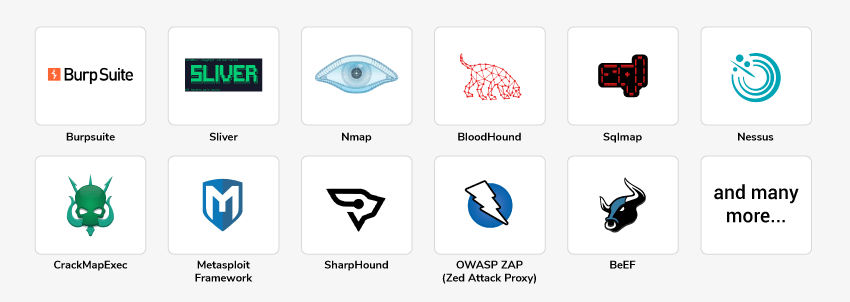
- Red Team Operations Tool List
- Reconnaissance and OSINT
- Google Dorking, Shodan, Censys
- whois, dig, host, nslookup, fierce, dnsenum
- sublist3r, assetfinder, Amass
- theHarvester, hunter.io
- Wappalyzer, BuiltWith
- Maltego, SpiderFoot, Recon-ng
- Initial Access and Exploitation
- Client-Side Attacks
- Gophish, King Phisher, SET (Social-Engineer Toolkit)
- MacroPack, EvilClippy, SharpShooter
- Browser Exploitation Framework (BeEF)
- Client-Side Attacks
- Web Exploitation
- Burp Suite, OWASP ZAP
- sqlmap, XSStrike, Commix
- UploadScanner, Deserialization Exploitation Toolkit
- Network Exploitation
- Metasploit Framework, ExploitDB, searchsploit
- Nmap, Nessus, OpenVAS
- Impacket, CrackMapExec, Responder
- Persistence and Foothold
- Windows
- PowerView, WinPEAS, Seatbelt
- WMI Explorer, Autoruns, Sysinternals Suite
- Linux
- LinPEAS, Linux Exploit Suggester, pspy
- chkrootkit, rkhunter
- Cross-Platform
- Covenant, Empire, Sliver, Mythic
- Web shells, backdoored binaries, SSH implants
- Covert Channels
- iodine, dnscat2, ICMPExfil, Ptunnel
- Windows
- Internal Recon and Privilege Escalation
- BloodHound, SharpHound
- LaZagne, Mimikatz, Tokenvator
- Linux Exploit Suggester, GTFOBins
- SudoKiller, SUID3NUM, find, grep, awk
- Lateral Movement and Pivoting
- Windows
- PsExec, wmiexec.py, CrackMapExec
- RDP, Scheduled Tasks, Golden/Sliver Ticket tools
- Linux
- sshpass, proxychains, Ligolo-ng, Chisel, socat, netcat
- Windows
- Data Exfiltration and Impact Simulation
- curl, wget, scp, rsync
- dns2tcp, ICMPExfil, exfiltration scripts
- touch, shred, log cleaner scripts
- Custom ransomware simulators (non-destructive)
- C2 Frameworks and Infrastructure
- Cobalt Strike (licensed), Mythic, Empire, Sliver, Metasploit multi/handler
Apache, Nginx, HAProxy (redirectors)
- Cobalt Strike (licensed), Mythic, Empire, Sliver, Metasploit multi/handler
- Advanced Tradecraft and Adversary Simulation
- Invoke-Obfuscation, NinjaCopy, Process
- Hollowing scripts
- Living Off The Land Binaries (LOLBAS)
- Code signing tools, sandbox evasion scripts
- MITRE ATT&CK Navigator, Threat Actor TTP mappers
- AI for Red Teaming
- Gyoithon (web intelligence via AI)
- AInjection (AI-assisted SQLi)
- LLM-based recon tools (custom GPT wrappers)
- Deepfake generators: Descript, DeepFaceLab, Wav2Lip
- RAG pipeline simulators, LangChain, Haystack
- Prompt injection testers, RAG threat modeling scripts
- Reconnaissance and OSINT


Vision

Goal

Skill-Building

Mentoring

Direction

Support

Success

Red teaming services market reached USD 1.92 billion in 2024, while The Continuous Automated Red Teaming (CART) sub-market is projected at USD 1.838 billion in 2025, with a CAGR of 12.8%
About 74% of organizations now use red teams to test and validate their security posture.
The cybersecurity workforce faces a gap of nearly 4 million unfilled roles globally, with specialized areas like red teaming being notably under-resourced.

Finance

Healthcare

Defense

Telecom

Retail & E-com

EdTech





The Red Team training provided deep knowledge in cybersecurity, and the hands-on sessions helped me gain a strong grasp of the subjects.

It was a wonderful journey with the trainer during the Red Team training, where I got to learn many valuable things from him.
The Red Team training was extremely interesting and useful. The instructor explained the concepts very clearly and effectively, making the sessions highly valuable.
It was a good experience overall. The Red Team training really helped me upskill my technical knowledge and boosted my confidence in applying it.
Thank you for a great Red Team training. Great presentation style with lots of opportunities to ask questions and talk about real-life examples, which all made for a really enjoyable and informative course. This has more than met my expectations. A wonderfully practical course, both personally and professionally.


Frequently Asked Questions
What is Red Team Operations Training, and why is it important?
Red Team Operations Training is an advanced cybersecurity program that teaches professionals how to emulate real-world adversaries and test an organization’s defenses. It’s important because it goes beyond traditional security testing; helping organizations identify hidden vulnerabilities, improve detection, and strengthen their overall security posture.
Who should enroll in Red Team Operations Online Training?
- Penetration Testers transitioning into Red Team roles
- SOC Analysts and Blue Teamers seeking adversarial insight
- Security Engineers and Architects building detection strategies
- Cybersecurity students and enthusiasts with a strong technical foundation
- Professionals preparing for CREST, OSCP, CRTO, or similar certifications
What skills are covered in the Red Team Operations Training Course?
The course covers the full red team engagement lifecycle including reconnaissance, initial access, exploitation, privilege escalation, lateral movement, persistence, evasion, command & control (C2), data exfiltration, and reporting. Learners also gain hands-on experience with tools, frameworks, and real-world attack simulations.
How does a Red Team Operations Course differ from penetration testing?
While penetration testing focuses on finding and reporting vulnerabilities within a defined scope, red teaming simulates advanced persistent threats (APTs) to test an organization’s resilience. Red team operations emphasize stealth, persistence, and adversary tradecraft, providing a more realistic assessment of detection and response capabilities.
What are the career benefits of completing Red Team Operations Training?
Professionals trained in red teaming can pursue high-demand roles such as Red Team Operator, Penetration Tester, Red Team Security Engineer, and Security Analyst. Salaries often range from $100,000 to $200,000+ annually depending on experience and role. The course helps bridge the skills gap in one of the fastest-growing areas of cybersecurity.
Is Red Team Operations Online Training suitable for beginners?
This is an advanced-level course. While beginners with a strong interest in cybersecurity may join, prior knowledge of networking, penetration testing, and basic security concepts is highly recommended to maximize learning outcomes.
What certifications complement a Red Team Operations Training Course?
Certifications such as OSCP, OSEP, CRTO, CRTP, CEH, and CISSP complement this training. They add credibility to your skill set and help validate your expertise in offensive security and red teaming.
How long does it take to complete a Red Team Operations Course?
InfosecTrain’s Red Team Operations Training is a 60-hour intensive program, delivered through instructor-led sessions, hands-on labs, and interactive exercises.
What job roles can I pursue after Red Team Operations Training?
After completing the course, you can pursue roles such as:
- Red Team Penetration Tester
- Red Team Security Engineer
- Red Team Security Analyst
- Red Team Operator (Entry-Level)
Why choose InfosecTrain for Red Team Operations Online Training?
InfosecTrain offers expert-led, hands-on training with detection-aware lab setups, real-world case studies, purple team collaboration tips, interview preparation, and post-course mentorship. With lifetime access to recorded sessions and extended support, InfosecTrain ensures you’re job-ready and confident in your red team career path.