What is a Zero-Trust Cybersecurity Model?
The growth of the modern workforce and the migration to remote work have resulted in a continuous rise in cybercrime, data breaches, data theft, and ransomware attacks. As a result, many experts today believe that a zero-trust cybersecurity model is the best strategy for preventing such threats. Implementing a zero-trust cybersecurity model gives enterprises visibility into their data, applications, and the activity around them, making it simple to notice suspicious activities. Zero-trust adheres to stringent identity verification standards for every person and device that tries to access an enterprise’s resources on a network, in contrast to typical network security approaches that concentrate on keeping hackers and cybersecurity risk outside the network.
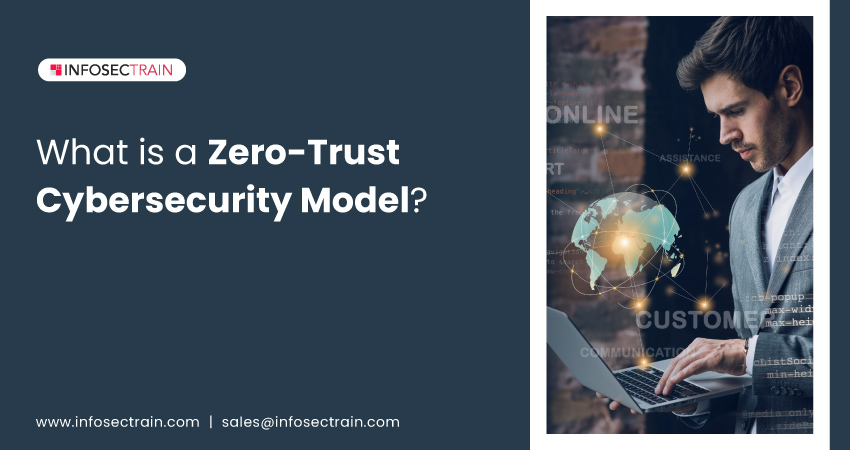
Table of Contents
What is a Zero-Trust Cybersecurity Model?
Core Principles of Zero-Trust Cybersecurity Model
Key Benefits of Zero-Trust Cybersecurity Model
In this post, we will be discussing the zero-trust cybersecurity model – its definition, principles, and key benefits.
What is a Zero-Trust Cybersecurity Model?
A zero-trust cybersecurity model is a comprehensive approach to business network security that includes various techniques and principles to safeguard businesses from cutting-edge attacks and data breaches. This approach ensures that any user or device, within or outside an organization’s network, must be authorized, authenticated, and continually validated before attempting or accessing its applications and data. Furthermore, this approach integrates analytics, filtering, and logging to confirm behavior and continuously look for compromised signs. This approach also aids in compliance with other important data privacy or security legislation, such as GDPR, HIPAA, FISMA, and CCPA.
Core Principles of Zero-Trust Cybersecurity Model
A zero-trust model adheres to several fundamental principles of authentication to improve security posture. Let us discuss some important core principles of the zero-trust model.
- Least-privilege Approach: Implement a least-privilege strategy for access control. This means providing users only as much access as they require, and every access request must be authorized and encrypted.
- Real-time Monitoring: Zero-trust real-time monitoring aids in identifying and mitigating malicious activities before any sustained damage or malicious attacks. It continually assesses the network to identify intruders and the reduction of the potential damage they can cause.
- Micro-segmentation: Micro-segmentation is a network security technique that divides each component of the network into several small segments and re-establish them periodically to prevent hackers from accessing the network. Hackers can only access the small micro-segment of the network they have managed to penetrate.
- Limiting Lateral Movement: Lateral movement refers to a hacker or malicious user moving into private or secured areas of your IT infrastructure or network after gaining access to the network. Even if the hacker’s access point is found, it may be difficult to recognize them because they will have already compromised other areas of the network.
- Multi-Factor Authentication (MFA): Multi-factor authentication (MFA) is also a fundamental principle of the zero-trust cybersecurity model. It requires at least two pieces of evidence, such as an SMS code and security questions, to confirm a user’s legitimacy.
- Authorize and Authenticate User, Device, and Network Flow: A zero-trust cybersecurity model uses least-privilege access to secure, authorize, and authenticate each user, device, and network flow access on a session-by-session basis.
Key Benefits of Zero-Trust Cybersecurity Model
A zero-trust cybersecurity model reduces infrastructure needs, protects users from cyberattacks, and provides a user-friendly interface. Here are some key benefits of the zero-trust architecture.
- It helps ensure the security of a distributed remote workforce when people and devices access critical data.
- It can strengthen security measures while reducing the exposure of malware, ransomware, data exfiltration, and sophisticated zero-day attacks.
- It helps ensure ongoing compliance with numerous industries’ and regulatory frameworks’ standards.
- It can provide a consistent user experience while lowering business risk and complexity.
- It can help you to monitor resource usage and system activity to reduce risk and ensure a consistent user experience.
How can InfosecTrain help you?
The zero-trust cybersecurity approach aims to secure the organization’s IT infrastructure by relying on several current technologies and governance procedures. This approach uses information from as many data sources as feasible to authorize and authenticate each device, network transaction, and connection by dynamic policies.
InfosecTrain is a leading provider of security and technology training and consulting services specializing in various IT security and information security services. We offer instructor-led training courses for different cybersecurity and cloud security certifications with qualified and experienced instructors, assisting you in acquiring the abilities you need to select the career you desire.

Contact Us