What is a Network Security Administrator?
Every organization relies on networks to propel its business in today’s world. Unfortunately, these networks are highly vulnerable to data loss, theft, and misuse due to increased cybercrime. As a result, companies need reliable and skilled experts who can protect their networks and help them mitigate risk. Companies recruit a Network Security Administrator to keep their networks secure and protect sensitive data. They play a critical role in companies’ network security and help safeguard them from internal and external security risks.

We will look at what a Network Security Administrator is, along with the skills and Network Security Administrator job description in this article.
What is a Network Security Administrator?
Network Security Administrators play a significant role in organizations’ security; they monitor, analyze, and administer security across computer networks. They secure data and keep IT systems running by installing firewalls and anti-virus softwares. They often establish and implement effective network security policies and guidelines across the networks and ensure that unauthorized users do not obtain access to enterprise networks. They evaluate the network for operational difficulties and troubleshoot and report the issues. They are experts in identifying network operations, security risks, and security breaches in an organization’s network, with advanced skills in mitigation measures and protective strategies.
Key Skills of Network Security Administrators
Network Security Administrators have a few key skills to keep the network running effectively and securely. Some of the key skills required for Network Security Administrator include:
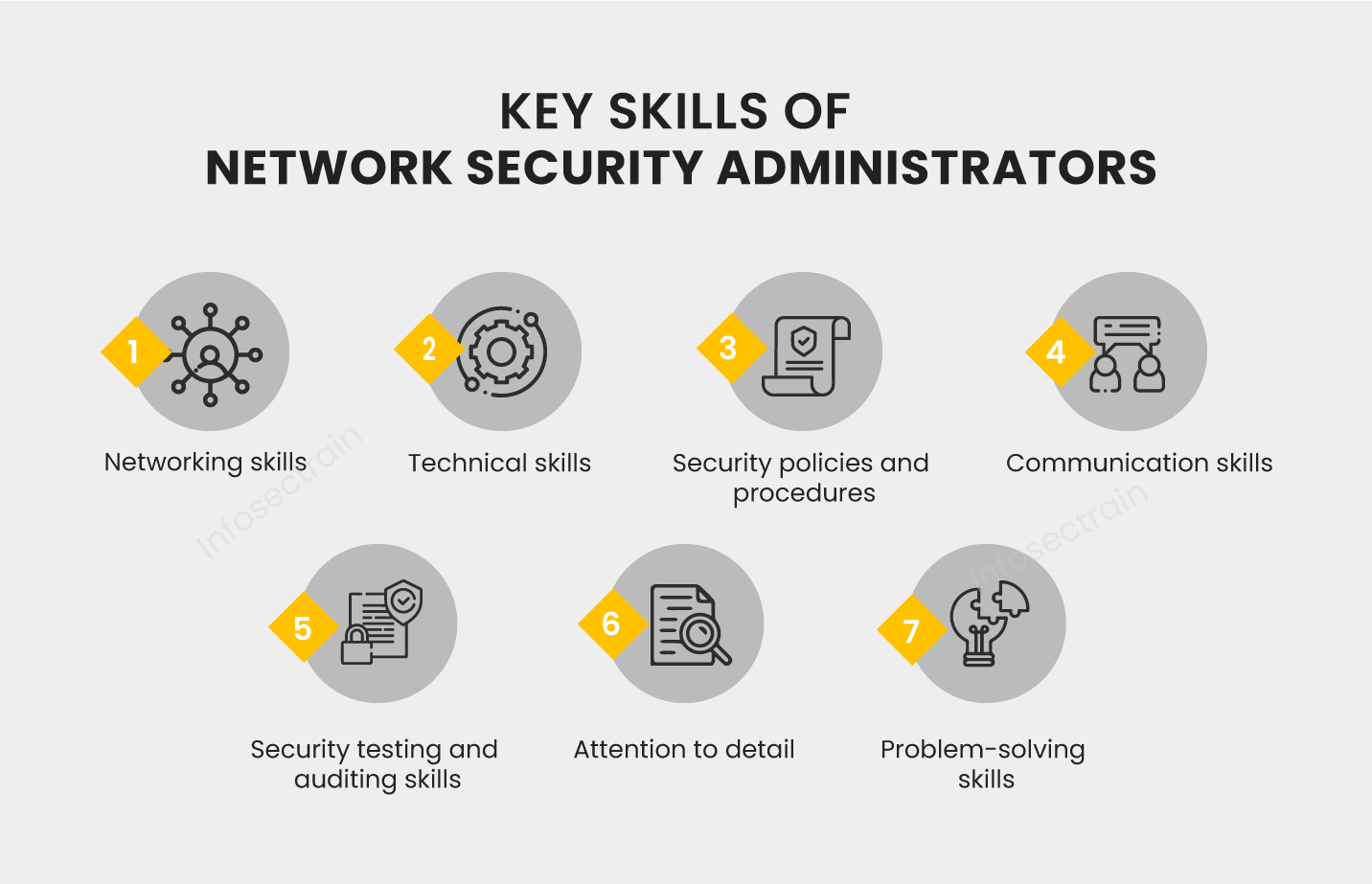
- Networking skills:They comprehensively understand the networking fundamentals to configure and manage an organization’s network security. They strongly understand different operating systems, networking protocols, and networking services.
- Technical skills: They have strong technical skills to identify and reduce security risks, create security rules and procedures, and perform security audits.
- Security policies and procedures: They understand the organization’s security policies and procedures for providing network security. These security policies refer to well-defined strategies, regulations, and techniques that govern access to an organization’s systems and are implemented throughout the network architecture.
- Communication skills: They have strong written and verbal communication skills. These skills enable them to effectively cooperate and convey information to their customers, coworkers, and other IT professionals. Effective communication can build trust, which is an important security element.
- Security testing and auditing skills: They are skilled in security testing and auditing tools for network management. Security testing identifies and remediates vulnerabilities and auditing assists in reporting findings and figuring out how to manage internal difficulties.
- Attention to detail: They have an excellent ability to notice small changes in a system that may indicate a security breach.
- Problem-solving skills: Problem-solving capabilities help Network Security Administrators to examine issues and build appropriate security solutions to prevent potential security threats. They may also employ problem-solving skills to find network vulnerabilities and develop strategies to improve an organization’s network security.
Roles and responsibilities of Network Security Administrators
The primary function of a Network Security Administrator is to assist with the security of an organization’s IT network, which includes network monitoring and upgrading for security risks.
The roles and responsibilities of Network Security Administrators are mentioned below. They:
- Identify all network security flaws and vulnerabilities and make strategies to mitigate them
- Create, implement, operate, and administer specific network security procedures and policies
- Install and configure network security softwares and technologies to safeguard networks from malicious software
- Verify, manage, and configure available IP addresses
- Employ firewalls, anti-malware, intrusion prevention, vulnerability scanning, and other protective measures
- Control and optimize server use while backing up all critical data
- Monitor, analyze, and respond to numerous suspicious security events, including IPS, Firewall, IDS, and VPN
- Monitor network performance to ensure that applications are functioning correctly and effectively
- Collaborate with Network Administrators and Engineers to maintain the internet security
- Collaborate with members of various teams and departments
- Improves the strength of the security system and evaluates and maintains network security efficiency
- Maintain a record of all network users and their assigned privileges to ensure that only authorized people can access sensitive data

How can InfosecTrain help you?
InfosecTrain can assist you if you desire to become a Network Security Administrator. InfosecTrain offers a comprehensive Network Security training course and some other courses, such as CompTIA Network+ and CompTIA Security+ certification training courses, to help you prepare for the Network Security Administrator role. People from all over the world benefit from our extensive training and consulting services. We have skilled instructors who will dispel your doubts and provide excellent guidance.


Contact Us