Security+ in 2026: Is It Still Worth It for Cybersecurity Beginners?
Quick Insights:
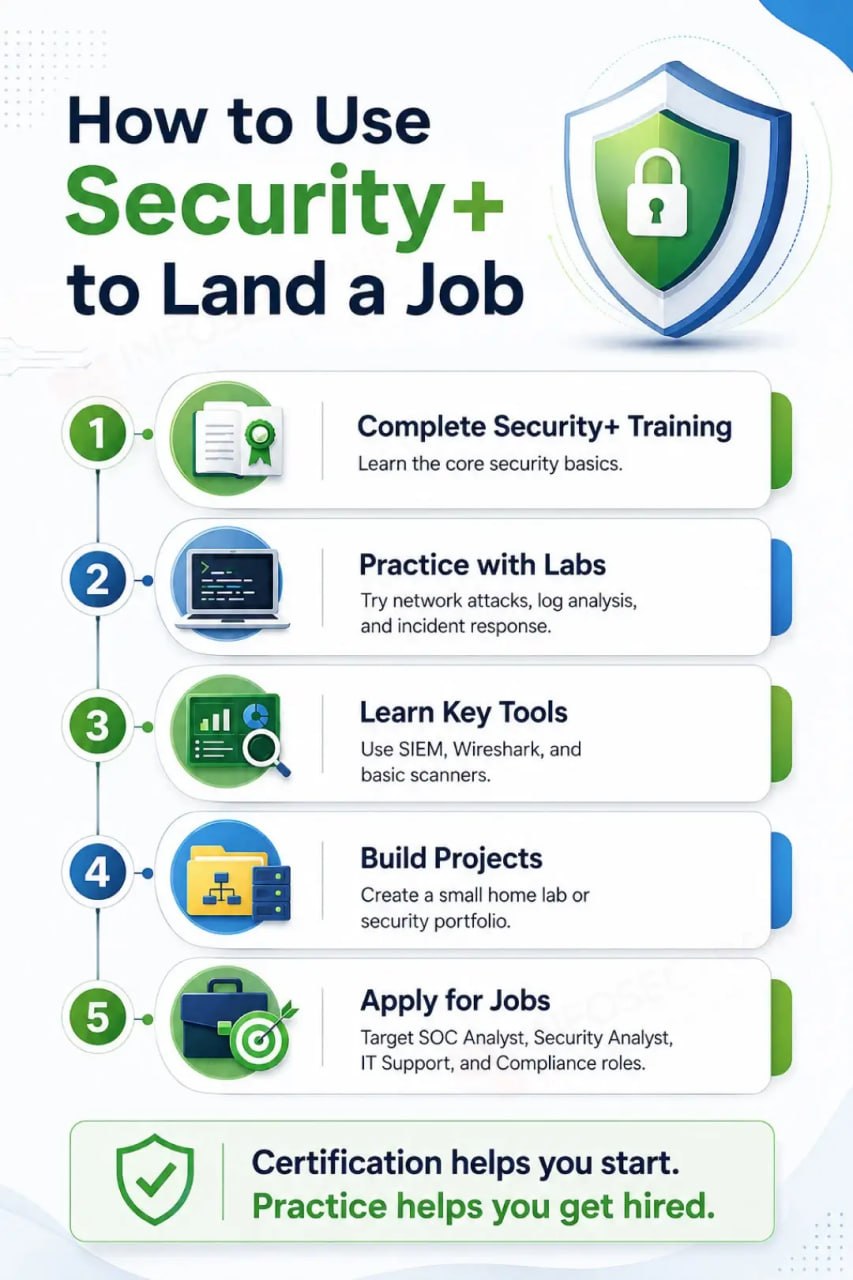
CompTIA Security+ is still worth it in 2026 for beginners; it builds a strong foundation and helps you get shortlisted, but it won’t land you a job on its own. The winning formula: Security+ + Hands-on labs + Real-world tools = Job-ready cybersecurity profile Use it as a starting point, not the finish line.
Breaking into cybersecurity in 2026 is not easy. Every job posting asks for skills, certifications, and experience; even for entry-level roles. So naturally, one question comes up: “Is Security+ still worth it, or should I focus on something else?”
The answer? Yes, but only if you use it the right way. In this guide, we will break down:
- Whether Security+ is still relevant in 2026
- What value does it actually bring to beginners
- Security+ vs Other Beginner Certifications
- How to use it to land your first cybersecurity job
What is Security+ Certification?
CompTIA Security+ is a globally recognized entry-level cybersecurity certification. It validates your understanding of:
- Network security fundamentals
- Threats, vulnerabilities, and attacks
- Risk management & compliance
- Identity and Access Management (IAM)
- Security architecture and operations
Think of it as: “Your first structured entry into the cybersecurity world.”
Is Security+ Still Relevant in 2026?
CompTIA Security+ continues to hold strong value in 2026, but its role has evolved. It’s no longer just a “nice-to-have certification.” It’s a baseline requirement and a career-entry accelerator when used correctly.
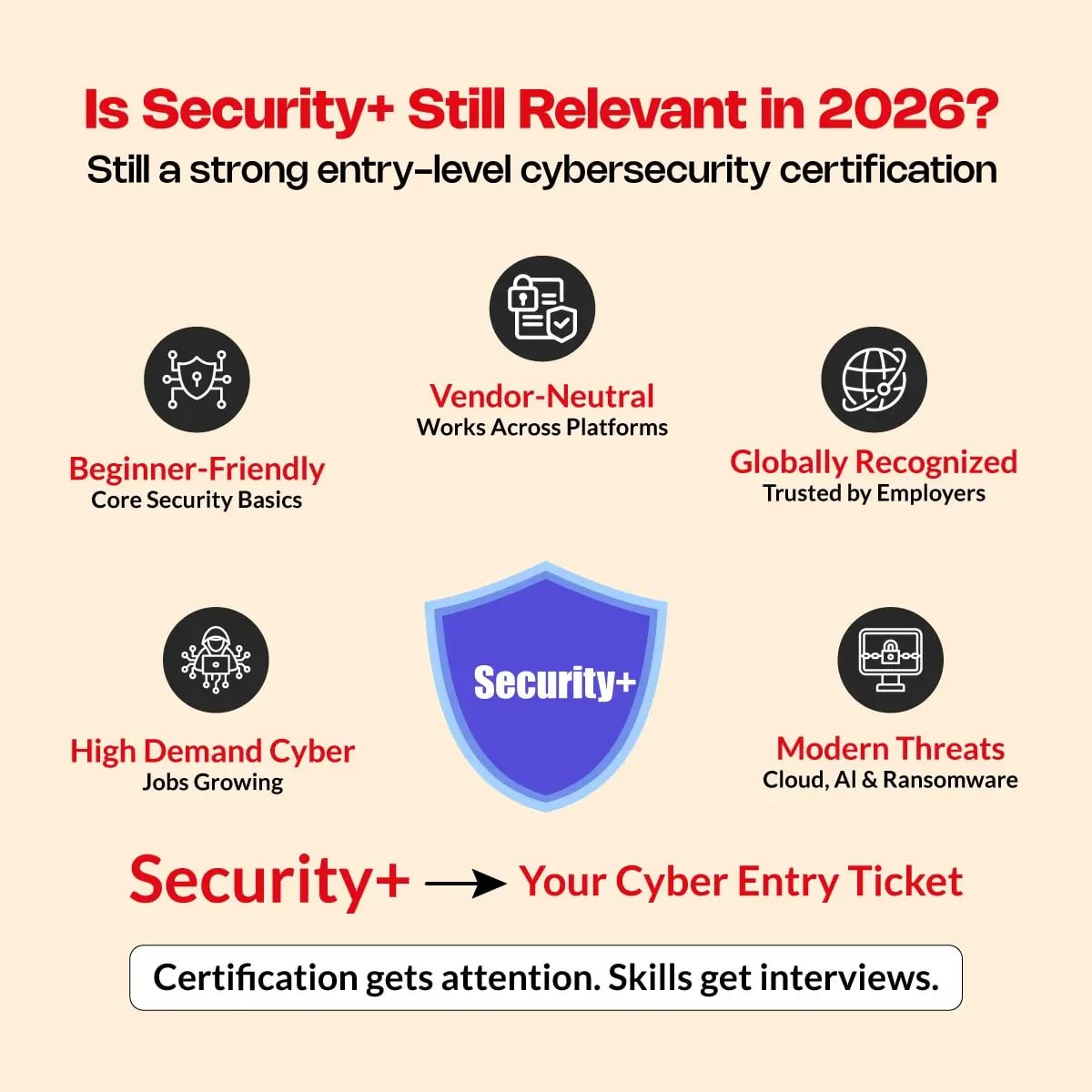
1. Industry Demand is Still High
In 2026, cybersecurity jobs are still in high demand, but here’s the reality: More candidates are entering the field than ever before. That means:
- Recruiters use certifications like Security+ as a filter
- It helps you stand out in crowded applicant pools
Organizations still need SOC Analysts, Security Admins, and more.
2. Security+ Covers Exactly What Beginners Need
Unlike advanced certifications, Security+ focuses on:
- Core security concepts
- Real-world threats and attack types
- Risk, compliance, and governance basics
- Identity and access management
It gives you a 360° foundational understanding, which is critical before specialization.
3. Vendor-Neutral Advantage
Unlike tool-specific certs, Security+ teaches core concepts. It is useful across roles: SOC, cloud security, and governance.
4. Still Recognized Globally (And by Employers)
Security+ remains:
- Accepted by private companies and government organizations
- Part of compliance frameworks
- Trusted as a standard entry-level certification
Employers don’t just recognize it; they expect it for beginner roles.
5. Updated to Match Modern Threats
The latest Security+ versions now include:
- Cloud security basics
- Zero Trust concepts
- Hybrid environments
- Modern attack vectors (phishing, ransomware, AI-driven threats)
So, you’re not learning outdated theory; you’re learning current industry practices.
Career Opportunities: What Jobs Can You Get?
Career opportunities after Security+:
- SOC Analyst (Tier 1): Often the first step into cybersecurity operations, these analysts monitor security alerts, investigate incidents, and escalate threats within a Security Operations Center.
- Security Analyst: Focuses on protecting systems and networks by identifying vulnerabilities, analyzing potential threats, and implementing security measures.
- IT Support with a Security Focus: Combines traditional IT support duties with security responsibilities, including configuring firewalls, managing user access, and responding to minor security incidents.
- Junior Risk/Compliance Analyst: Helps organizations ensure they meet regulatory standards and internal security policies, often reviewing logs, reports, and procedures.
- Network Administrator (Entry-Level Security Focus): Maintains and secures network infrastructure, monitors traffic, and applies patches or updates to prevent security breaches.
- Incident Response Technician: Assists in responding to security incidents, documenting events, and supporting more senior incident responders.
- Cybersecurity Specialist (Entry-Level): A broad role where beginners may handle tasks like vulnerability scanning, endpoint protection, and basic penetration testing under supervision.
Salary potential grows when combined with:
- Hands-on labs
- SIEM tools
- Real-world scenarios
Security+ vs. Other Beginner Certifications
| Certification | Best For | Main Focus | Notes |
| CompTIA Security+ | Beginners entering cybersecurity | Security basics, threats, risk, networks, identity, and cryptography | Strong all-around cybersecurity starter cert |
| CompTIA A+ | Absolute IT beginners | Hardware, software, troubleshooting, and operating systems | Good before Security+ if you have little IT experience |
| CompTIA Network+ | Beginners focused on networking | Networking concepts, protocols, devices, and troubleshooting | Helpful foundation before Security+ |
| Google Cybersecurity Certificate | Career changers and beginners | SOC basics, Linux, SQL, security tools, and incident response | More practical and guided than Security+ |
| ISC2 Certified in Cybersecurity (CC) | New cybersecurity learners | Security principles, access control, network security, and risk | Good low-cost entry point |
In Conclusion
In 2026, cybersecurity is a necessity across every industry. CompTIA Security+ remains one of the most reliable entry points for beginners looking to break into this field.
But here’s the key takeaway: CompTIA Security+ is not just about passing an exam. It is about building a strong foundation, understanding real-world threats, and developing a security professional’s mindset.
If you treat it as:
- A starting point (not the finish line)
- A combination of theory + hands-on practice
- A stepping stone toward specialization
Then it can truly accelerate your cybersecurity career in 2026 and beyond.
CompTIA Security+ Certification Training with InfosecTrain
Want to start your cybersecurity career the right way?
Enroll in InfosecTrain’s CompTIA Security+ Certification Training program that focuses on real-world skills. With the InfosecTrain training program, you will:
- Build a strong foundation in cybersecurity fundamentals
- Learn through hands-on labs, real-world attack scenarios, and practical use cases
- Get guidance from industry experts with real security experience
- Prepare effectively to pass the Security+ exam on your first attempt
- Gain skills aligned with SOC Analyst and entry-level cybersecurity roles

TRAINING CALENDAR of Upcoming Batches For Security+ Training
| Start Date | End Date | Start - End Time | Batch Type | Training Mode | Batch Status | |
|---|---|---|---|---|---|---|
| 10-Oct-2026 | 29-Nov-2026 | 09:00 - 13:00 IST | Weekend | Online | [ Close ] | |
| 26-Oct-2026 | 17-Nov-2026 | 20:00 - 23:00 IST | Weekday | Online | [ Open ] | |
| 28-Nov-2026 | 03-Jan-2027 | 19:00 - 23:00 IST | Weekend | Online | [ Open ] | |
| 09-Jan-2027 | 14-Feb-2027 | 09:00 - 13:00 IST | Weekend | Online | [ Open ] | |
| 13-Feb-2027 | 21-Mar-2027 | 19:00 - 23:00 IST | Weekend | Online | [ Open ] | |
| 13-Mar-2027 | 18-Apr-2027 | 09:00 - 13:00 IST | Weekend | Online | [ Open ] |
Frequently Asked Questions
Is Security+ enough to get a job in 2026?
Not alone. You need hands-on skills + tools experience.
How long does it take to prepare?
Typically, 2 to 3 months with structured training.
- Beginners: 10 to 12 weeks
- IT professionals: 4 to 6 weeks
Is Security+ better than CEH for beginners?
Yes, for most beginners.
- Security+: Fundamentals (best starting point)
- CEH: Offensive security (more specialized)
What jobs can I get after Security+?
Common entry-level roles include SOC Analyst (Tier 1), Security Analyst, IT Support (Security-focused), and Junior Compliance/Risk Analyst.
Is Security+ valid globally?
Yes, Security+ is recognized worldwide. It is accepted by multinational companies, government organizations, and cybersecurity service providers.
What skills should I learn along with Security+?
To stand out in 2026, combine Security+ with SIEM tools (e.g., Splunk basics), network fundamentals, log analysis, and basic scripting (optional but helpful). This combination makes you job-ready, not just certified.
Is Security+ worth it without IT experience?
Yes, but you'll need extra effort. The best approach is:
- Learn networking basics first.
- Then start Security+ training.
What should I do after Security+?
Choose a specialization based on your career goals:
- SOC / Blue Team: SIEM, Threat Detection
- Red Team: CEH, Pentesting
- Cloud Security: AWS/Azure Security