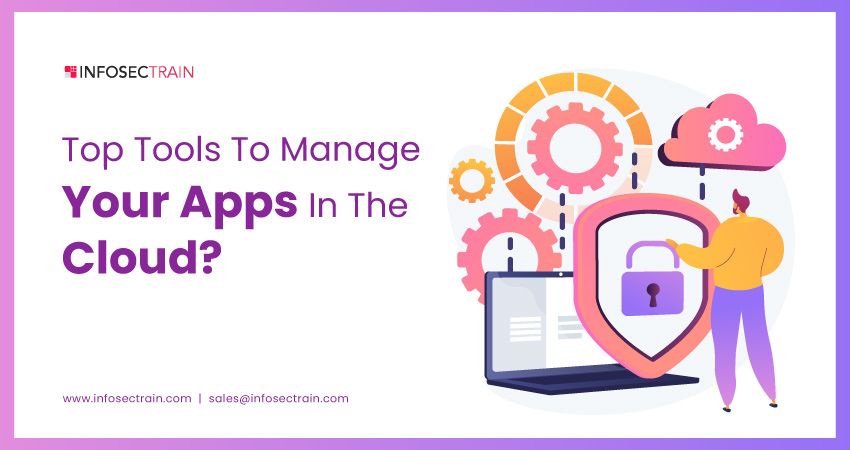
Top Tools To Manage Your Apps In The Cloud?
The cloud has transformed how businesses develop, deploy, and manage applications. With the increasing adoption of cloud services, having the proper management and oversight tools in place for these applications becomes essential. This concise guide examines some of the most effective tools for managing cloud-based applications. These tools include deployment management, monitoring, scaling, automation, and performance analysis, among their many features. By leveraging these tools, businesses can streamline their app management processes, enhance efficiency, and ensure optimal performance in the cloud environment.
Top Tools to Manage Applications in the Cloud
There are several excellent tools available to manage apps in the cloud. Here are some of the best ones:
-
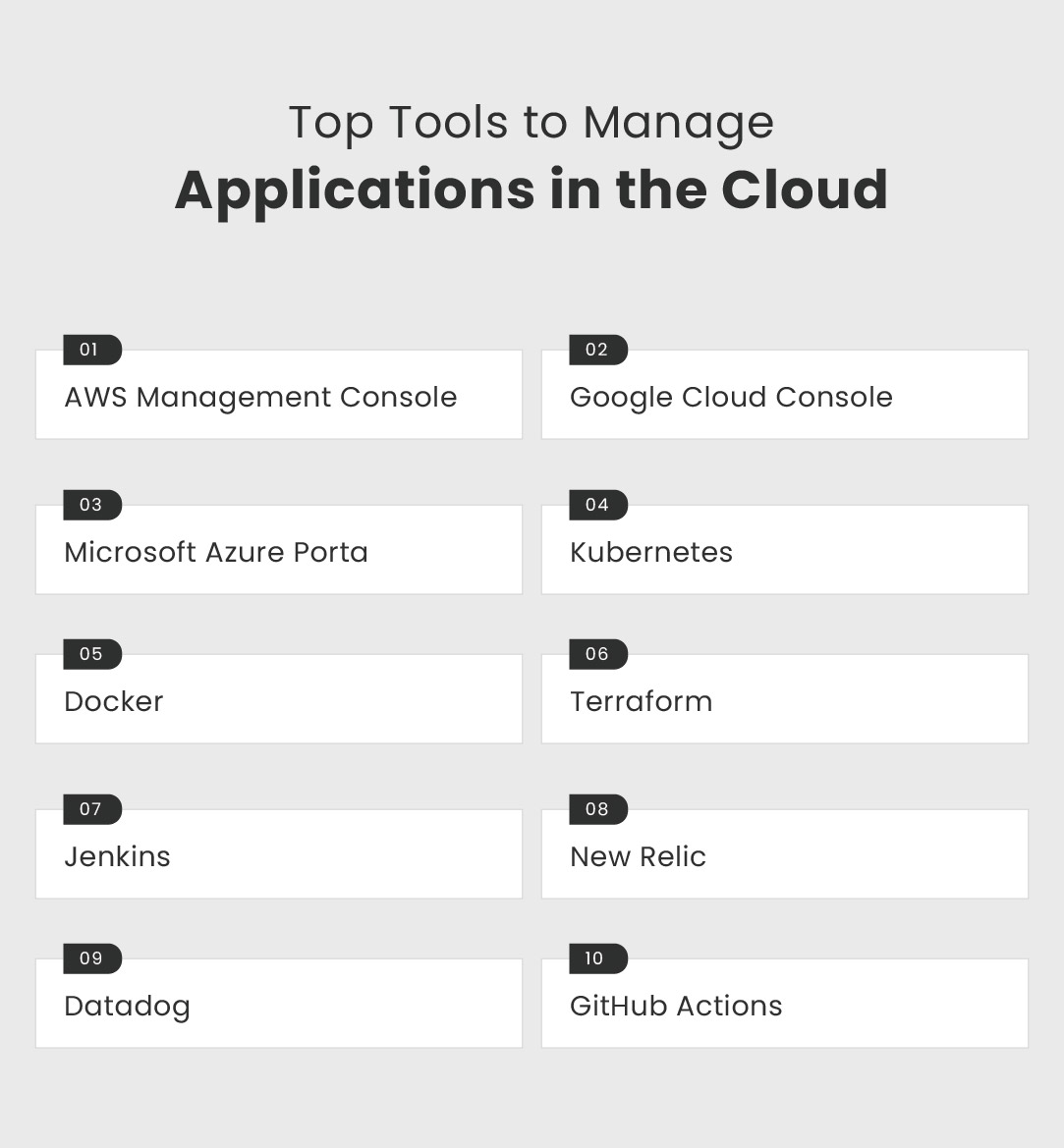
- AWS Management Console: Amazon Web Services (AWS) provides a user-friendly web interface for managing your cloud resources, including apps. It provides a comprehensive set of deployment, monitoring, and scaling tools and services.
- Google Cloud Console: Google Cloud Platform (GCP) offers a web-based console for managing your cloud-based applications. It provides an intuitive interface with deployment management, monitoring, and debugging features.
- Microsoft Azure Portal: Azure Portal is a unified management console for Microsoft Azure. It enables the management and monitoring of cloud applications, the configuration of continuous deployment, and access to various Azure services.
- Kubernetes: Kubernetes is an open-source container orchestration framework that simplifies containerized application management and scaling. It provides powerful features for deployment, monitoring, and automation.
- Docker: Docker is a popular containerization platform that enables you to package your applications and their dependencies into portable containers. It simplifies the deployment and management of applications across different environments.
- Terraform: Terraform is an infrastructure-as-a-code tool that allows you to define and manage your cloud resources using declarative configuration files. It supports multiple cloud providers, making it easier to manage apps across different platforms.
- Jenkins: Jenkins is an open-source automated server that aids in the processes of continuous integration and continuous deployment (CI/CD). It allows you to automate app deployment, testing, and monitoring.
- New Relic: New Relic is a performance monitoring and application management tool that provides real-time insights into your app’s performance and helps troubleshoot issues. It supports various cloud platforms and offers detailed analytics.
- Datadog: Datadog is a cloud monitoring and analytics platform that provides comprehensive visibility into clients’ infrastructure and applications. It offers monitoring, alerting, and visualization features for cloud-based apps.
- GitHub Actions: GitHub Actions is a powerful workflow automation tool integrated with the popular code hosting platform GitHub. It lets users define and automate their application deployment processes directly from the code repository.
Cloud with InfosecTrain
Managing cloud solutions can be challenging due to their inherent complexity. The tools mentioned earlier provide a starting point for managing your cloud-based applications. However, as your cloud environment becomes more intricate, exploring additional services to manage your published apps becomes essential.

To enhance your expertise in cloud computing, consider exploring the AWS Cloud Practitioner training course provided by InfosecTrain. This comprehensive AWS Cloud Practitioner training course will assist you in gaining extensive knowledge of AWS Cloud principles to demonstrate your skills and gain industry recognition.

Contact Us