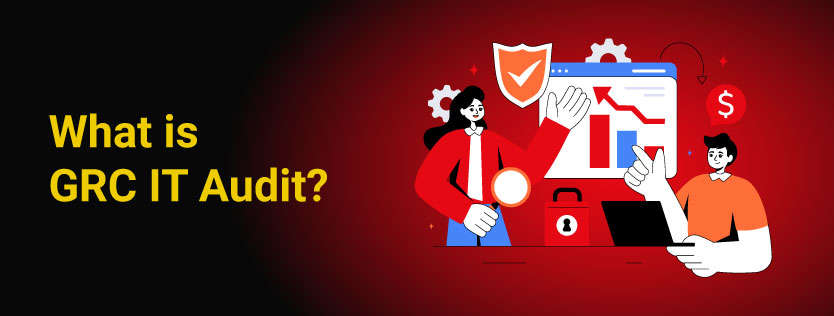
What is GRC IT Audit?
Quick Insights:
A GRC IT Audit is a comprehensive health check for an organization's digital backbone. It moves beyond basic technical checks to ensure technology is strategically aligned (Governance), securely defended (Risk), and legally sound (Compliance). Through a structured five-step process, Planning, Risk Assessment, Fieldwork, Reporting, and Follow-up, auditors identify vulnerabilities and regulatory gaps. While challenges such as system complexity and changing laws (such as the DPDP Act) persist, the audit ultimately protects a company's reputation, budget, and data integrity by turning security from a check-the-box task into a strategic advantage.
In today’s digital world, a company’s technology is its backbone. However, having advanced systems is not enough; those systems must be secure, well-managed, and legally compliant. A GRC IT Audit is a specialized assessment that ensures an organization’s IT operations align with its business goals, mitigate security threats, and follow all necessary laws.
To understand it easily, think of a GRC IT Audit as a three-lens evaluation:
- Governance: Ensuring the digital rulebook exists and that IT supports the company’s strategy.
- Risk Management: Finding and fixing weak spots before cyber threats or system failures occur.
- Compliance: Verifying that the organization follows government regulations (like the DPDP Act or GDPR) to avoid legal penalties.
By combining these three pillars, a GRC IT Audit provides a clear blueprint for building a resilient, ethical, and highly secure digital environment.
What is GRC IT Audit?
GRC IT Audit is a specialized evaluation that formally examines the three pillars of Governance, Risk Management, and Compliance to ensure an organization’s technology is secure, legally sound, and strategically aligned. It moves beyond checking whether systems are working to verify that the frameworks governing IT (Governance), the controls protecting digital assets (Risk), and the adherence to laws such as GDPR or the DPDP Act (Compliance) are functioning as intended.
Objectives of a GRC IT Audit
The primary goal is not just to find mistakes, but to provide a roadmap for better security and efficiency. Key objectives include:
- Assessing Risk Exposure: Identifying where the organization is most vulnerable to cyberattacks or system failures.
- Ensuring Regulatory Adherence: Verifying that the company meets legal obligations to avoid heavy fines.
- Evaluating Control Effectiveness: Testing if security measures (like firewalls or MFA) are actually doing their job.
- Strategic Alignment: Ensuring that IT departments are not just doing their own thing but are actively helping the company reach its financial and operational targets.
Key Components of GRC IT Audit
- IT Infrastructure: Reviewing servers, networks, and data centers.
- Information Security: Checking encryption standards, vulnerability management, and incident response plans.
- Data Integrity and Privacy: Ensuring data is accurate and that personal information is handled according to privacy laws.
- Access Controls: Verifying that only authorized individuals have access to sensitive systems (the Principle of Least Privilege).
- Business Continuity: Evaluating disaster recovery plans to see how quickly the company can bounce back after an outage.
GRC IT Audit Process
- Planning & Scoping: Auditors set boundaries by identifying key systems and data. This ensures the audit aligns with standards like ISO 27001 while maintaining an efficient focus.
- Risk Assessment: Threats are ranked by impact to prioritize critical assets, such as financial databases. This ensures the most significant vulnerabilities receive immediate attention.
- Fieldwork: Auditors gather evidence through technical tests and interviews. This confirms that security controls are actively functioning in daily operations.
- Reporting: Findings are compiled into a report that categorizes gaps by severity. This provides leadership with a prioritized roadmap for security improvements.
- Remediation & Follow-up: The IT team resolves issues, followed by an auditor’s verification. The cycle concludes once all high-priority risks are successfully mitigated.
Benefits of GRC IT Audit
- Enhanced Security: It uncovers shadow IT or weak links before hackers do.
- Reduced Costs: While audits cost money, they are far cheaper than a massive data breach or a multi-million dollar non-compliance fine.
- Improved Decision Making: Provides leadership with an objective view of their IT landscape.
- Trust and Reputation: For service providers, a clean audit report (like a SOC 2) is a massive selling point for potential clients.
Core Challenges in GRC IT Audits
- System Complexity: Navigating modern hybrid-cloud architectures makes it difficult to maintain full visibility. Mapping data flows across decentralized platforms often creates audit blind spots.
- Regulatory Volatility: Compliance is a moving target. Rapidly evolving laws, such as the EU AI Act and the DPDP Act, mean that systems that met yesterday’s standards may be non-compliant today.
- Resource Gaps: Many organizations lack the specialized talent and budget required for deep-dive technical assessments, leading to surface-level audits that miss critical vulnerabilities.
- Organizational Friction: A policeman-versus-criminal mentality between auditors and IT teams can lead to defensiveness and withholding of information, shifting the focus from genuine security to merely checking the box.
Conclusion
GRC IT Audit strengthens resilience and builds stakeholder trust by aligning Governance, Risk Management, and Compliance. It helps organizations turn IT into a secure and strategic asset while navigating modern challenges with confidence. The InfosecTrain GRC IT Audit course connects theory with real-world practice through frameworks such as COBIT and ISO 27001. Designed for professionals preparing for CISA or CRISC, it covers the complete audit lifecycle with practical insights. This training equips you with the technical skills and strategic mindset needed to handle today’s complex security and compliance demands.

TRAINING CALENDAR of Upcoming Batches For GRC Auditor Training
| Start Date | End Date | Start - End Time | Batch Type | Training Mode | Batch Status | |
|---|---|---|---|---|---|---|
| 30-Jan-2027 | 28-Feb-2027 | 19:00 - 23:00 IST | Weekend | Online | [ Open ] |
Frequently Asked Questions
How is a GRC IT Audit different from a regular IT Audit?
A standard IT audit often focuses specifically on technical controls or financial accuracy. A GRC IT Audit is broader; it evaluates how those technical controls link back to the company’s overall business strategy (Governance) and its broader legal landscape (Compliance).
Who is responsible for acting on the audit findings?
While the auditor identifies the gaps, the IT and Security teams are responsible for the Remediation phase, actually fixing the issues. Senior leadership is responsible for overseeing the process and ensuring the necessary budget and resources are available to address today's high-priority items.
What is Shadow IT, and how does a GRC Audit help?
Shadow IT refers to software or hardware used by employees without the IT department's knowledge (e.g., a personal cloud storage account used for work files). GRC audits help uncover these blind spots, ensuring all data-handling tools are under the company's security umbrella.
How often should an organization perform a GRC IT Audit?
There is no one-size-fits-all answer, but most organizations perform them annually. However, if there is a major change, such as migrating to a cloud environment or the introduction of a new law, such as the EU AI Act, an ad hoc audit should be triggered to ensure continued compliance.
Can a GRC IT Audit prevent a cyberattack?
While no audit can guarantee 100% protection, it significantly reduces the likelihood of a successful attack. By identifying departments and ensuring that security measures like Multi-Factor Authentication (MFA) and encryption are actually working, the organization becomes a much harder target for hackers.