Recovery Time Objectives (RTO) vs Recovery Point Objectives (RPO)
Quick Insights:
Recovery Time Objective (RTO) targets time by defining how quickly you must restore systems after an outage to minimize operational downtime. In contrast, Recovery Point Objective (RPO) targets data by defining the maximum age of files you can afford to lose, which dictates backup frequency. Ultimately, RTO limits downtime and RPO limits data loss, forcing organizations to balance infrastructure costs against their tolerance for disruption. By establishing these clear boundaries through a structured Business Impact Analysis, security teams protect both the operational clock and corporate data integrity from unexpected disasters.
In the cybersecurity and enterprise risk management landscapes, downtime is not just an inconvenience; it’s an expensive operational crisis. When an unexpected outage, ransomware attack, or natural disaster strikes, business continuity plans rely heavily on two critical metrics:
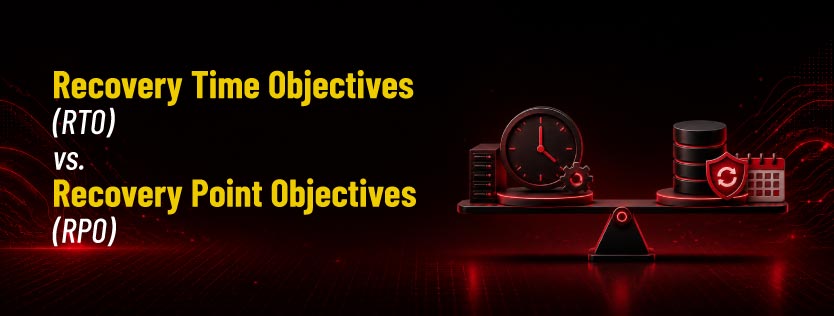
Recovery Time Objective (RTO) and Recovery Point Objective (RPO). While these terms sound similar, they serve entirely different purposes in your disaster recovery (DR) strategy. Understanding the distinction helps organizations balance their security budgets against their tolerance for data loss and downtime. Organizations typically define both RTO and RPO through a Business Impact Analysis (BIA), which identifies critical business processes and determines acceptable downtime and data loss.
What is the Recovery Time Objective (RTO)?
Recovery Time Objective (RTO) focuses on recovery time. It represents the maximum acceptable time an organization can tolerate a system, application, or business process being offline before unacceptable damage occurs.
Essentially, RTO answers the question: How quickly do we need to get back up and running after a disaster?
Key Characteristics of RTO
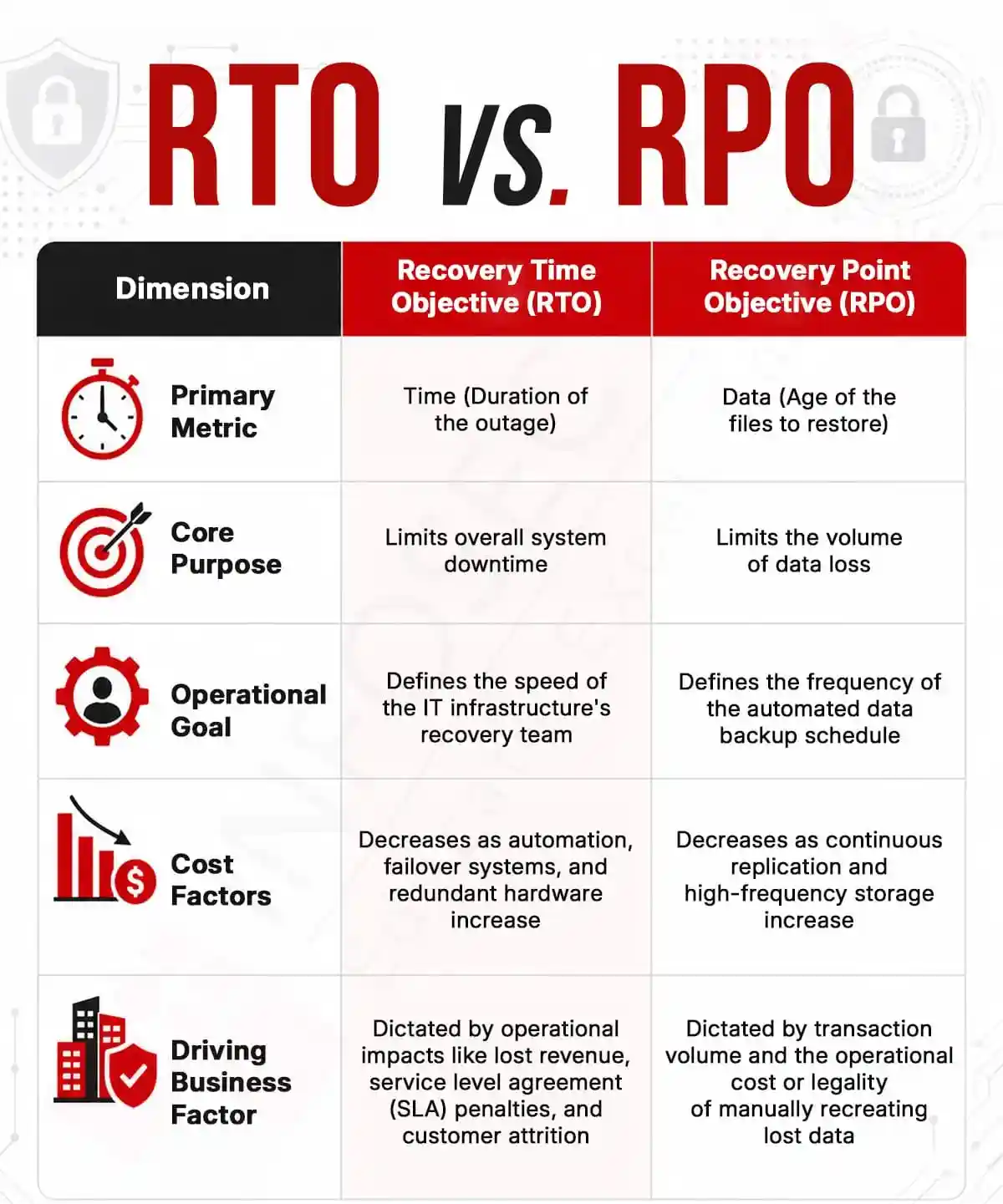
- Focuses on Downtime Duration: RTO measures the strict time interval on the clock between the initial system disruption and the full restoration of normal business operations.
- Driven by Operational Impact: Business priorities such as lost revenue, damaged customer trust, regulatory fines, and service level agreement (SLA) penalties directly dictate your RTO targets.
- Varies Widely by Asset Type: RTO is never one-size-fits-all; critical assets (like e-commerce payment gateways) require an RTO of minutes, while non-essential internal archives can safely tolerate an RTO of several days.
- Determines Recovery Resource Allocation: Your RTO goals dictate the type of technical deployment you need. Achieving a low RTO requires investing in automated failover systems, redundant hardware, and immediate incident response capabilities.
- Independent of Backup Frequency: Unlike metrics that focus on data states, RTO focuses solely on the speed of your recovery team and infrastructure. It assumes the backup data exists and only measures how fast you can restore it to operational status.
What is the Recovery Point Objective (RPO)?
Recovery Point Objective (RPO) focuses on minimizing data loss. It defines the maximum age of files or transactional data that an organization can tolerate losing from backup storage in the event of an unexpected crash, ransomware attack, or disaster.
Essentially, RPO answers the core question: How much data can we afford to lose?
Key Characteristics of RPO
- Focuses on Tolerable Data Loss: RPO evaluates data loss by looking backward from the moment of failure to determine the maximum amount of data that could be lost between the last successful backup and the disruptive event.
- Dictates Backup and Replication Frequency: Your RPO metrics directly establish your technical backup schedule. If a database carries a strict 1-hour RPO, the system must trigger automated data replication or backup snapshots at least once every hour.
- Driven by Transaction Volume: High-velocity systems that process continuous user transactions (such as banking ledgers or cloud shopping carts) require near-zero RPOs, as even a few minutes of unique data loss can cause massive operational chaos.
- Determines Storage Infrastructure Cost: Achieving tight RPO goals demands premium, high-capacity infrastructure. Lowering your RPO means moving away from traditional daily tape backups and investing heavily in continuous data protection (CDP), real-time cloud mirroring, and advanced storage snapshots.
- Completely Separate from System Recovery Speed: RPO cares only about data currency, not system operational status. It ignores how long it takes your IT team to restore a server (which is the job of RTO) and focuses purely on ensuring that, once the server is back online, the data inside it is not outdated.
RTO vs. RPO
Conclusion
Mastering RTO and RPO boundaries ensures that an enterprise can withstand severe disruptions without losing its competitive edge or its data. Effective disaster recovery planning requires balancing recovery costs with acceptable levels of downtime and data loss, not a universal zero-downtime standard. By aligning technical architecture with precise risk thresholds, security teams protect both the operational clock and corporate data integrity.
Master these business continuity strategies and elevate your risk management skills with GRC IT Auditor training at InfosecTrain, where you will learn to evaluate disaster recovery frameworks, audit internal controls, and maintain compliance against global industry standards.

TRAINING CALENDAR of Upcoming Batches For GRC Auditor Training
| Start Date | End Date | Start - End Time | Batch Type | Training Mode | Batch Status | |
|---|---|---|---|---|---|---|
| 30-Jan-2027 | 28-Feb-2027 | 19:00 - 23:00 IST | Weekend | Online | [ Open ] |
Frequently Asked Questions
Can an organization have a near-zero RTO but a long RPO?
Yes. A system can fail over instantly (near-zero RTO) even if its data is only backed up once a day (long RPO). If a crash occurs, the system recovers immediately, but users lose hours of data and must manually recreate it.
What is the difference between a Tier 1 and a Tier 3 asset regarding RTO/RPO?
Tier 1 assets are mission-critical systems (like payment gateways) that require near-zero RTO and RPO to prevent immediate financial loss. Tier 3 assets are non-critical components (such as legacy archives) that can safely tolerate days of downtime and infrequent backups.
Does a low RPO automatically guarantee a low RTO?
No. RPO only controls backup frequency, not restoration speed. You can capture snapshots every 10 minutes (low RPO), but if your IT team takes 12 hours to provision hardware and restore those files, your system remains offline for those 12 hours (high RTO).
How do operational impacts determine RTO goals?
RTO goals are calculated by measuring the cost of downtime over time. When the cumulative impact from lost revenue, regulatory fines, customer churn, and SLA penalties reaches an unacceptable financial threshold, that duration defines your maximum RTO.
Why does lowering RPO increase storage infrastructure costs?
Shrinking your RPO window requires moving away from simple daily backups toward continuous data protection (CDP) and real-time cloud mirroring. This high frequency demands premium network bandwidth, rapid snapshot tools, and significantly more storage capacity.