AI-Integrated Curriculum
CCSP Cloud Security Certification Training
Master Cloud Security Architecture, Governance, Risk Management & Compliance
 27 Sep




Program Highlights
The Certified Cloud Security Professional is a globally recognized standard for professionals who wish to demonstrate their abilities in securing cloud assets of an organization. The ISC2 CCSP training gives an opportunity to IT professionals who wish to advance their careers in cloud security. The CCSP training allows participants to gain skills that allow them to design, manage, and protect data and applications in a cloud environment while adhering to the established practices, policies, and procedures.
 48-Hour LIVE Instructor-Led Training
  Telegram Group for Exam Practice
  Learn Better with Flash Cards & Mind Maps
  Regular Assessments and Knowledge Checks
  98% Exam Pass Rate
  Experienced Industry Experts
  Real-World Case Studies
  Post Training Support Till Exam
  Access to Recorded Sessions
Training Schedule
- upcoming classes
- corporate training
- 1 on 1 training
| Start - End Date | Training Mode | Batch Type | Start - End Time | Batch Status | |
|---|---|---|---|---|---|
| 27 Sep - 28 Nov | Online | Weekend | 09:00 - 13:00 IST | BATCH OPEN | |
| 14 Nov - 10 Jan | Online | Weekend | 19:00 - 23:00 IST | BATCH OPEN | |
| 23 Jan - 07 Mar | Online | Weekend | 19:00 - 23:00 IST | BATCH OPEN | |
| 13 Mar - 02 May | Online | Weekend | 09:00 - 13:00 IST | BATCH OPEN |
Why Choose Our Corporate Training Solution
- Upskill your team on the latest tech
- Highly customized solutions
- Free Training Needs Analysis
- Skill-specific training delivery
- Secure your organizations inside-out
Why Choose 1-on-1 Training
- Get personalized attention
- Customized content
- Learn at your dedicated hour
- Instant clarification of doubt
- Guaranteed to run

About Course
This certification-focused CCSP course is based on the new syllabus that is designed to empower learners with all the necessary skills and expertise to ace the CCSP certification. The key objective of the new version update of this certification training program is to arm learners with the right techniques and skills required to safeguard the critical data assets in a cloud environment. Built on the updated ISC2 CCSP syllabus, Version 4.0, this program equips professionals with the practical knowledge needed to design, secure, and manage cloud environments across today’s enterprise landscape.
Course Curriculum
-
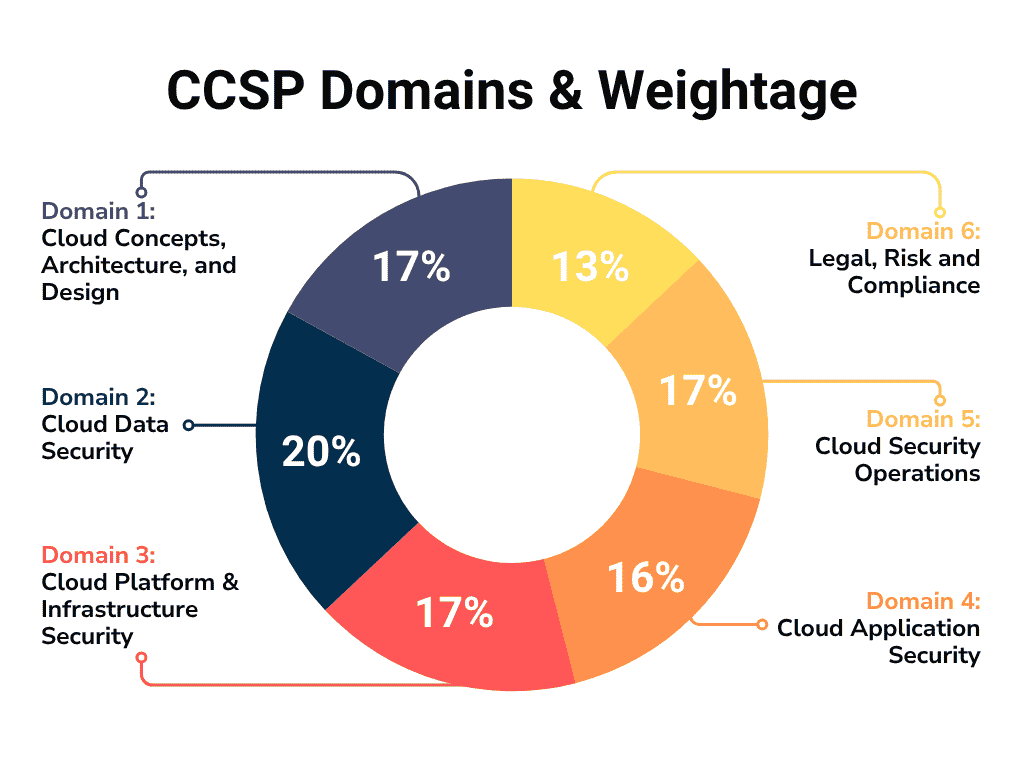
Domain 1: Cloud Concepts, Architecture and Design (17%)
- 1.1 Understand Cloud Computing Concepts
- Cloud Computing Definitions
- Cloud Computing Roles and Responsibilities
- Essential Cloud Computing Characteristics
- Building Block Technologies
- 1.2 Describe Cloud Reference Architecture
- Cloud Computing Activities
- Cloud Service Capabilities
- Cloud Service Categories
- Cloud Deployment Models
- Cloud Shared Considerations
- Impact of Related Technologies
- 1.3 Understand Security Concepts Relevant to Cloud Computing
- Cryptography and Key Management
- Identity and Access Control
- Data and Media Sanitization
- Network Security
- Virtualization Security
- Common Cloud Threats
- Security Hygien
- 1.4 Understand Design Principles of Secure Cloud Computing
- Cloud Secure Data Lifecycle
- Cloud-based Business Continuity (BC) and Disaster Recovery (DR) Planning
- Business Impact Analysis (BIA)
- Functional Security Requirements
- Security Considerations and Responsibilities for Different Cloud Categories
- Cloud Design Patterns
- DevOps Security
- 1.5 Evaluate Cloud Service Providers (CSP)
- Verification Against Criteria
- System/Subsystem Product Certifications
- 1.6 Comprehend Artificial Intelligence (AI)/Machine Learning (ML)
- Cloud Threat Detection and Analysis
- Data Source Validation and Verification
- Security Orchestration, Automation and Response (SOAR)
- Ethical Concerns
- Regulatory Requirements
- 2.1 Describe Cloud Data Concepts
- Cloud Data Lifecycle Phases
- Data Dispersion
- Data Flows
- 2.2 Design and Implement Cloud Data Storage Architectures
- Storage Types
- Threats to Storage Types
- 2.3 Design and Apply Data Security Technologies and Strategies
- Encryption and Key Management
- Hashing (e.g., data integrity, non-repudiation)
- Data Obfuscation (e.g., masking, anonymization)
- Tokenization
- Data Loss Prevention (DLP)
- Keys, Secrets and Certificates Management
- 2.4 Implement Data Discovery
- Structured Data
- Unstructured Data
- Semi-Structured Data
- Data Location
- 2.5 Plan and Implement Data Classification
- Data Classification Policies
- Data Mapping
- Data Labelling and Tagging
- 2.6 Design and Implement Information Rights Management (IRM)
- Objectives
- Appropriate Tools
- 2.7 Plan and Implement Data Retention, Deletion and Archiving Policies
- Data Retention Policies
- Data Deletion Procedures and Mechanisms
- Data Archiving Procedures and Mechanisms
- Legal Hold
- 2.8 Design and Implement Auditability, Traceability and Accountability of Data Events
- Definition of Event Sources and Requirement of Event Attributes
- Logging, Storage and Analysis of Data Events
- Chain of Custody and Non-repudiation
- 2.9 Comprehend Data Protection of AI and ML Data
- Data Set and Model Privacy
- Data Set and Model Security
- 3.1 Comprehend Cloud Infrastructure Components
- Physical Environment
- Network and Communications
- Compute
- Virtualization
- Storage
- Management Plane
- 3.2 Design a Secure Data Center
- Logical Design
- Physical Design
- Environmental Design
- Design Resilience
- 3.3 Analyze Risks Associated with Cloud Infrastructure and Platforms
- Risk Assessment
- Cloud Vulnerabilities, Threats and Attacks
- Risk Treatment Strategies
- 3.4 Plan and Implementation of Security Controls
- Physical and Environmental Protection
- System, Storage and Communication Protection
- Identification, Authentication and Authorization in Cloud Environments
- Audit Mechanisms
- 3.5 Plan Business Continuity (BC) and Disaster Recovery (DR)
- Business Continuity (BC)/Disaster Recovery (DR) Strategy
- Business Requirements
- Creation, Implementation and Testing of Plan
- 4.1 Advocate Training and Awareness for Application Security
- Cloud Development Basics
- Common Pitfalls
- Common Cloud Vulnerabilities
- 4.2 Describe the Secure Software Development Life Cycle (SDLC) Proces
- Business Requirements
- Phases and Methodologies (e.g., design, code, test, maintain, waterfall vs. agile)
- 4.3 Apply the Secure Software Development Life Cycle (SDLC)
- Cloud-Specific Risks
- Threat Modelling
- Avoid Common Vulnerabilities During Development
- Secure Coding
- Software Configuration Management (CM) and Versioning
- 4.4 Apply Cloud Software Assurance and Validation
- Functional and Non-functional Testing
- Security Testing Methodologies
- Quality Assurance (QA)
- Abuse Case Testing
- 4.5 Use Verified Secure Software
- Securing Application Programming Interfaces (API)
- Supply-Chain Management
- Third-Party Software Management
- Validated Open-Source Software
- 4.6 Comprehend and Apply the Specifics of Cloud Application Architecture
- Supplemental Security Components
- Cryptography
- Sandboxing
- Application Virtualization and Orchestration
- 4.7 Design Appropriate Identity and Access Management (IAM) Solutions
- Federated Identity
- Identity Providers (IdP)
- Single Sign-On (SSO)
- Multi-Factor Authentication (MFA)
- Cloud Access Security Broker (CASB)
- Secrets, Key, and Certificate Management
- 5.1 Build and Implement Physical and Logical Infrastructure for Cloud Environment
- Hardware Specific Security Configuration Requirements
- Secure by Default
- Installation and Configuration of Management Plane Tools
- Virtual Hardware Specific Security Configuration Requirements
- Installation of Guest Operating System (OS) Virtualization Toolsets
- 5.2 Operate and Maintain Physical and Logical Infrastructure for Cloud Environment
- Access Controls for Local and Remote Access
- Secure Network Configuration
- Network Security Controls
- Operating Systems Hardening through Application of Baselines, Monitoring and Remediation
- Patch Management
- Availability of Clustered Hosts
- Availability of Guest Operating System (OS)
- Performance and Capacity Monitoring
- Hardware Monitoring
- Configuration of Host and Guest OS Backup and Restore Functions
- Management Plane
- 5.3 Implement Operational Controls and Standards
- Change Management
- Continuity Management
- Information Security Management
- Continual Service Improvement Management
- Incident Management
- Problem Management
- Release Management
- Deployment Management
- Configuration Management (CM)
- Service-Level Management
- Availability Management
- Capacity Management
- 5.4 Support Digital Forensics
- Forensic Data Collection Methodologies
- Evidence Management
- Collecting, Acquiring, and Preserving Digital Evidence
- 5.5 Manage Communication with Relevant Parties
- Vendors
- Customers
- Partners
- Regulators
- Other Stakeholders
- 5.6 Manage Security Operations
- Security Operations Center (SOC)
- Intelligent Monitoring of Security Controls
- Log Capture and Analysis
- Incident Response (IR)
- Vulnerability Assessments
- Penetration Testing
- 6.1 Articulate Legal Requirements and Unique Risks within the Cloud Environment
- Conflicting International Legislation
- Evaluation of Legal Risks Specific to Cloud Computing
- Legal and Regulatory Frameworks and Guidelines
- eDiscovery
- Forensics Requirements
- 6.2 Understand Privacy Requirements
- Difference Between Contractual and Regulated Private Data
- Country-Specific Legislation Related to Private Data
- Jurisdictional Differences in Data Privacy
- Standard Privacy Requirements
- Privacy Impact Assessments (PIA)
- 6.3 Understand Audit Processes, Methodologies, and Required Adaptations for a Cloud Environment
- Internal and External Audit Controls
- Impact of Audit Requirements
- Identify Assurance Challenges of Virtualization and Cloud
- Types of Audit Reports
- Restrictions of Audit Scope Statements
- Gap Analysis
- Audit Planning
- Internal Information Security Management System (ISMS)
- Internal Information Security Controls System
- Policies
- Identification and Involvement of Relevant Stakeholders
- Specialized Compliance Requirements for Highly Regulated Industries
- Impact of Distributed Information Technology (IT) Model
- 6.4 Understand Implications of Cloud to Enterprise Risk Management
- Assess Providers Risk Management Programs
- Difference Between Data Roles
- Regulatory Transparency Requirements
- Risk Treatment
- Different Risk Frameworks
- Metrics for Risk Management
- Assessment of Risk Environment
- 6.5 Understand Outsourcing and Cloud Contract Design
- Business Requirements
- Vendor Management
- Contract Management
- Supply-Chain Management
Domain 2: Cloud Data Security (20%)
Domain 3: Cloud Platform and Infrastructure Security (17%)
Domain 4: Cloud Application Security (16%)
Domain 5: Cloud Security Operations (17%)
Domain 6: Legal, Risk and Compliance (13%)
Target Audience
This CCSP training is designed for experienced IT and security professionals, including:
- Cloud Security Architect
- Cloud Engineer
- Cloud Consultant
- Cloud Administrator
- Cloud Security Analyst
- IT Auditor
- Professional Cloud Developer
- Information Security Professionals
- Risk and Compliance Professionals
- Security Engineers
- Governance and IT Audit Professionals
Pre-requisites
Candidates enrolling for this course must have five years of cumulative paid work experience in IT, with at least three years in information security and one year in one or more of the six CCSP CBK domains. This course is particularly suited for professionals working in cloud architecture, security engineering, IT auditing, governance, risk and compliance, and cloud operations. Professionals who do not yet meet the experience requirement can still take the exam and earn the Associate of ISC2 designation, then work toward full certification as they complete the required experience.
Note:
- CCSP is a registered mark of The International Information Systems Security Certification Consortium, ISC2
- InfosecTrain is not an authorized training partner of ISC2.
Exam Details
| Certification Name | CCSP |
| Exam Duration | 180 minutes |
| Number of Questions | 100-150 |
| Exam Format | Multiple Choice and Advanced Question Types |
| Passing Score | 700 out of 1000 points |
| Exam Language | English, Chinese, Japanese and German |
Course Objectives
Upon successful course completion, you will be able to:
- Design and implement security controls for cloud infrastructure, applications, and data across all major service models.
- Secure cloud-based applications across SaaS and PaaS environments using proven architectural and coding practices.
- Navigate the legal, privacy, and audit compliance requirements specific to cloud environments, including eDiscovery and forensic readiness.
- Build and manage cloud security operations covering monitoring, incident response, vulnerability assessment, and disaster recovery.
- Identify, assess, and treat risks associated with cloud vulnerabilities, threats, and multi-tenant infrastructure.
- Apply AI and ML security concepts, including threat detection, SOAR, data source validation, and regulatory requirements for cloud environments.
- Implement identity and access management solutions, including federated identity, SSO, MFA, CASB, and secrets and certificate management.
- Apply best practices for securing cloud services, data pipelines, and infrastructure at scale, including supply chain risk management.


Vision

Goal

Skill-Building

Mentoring

Direction

Support

Success



I appreciate the CCSP course trainer for engaging sessions throughout the week. The best part was the revision of the past modules whenever we jumped on the new module. It was great to have some time for the question and answer sessions. Along with all this, the best part was the concepts were being discussed in real example demonstrations.

Enjoyed the course! The CCSP trainer is very experienced and dedicated to delivering the best. As part of the training, he ensured that the training objective was met while keeping the exam preparation in mind at the same time.

The CCSP training at InfosecTrain was good, and the trainer’s ability to explain complicated topics in a simple manner was very good. He was able to explain concepts and left no room for doubt.

It was a very good CCSP training session. The instructor is one of the best in the industry. Focused on helping students clear the exam. Really appreciated.

I found the CCSP training to be highly valuable and wanted to express my gratitude for the comprehensive and well-structured program. The concepts were explained in an easy to understand language. The trainer made all efforts to make sure we had our concentration on his sessions and kept us engaged.

Excellent CCSP training with highly professional communication from the support team (prompt delivery of all recordings). Would highly recommend InfosecTrain. Thanks a ton.

Frequently Asked Questions
What is the CCSP certification, and who is it for?
CCSP, or Certified Cloud Security Professional, is an advanced credential offered by ISC2 for experienced IT and security professionals working in cloud architecture, security engineering, risk and compliance, governance, or IT auditing. It validates the expertise required to design, manage, and secure cloud environments across all major service models and is recognized by organizations worldwide as a benchmark for cloud security competence.
What are the eligibility requirements for the CCSP exam?
Candidates need five years of cumulative paid work experience in IT, including at least three years in information security and one year in at least one of the six CCSP CBK domains. Those who do not yet meet the experience requirement can take the exam and earn the Associate of ISC2 designation while they work toward completing the required experience for full certification.
What is the CCSP exam format in 2026?
The CCSP exam consists of 100 to 150 questions across multiple-choice and advanced question types. It runs for 180 minutes and requires a passing score of 700 out of 1000 points. The exam is available in English, Chinese, Japanese, and German and is administered through Pearson VUE testing centers worldwide.
How many domains does the CCSP cover, and what are they?
The CCSP covers six domains: Cloud Concepts, Architecture and Design at 17%; Cloud Data Security at 20%; Cloud Platform and Infrastructure Security at 17%; Cloud Application Security at 16%; Cloud Security Operations at 17%; and Legal, Risk and Compliance at 13%. Cloud Data Security carries the highest weight, reflecting how central data protection is to cloud security practice today.
Does the CCSP syllabus cover AI and machine learning security?
Yes. The ISC2 Version 4.0 syllabus includes dedicated coverage of AI and ML security across two domains. This includes cloud threat detection and analysis, data source validation and verification, Security Orchestration Automation and Response (SOAR), ethical concerns in AI deployment, regulatory requirements, and the privacy and security of AI and ML datasets.
How long does CCSP training take?
InfosecTrain's CCSP course is delivered over 48 hours of live, instructor-led training. All sessions are also recorded so you can revisit any topic at your own pace after the program ends, and post-training support continues until you clear the exam.
What makes CCSP training different from other providers?
InfosecTrain's CCSP training is delivered by Microsoft and CSA Authorized Instructor with 19 years of enterprise cloud security experience, who has trained over 2,000 professionals and supported 60+ global organizations. The program combines 48 hours of live training with recorded access, flash cards, mind maps, domain-level assessments, real-world case studies, and a dedicated Telegram group for exam practice, along with post-training support until you pass.
Is the CCSP recognized by government and defense organizations?
Yes. The CCSP is ANAB accredited to the ISO/IEC 17024 standard and is approved under the U.S. Department of Defense Directive DoDM 8140.03. It is also recognized by ENISA and SFIA, making it one of the most credible vendor-neutral cloud security credentials for professionals working in government, defense, and regulated enterprise environments.
What is the difference between CCSP and CISSP?
CISSP is a broad information security certification covering eight security disciplines across all areas of the field. CCSP is specifically focused on cloud security and goes considerably deeper into cloud architecture, data security, cloud application security, and cloud-specific compliance requirements. Many professionals hold both certifications, as they complement each other well at senior levels and together signal comprehensive security leadership capability.
What career opportunities does the CCSP open up in 2026 and beyond?
CCSP-certified professionals are in high demand as organizations across every sector accelerate cloud adoption and face increasingly complex regulatory environments. Globally, the average annual salary for a CCSP-certified professional is approximately USD 132,000, with senior roles in cloud security architecture, GRC, and security operations commanding significantly more. Roles include Cloud Security Architect, Cloud Security Analyst, Cloud GRC Consultant, Security Operations Lead, and Cloud Compliance Manager, with hiring organizations including Microsoft, AWS, Google, IBM, Cisco, and major financial institutions worldwide.
What legal and compliance topics are covered in the CCSP?
The Legal, Risk, and Compliance domain covers international legislation conflicts, eDiscovery requirements, forensic readiness in cloud environments, privacy impact assessments, internal and external audit controls, enterprise risk management frameworks, and outsourcing and cloud contract design, including vendor and supply chain management. It also covers jurisdictional differences in data privacy and compliance requirements for highly regulated industries.
What is the Associate of ISC2, and how does it apply to CCSP?
The Associate of ISC2 designation is for professionals who pass the CCSP exam but have not yet completed the five years of required work experience. It allows you to demonstrate your knowledge and commitment to cloud security while you build toward full certification. Once the experience requirement is met, the Associate designation converts to the full CCSP credential without requiring you to retake the exam.
Who is the CCSP best suited for?
The CCSP is best suited for experienced IT and security professionals who are already working in or transitioning into cloud-focused roles. This includes Cloud Security Architects, Cloud Engineers, Cloud Consultants, Cloud Administrators, Cloud Security Analysts, IT Auditors, and professionals in governance, risk, and compliance functions. It is not an entry-level certification, and candidates are expected to bring existing information security experience and use the CCSP to formalize, deepen, and globally validate their cloud security expertise.
Does the CCSP certification require renewal?
Yes. Like other ISC2 credentials, the CCSP requires recertification every three years, adherence to the ISC2 Code of Ethics, and continued professional education to maintain certification validity.
What is the difference between CCSP 2024 and CCSP 2026?
The core CCSP domains remain the same across both versions, but CCSP 2026 places greater emphasis on emerging cloud technologies, evolving threat landscapes, and zero-trust principles. It also strengthens focus on cloud-native security practices and updated regulatory requirements shaping today's cloud environments. This shift reflects how quickly cloud security demands have evolved, ensuring the certification stays relevant to current enterprise practice.