Data Privacy Career Roadmap: A Complete Guide
Quick Insights:
A data privacy career focuses on ensuring that personal data is collected, used, shared, retained, and deleted responsibly and in accordance with applicable laws. A structured Data Privacy Learning Path can be divided into three stages: the foundational stage, which covers privacy fundamentals and DPDPA Bootcamp; the professional stage, which includes CIPP/E, CIPP/US, and CIPM; and the expert stage, which focuses on CIPT and hands-on DPO training. Privacy professionals need more than legal knowledge, as they must understand data flows, privacy risks, consent, individual rights, third-party processing, privacy notices, breach response, governance, security controls, and privacy-by-design practices. Although certifications can validate knowledge, practical evidence such as data inventories, privacy impact assessments, consent reviews, breach-response plans, and privacy policies are essential for becoming job-ready.
Every digital interaction creates data. When a customer opens an account, when an employee joins a company, when a patient books an appointment or when a user accepts cookies they all produce names, contact details, IDs, financial information, behavioral patterns, health records, location data and other personal data.
Organizations need to know what data they hold, why they use it, who can look at it, where it goes, how long it stays and what happens when a person uses a privacy right. This responsibility has opened opportunities for professionals who can turn data protection rules into real business controls. However, entering into the privacy field can feel confusing. Should you start with privacy law, governance, technology, cybersecurity or compliance? Do you need a degree? Which certification fits your dream job? How can you show experience if you have not yet worked in privacy?
The Data Privacy Career Roadmap answers those questions. Gives you a clear learning route that starts with privacy basics moves into program management, privacy engineering and then, into hands‑on Data Protection Officer duties.
What Is Data Privacy?
Data privacy is the responsible and lawful management of personal data throughout its lifecycle. It addresses questions such as:
- What personal data is being collected?
- Why is the organization processing it?
- Is the processing lawful, fair, and transparent?
- Is the collected data limited to what is necessary?
- Who can access or receive the data?
- How is the data protected?
- How long should it be retained?
- How can individuals exercise their rights?
- What happens if the data is breached?
- How can privacy requirements be built into products and operations?
Data privacy is not limited to publishing a privacy notice or obtaining consent. It is an organizational discipline connecting law, governance, risk, technology, cybersecurity, product design, human resources, procurement, marketing, and business operations.
What Does a Data Privacy Professional Do?
A Data Privacy Professional helps an organization understand and control how it processes personal data. Depending on the role, responsibilities may include:
- Maintaining personal-data inventories
- Creating records of processing activities
- Mapping data flows across systems and vendors
- Identifying applicable privacy requirements
- Reviewing privacy notices and consent mechanisms
- Responding to individual-rights requests
- Conducting privacy impact assessments
- Evaluating new products and technologies
- Reviewing vendor privacy and security practices
- Defining data-retention requirements
- Supporting personal-data breach response
- Developing privacy policies and procedures
- Monitoring privacy risks and compliance
- Delivering privacy-awareness training
- Advising product, marketing, HR, legal, and security teams
- Preparing reports for leadership or regulators
- Embedding privacy by design into systems
- Coordinating a privacy management program
The role requires judgment. Privacy professionals frequently balance individual rights, legal obligations, business needs, technology constraints, and security risks.
Why Is Data Privacy a Growing Career Field?
Privacy has become a board-level, regulatory, and operational concern. Organizations now process personal data through websites, mobile applications, cloud platforms, analytics systems, connected devices, workplace technologies, advertising tools, artificial intelligence, and international service providers. Each activity may create legal, ethical, reputational, and security risks.
India’s Digital Personal Data Protection Act, 2023 establishes requirements concerning lawful processing, consent, Data Principal rights, Data Fiduciary obligations, security safeguards, breach notification, children’s data, and other areas. The DPDPA Rules, 2025 introduced a staggered commencement schedule, with many substantive provisions scheduled to come into force 18 months after publication.
Globally, regulations such as the EU General Data Protection Regulation have made accountability, transparency, individual rights, privacy by design, impact assessments, breach management, and Data Protection Officer responsibilities central to organizational privacy programs.
This creates opportunities in:
- Privacy compliance
- Privacy program management
- Data governance
- Privacy operations
- Privacy law and advisory
- Privacy engineering
- Product privacy
- Third-party privacy risk
- Privacy auditing
- Data Protection Officer services
- Privacy-focused cybersecurity
- AI and emerging-technology governance
Explore: Top 5 Data Privacy Laws Every Business Should Know
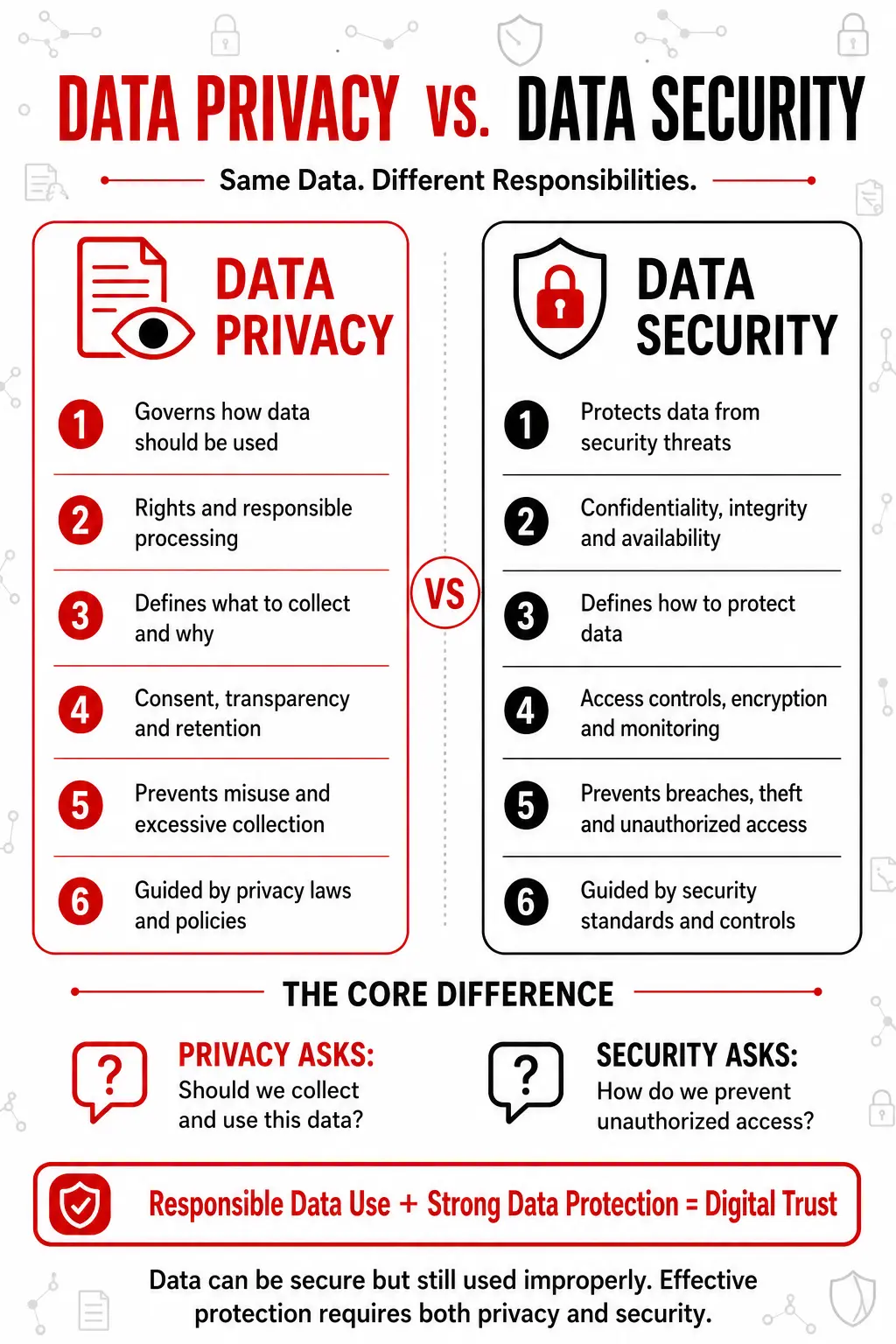
Data Privacy vs. Data Security
Data privacy and data security overlap, but they are not identical.
Who Should Consider a Data Privacy Career?
A data privacy career can suit:
- Students and recent graduates
- Legal and compliance professionals
- Cybersecurity practitioners
- Risk and governance professionals
- Internal and external auditors
- IT and cloud professionals
- Product and software teams
- Human resources professionals
- Data governance professionals
- Business analysts
- Project and program managers
- Marketing compliance professionals
- Professionals aspiring to become DPOs
A law degree is helpful for certain legal and regulatory roles, but it is not mandatory for every privacy career. Privacy operations, program management, governance, technology, audit, and engineering pathways also value business, technical, risk, and communication skills.
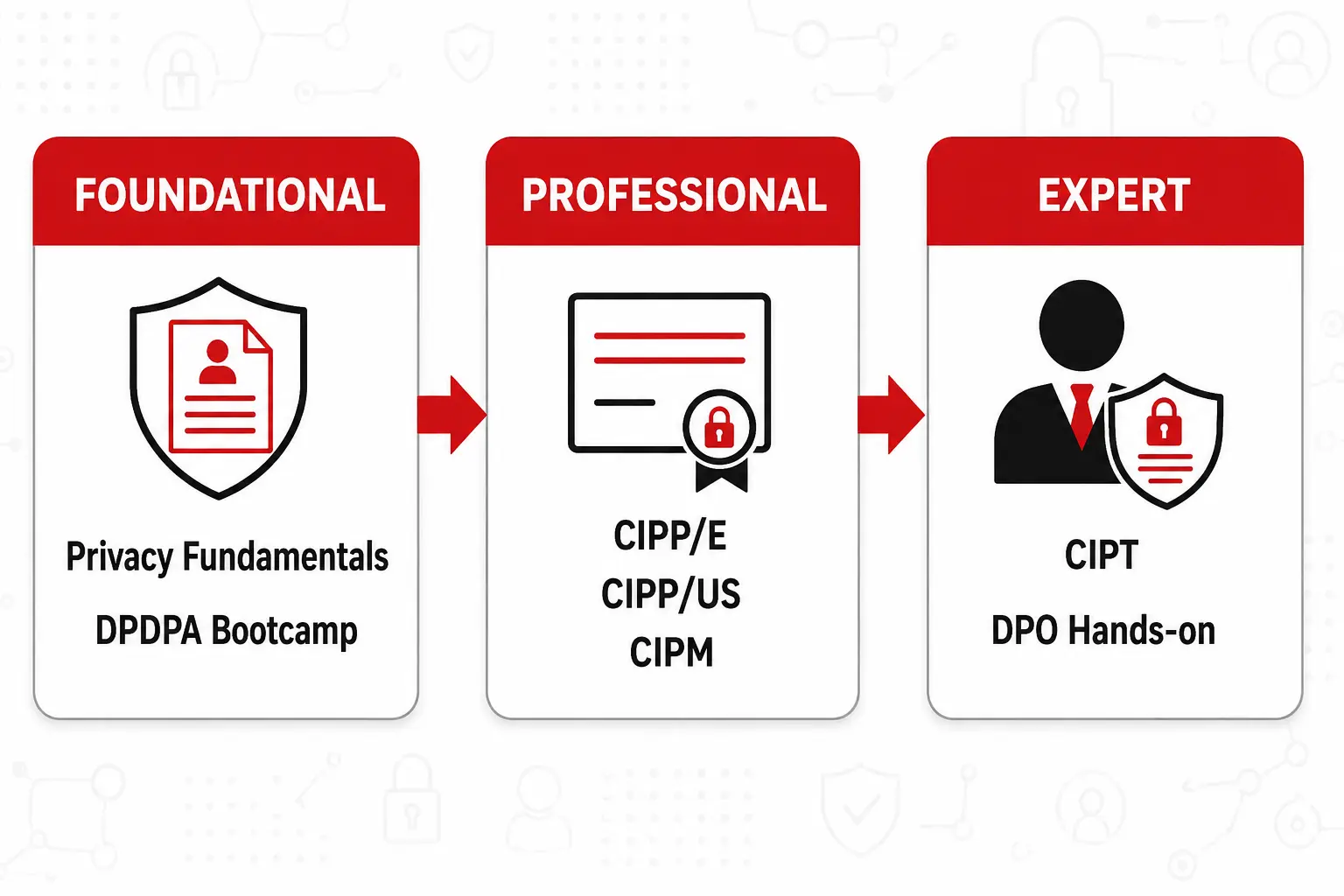
These stages represent the progression used in this roadmap. They are not universal levels assigned by certification providers. Learners should select training according to their jurisdiction, experience, target role, and organizational responsibilities.
Stage 1: Build Data Privacy Foundations
The foundational stage explains how privacy principles, laws, data lifecycles, business activities, and security practices connect.
Privacy Fundamentals to Learn
Begin with:
- Personal data and sensitive-data concepts
- Data controllers, fiduciaries, processors, and principals
- Privacy principles
- Purpose limitation
- Data minimization
- Accuracy and data quality
- Storage and retention limitation
- Transparency and privacy notices
- Consent and consent withdrawal
- Individual or Data Principal rights
- Children’s data
- Third-party processing
- Cross-border data transfers
- Privacy risk management
- Privacy by design and by default
- Security safeguards
- Personal-data breach response
- Accountability and governance
Learners should understand the full data lifecycle:
Collect → Use → Store → Share → Retain → Delete
Each stage creates different privacy questions and control requirements.
DPDPA Bootcamp
A DPDPA Bootcamp can help learners understand India’s data protection framework and how its requirements translate into organizational processes.
Important topics include:
- Scope and applicability
- Digital personal data
- Data Fiduciaries and Data Principals
- Consent requirements
- Certain legitimate uses
- Data Principal rights and duties
- Obligations of Data Fiduciaries
- Significant Data Fiduciaries
- Children’s personal data
- Consent Managers
- Security safeguards
- Personal-data breach notification
- Data retention and erasure
- Grievance redressal
- Data processors
- Cross-border considerations
- Penalties and enforcement
- Implementation planning
The DPDP Act states that consent must be free, specific, informed, unconditional, and unambiguous, supported by clear affirmative action. It also requires consent to be limited to personal data necessary for the specified purpose.
Practical Capabilities to Build
By the end of the foundational stage, learners should be able to:
- Identify personal data within a business process
- Explain core privacy principles
- Create a basic data inventory
- Draw a simple data-flow map
- Review a privacy notice
- Identify problems in a consent request
- Classify basic privacy risks
- Draft a simple retention schedule
- Recognize a possible personal-data breach
- Explain how an individual-rights request should be handled
- Identify common privacy stakeholders
- Document a basic privacy compliance gap
Suitable Starting Roles
Possible roles include:
- Privacy Intern
- Junior Privacy Analyst
- Data Protection Associate
- Privacy Operations Associate
- Compliance Analyst
- Data Governance Associate
- Junior GRC Analyst
- Privacy Support Specialist
Stage 2: Develop Professional Privacy Capability
At the professional stage, learners move from understanding privacy concepts to interpreting requirements and operating a privacy program.
The three pathways in this stage serve different goals:
| Learning Path | Primary Focus | Suitable For |
| CIPP/E | European privacy and data protection law | Professionals working with GDPR and European processing |
| CIPP/US | United States privacy laws and regulations | Professionals handling U.S. privacy compliance |
| CIPM | Privacy program management and operations | Professionals implementing and managing privacy programs |
CIPP/E
The Certified Information Privacy Professional/Europe pathway focuses on European data protection law, terminology, regulatory institutions, processing principles, data-subject rights, international transfers, accountability, and practical GDPR concepts.
CIPP/E may suit:
- Privacy Analysts
- GDPR Consultants
- Privacy Lawyers
- Compliance Professionals
- Data Protection Officers
- Privacy Program Managers
- Professionals serving European customers or employees
Relevant capabilities include:
- Interpreting GDPR requirements
- Identifying lawful bases
- Understanding controller and processor obligations
- Managing data-subject rights
- Evaluating international data transfers
- Supporting data protection impact assessments
- Advising on privacy by design
- Understanding DPO responsibilities
CIPP/US
The Certified Information Privacy Professional/United States pathway is designed for professionals who work with U.S. privacy laws and regulations. It covers the country’s sector-specific privacy framework as well as important state-level requirements.
CIPP/US may suit professionals working with:
- S. customers or employees
- Healthcare information
- Financial information
- Consumer privacy
- Workplace privacy
- Marketing and advertising data
- Technology platforms
- State privacy requirements
If most of your work involves U.S. privacy obligations, CIPP/US is usually the more relevant choice. If your responsibilities are focused on Europe and the GDPR, CIPP/E may be a better fit.
Professionals working for multinational organizations may eventually benefit from earning both certifications. However, there is no need to pursue every regional certification at the same time. It makes more sense to start with the one that best matches your current role and responsibilities.
CIPM
The Certified Information Privacy Manager focuses less on understanding a specific region’s privacy laws and more on putting privacy requirements into practice across an organization.
Skills and responsibilities commonly associated with CIPM include:
- Establishing privacy governance
- Defining program responsibilities
- Developing policies and procedures
- Maintaining privacy inventories
- Coordinating privacy assessments
- Managing privacy risks
- Defining program metrics
- Handling complaints and rights requests
- Supporting incident and breach response
- Managing vendors
- Delivering awareness programs
- Monitoring and improving the privacy program
CIPM may suit:
- Privacy Program Managers
- Privacy Operations Managers
- Compliance Managers
- Data Governance Managers
- Privacy Consultants
- DPO team members
- Professionals responsible for implementing privacy controls
Practical Capabilities to Build
By the professional stage, learners should be able to:
- Create a records-of-processing template
- Conduct a privacy gap assessment
- Perform a privacy impact assessment
- Review consent and notice mechanisms
- Design a rights-request workflow
- Develop a privacy policy
- Create a retention and deletion standard
- Assess a data processor or vendor
- Build a privacy risk register
- Coordinate a personal-data breach response
- Define privacy metrics and reporting
- Present findings to business stakeholders
Suitable Professional Roles
- Data Privacy Analyst
- Privacy Compliance Specialist
- Privacy Consultant
- Privacy Program Specialist
- Data Protection Specialist
- Privacy Operations Manager
- Data Governance Analyst
- Third-Party Privacy Risk Analyst
- Product Privacy Analyst
- GDPR Consultant
- Privacy Audit Specialist
Stage 3: Build Expert-Level Privacy Capability
The expert stage focuses on integrating privacy into technology and performing senior privacy leadership or DPO responsibilities.
CIPT
The Certified Information Privacy Technologist pathway connects privacy requirements with technology architecture, engineering, product development, and security. IAPP states that CIPT demonstrates an ability to use technical solutions to build data protection into products and services. Its coverage includes minimization, access controls, encryption, system design, infrastructure auditing, and collaboration with technical and business teams.
CIPT may suit:
- Privacy Engineers
- Product Privacy Professionals
- Security Architects
- Software and Cloud Professionals
- Technical Privacy Consultants
- Privacy-by-Design Specialists
- Data Protection Architects
- Technical DPO team members
Important capabilities include:
- Privacy threat modeling
- Privacy engineering
- Data minimization techniques
- De-identification and pseudonymization
- Identity and access management
- Encryption and key-management awareness
- Privacy-preserving system design
- Data lifecycle controls
- Logging and monitoring
- Secure deletion
- Cookie and tracking controls
- Privacy testing
- Vendor and API privacy assessment
DPO Hands-on Training
A Data Protection Officer must be able to convert legal requirements into decisions, workflows, controls, evidence, and clear guidance. DPO responsibilities vary by applicable law and organizational context. Under the GDPR, DPO tasks include advising the organization, monitoring compliance, supporting data protection impact assessments, cooperating with supervisory authorities, and acting as a contact point.
Hands-on DPO training should cover:
- Establishing a privacy governance structure
- Determining applicable requirements
- Defining privacy roles and responsibilities
- Creating data inventories and processing records
- Conducting privacy impact assessments
- Reviewing contracts and processing arrangements
- Managing individual-rights requests
- Advising product and business teams
- Monitoring privacy controls
- Coordinating breach response
- Communicating with leadership
- Supporting regulator engagement
- Maintaining independence and avoiding conflicts
- Reporting privacy risks and program performance
A title alone does not make someone DPO-ready. Professionals need regulatory knowledge, operational judgment, stakeholder influence, technical awareness, and practical experience.
Suitable Expert Roles
- Data Protection Officer
- Senior Privacy Consultant
- Privacy Program Lead
- Privacy Engineer
- Product Privacy Lead
- Data Protection Architect
- Privacy Risk Manager
- Regional Privacy Lead
- Head of Privacy
- Chief Privacy Officer
- Privacy and AI Governance Lead
Skills for a Data Privacy Career
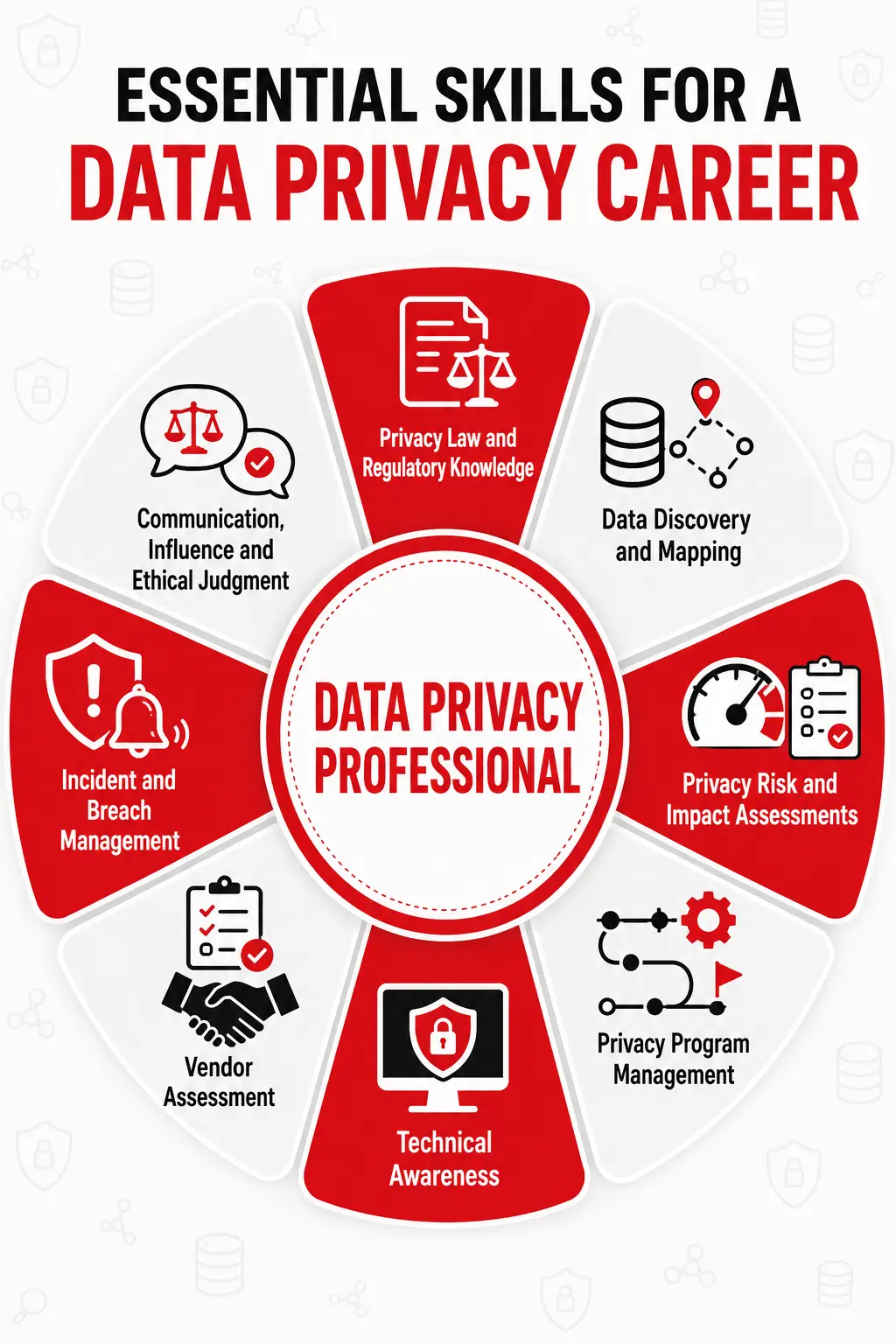
1. Privacy Law and Regulatory Interpretation
Learn how to read a privacy requirement, determine when it applies, and explain its operational implications.
2. Data Discovery and Mapping
Understand how to identify personal data across applications, departments, vendors, databases, devices, and cloud environments.
3. Privacy Risk Assessment
Assess how data processing may affect individuals, determine the likelihood and severity of harm, and recommend proportionate controls.
The NIST Privacy Framework describes privacy risk management as a cross-organizational process for identifying, assessing, and responding to privacy risks.
4. Privacy Impact Assessments
Learn to examine the purpose, necessity, data flows, stakeholders, risks, safeguards, and residual risks of a proposed processing activity.
5. Privacy Program Management
Develop policies, procedures, governance structures, controls, metrics, training, escalation mechanisms, and monitoring plans.
6. Technical and Security Awareness
Privacy professionals should understand:
- Identity and access management
- Encryption
- Logging
- Cloud services
- APIs
- Cookies and trackers
- Data-loss prevention
- Data classification
- Secure deletion
- Software development
- AI data processing
- Security incidents
They do not need to perform every technical task, but they must be able to ask the right questions and evaluate the answers.
7. Contract and Vendor Review
Learn to assess data-processing clauses, instructions, confidentiality, subprocessors, security measures, breach notification, retention, deletion, audit rights, and international transfers.
8. Incident and Breach Management
Privacy professionals must help determine:
- What personal data was involved
- Whose data was affected
- How the incident occurred
- What harm may result
- Which notifications are required
- What evidence should be retained
- Which corrective actions are necessary
9. Communication and Influence
Privacy professionals regularly deliver advice that affects products, marketing, HR, procurement, security, and leadership. Advice must be accurate, practical, and understandable.
10. Ethical Judgment
A processing activity may be technically possible or legally arguable without being responsible. Privacy professionals should consider fairness, proportionality, individual expectations, and potential harm.
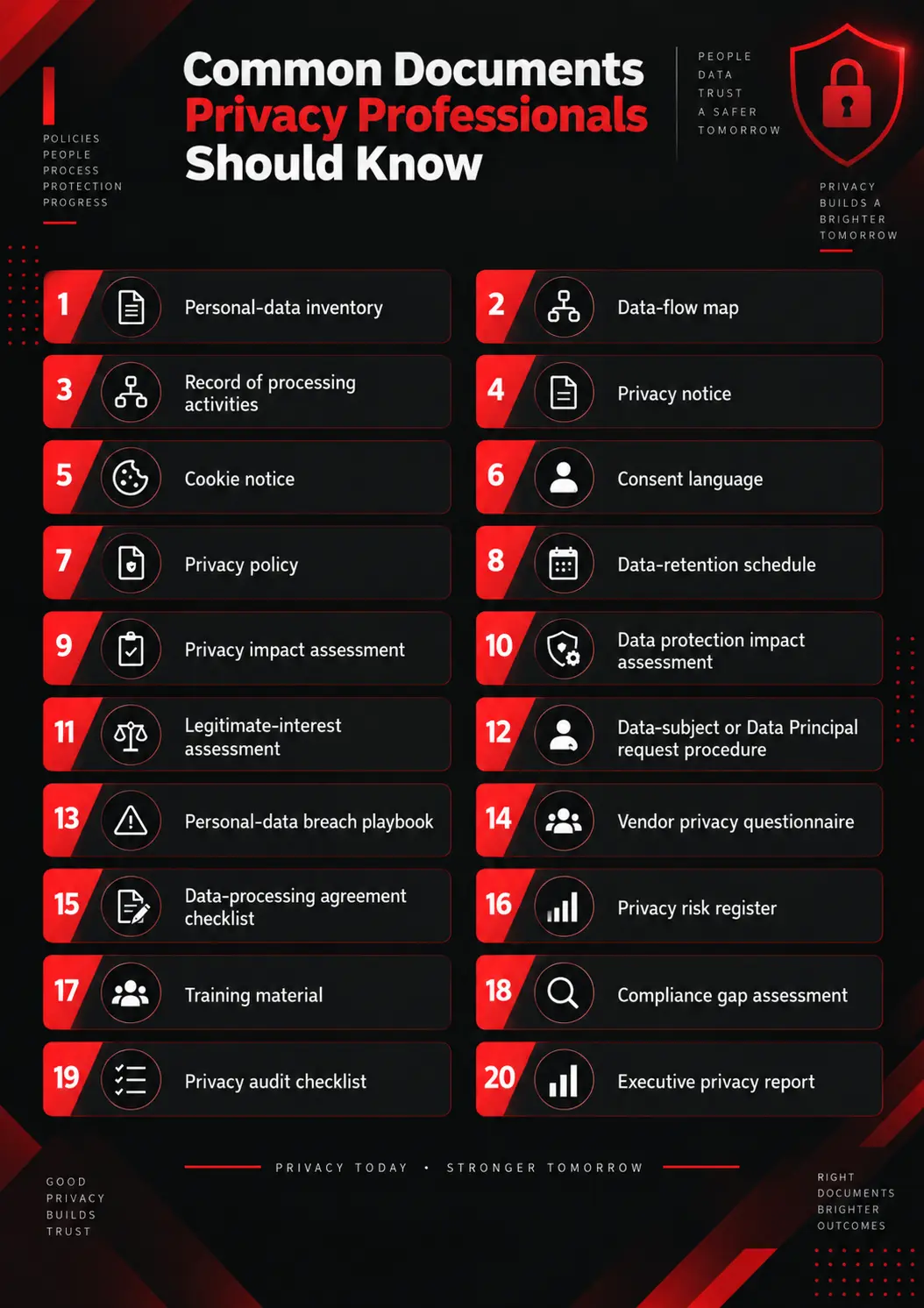
Data Privacy Career Progression
A possible progression is:
Privacy Intern or Associate → Privacy Analyst → Senior Privacy Analyst → Privacy Consultant or Manager → DPO or Privacy Lead → Head of Privacy or Chief Privacy Officer
A technical pathway may progress as:
Security or Data Analyst → Product Privacy Analyst → Privacy Engineer → Senior Privacy Engineer → Data Protection Architect → Head of Privacy Engineering
Career progression is not always linear. A cybersecurity professional may move into privacy engineering, an auditor into privacy assurance, a lawyer into regulatory privacy, or a program manager into privacy operations.
How to Start a Data Privacy Career
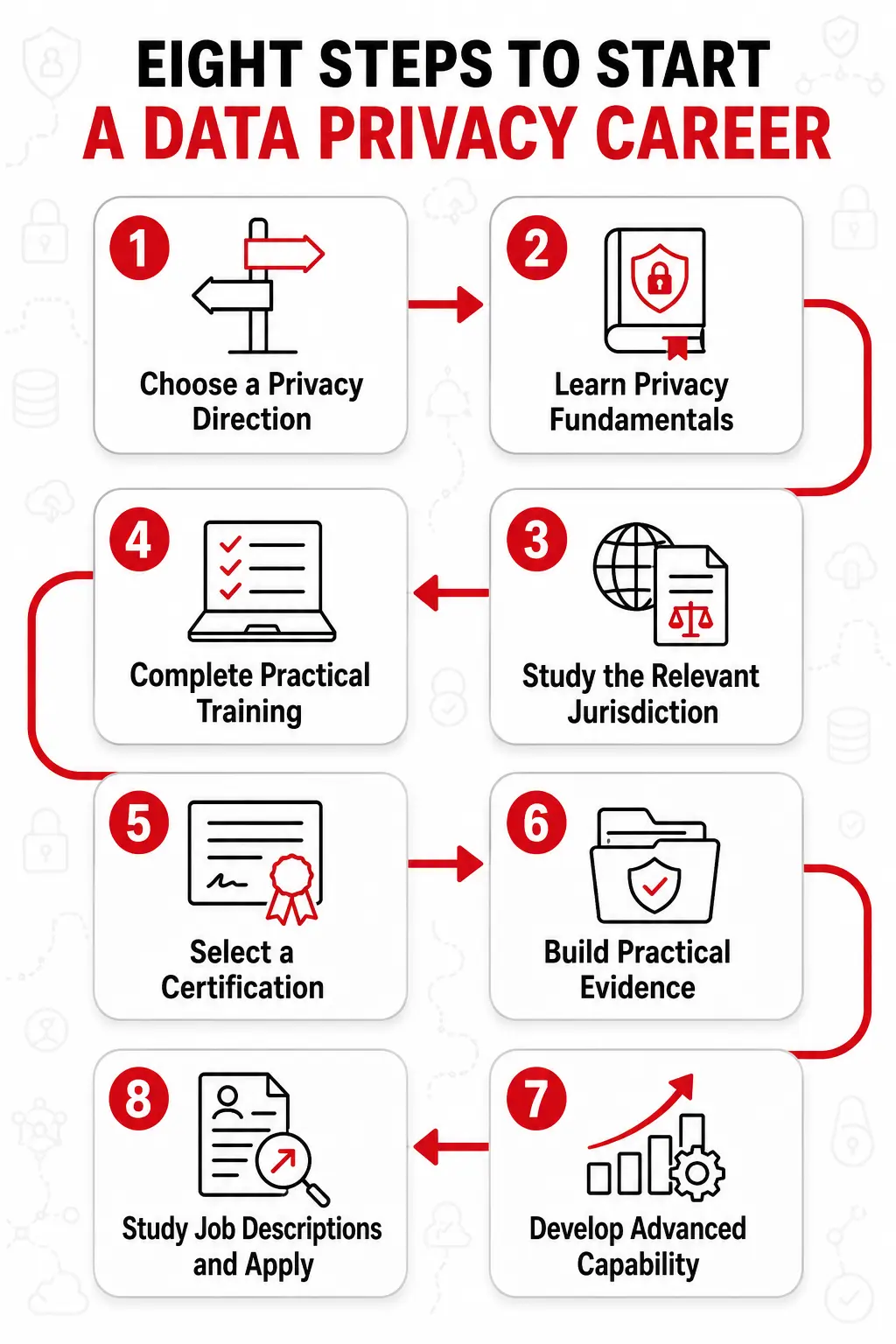
Step 1: Decide Which Area of Privacy Interests You
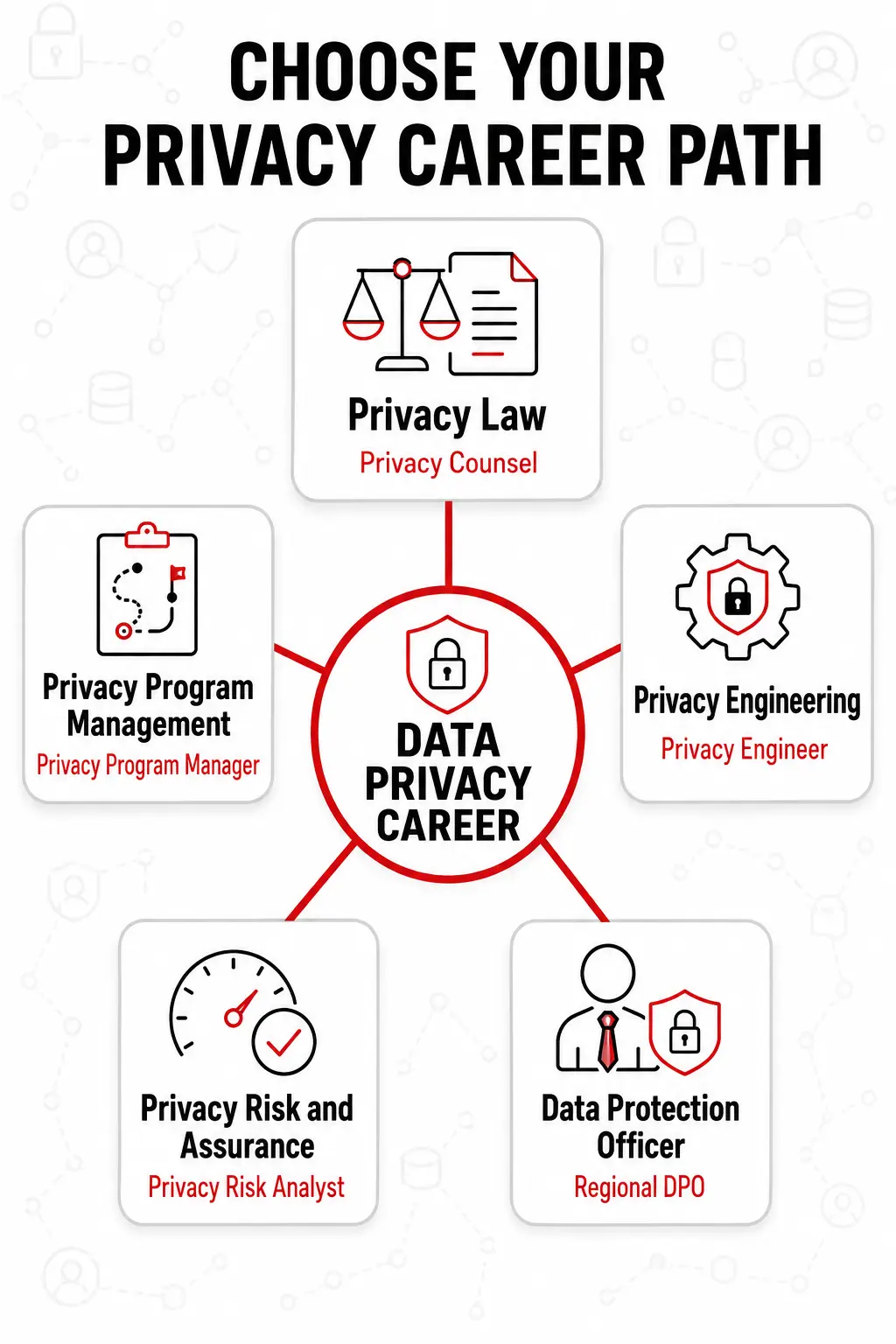
Data privacy covers many different career paths. You could work in privacy law, program management, risk, auditing, privacy operations, technology, product privacy, or move toward a Data Protection Officer (DPO) role.
Start by identifying the area that best matches your interests and existing skills.
Step 2: Build a Strong Foundation
Build a strong understanding of privacy principles, personal-data lifecycles, individual rights, organizational responsibilities, privacy risks, and security safeguards.
Step 3: Learn the Laws That Matter to Your Career
Privacy laws vary across countries and regions. Focus on the regulations that apply to the organizations, customers, or employees you are likely to work with.
For example, this could include the GDPR in Europe, DPDPA in India, or relevant privacy laws in the United States.
Step 4: Get Practical Training
Knowing the law is important, but you also need to understand how privacy works in real organizations.
Hands-on training, such as a DPDPA Bootcamp or similar privacy program, can help you learn how legal requirements are turned into policies, processes, assessments, and everyday business practices.
Step 5: Choose a Relevant Certification
Once you understand the fundamentals, a professional certification can help validate your knowledge and strengthen your profile.
Some common options include:
- CIPP/E for European data protection
- CIPP/US for U.S. privacy laws
- CIPM for privacy program management
Choose the certification that best matches the direction you want your career to take.
Step 6: Build Real-World Privacy Skills
Employers look for practical ability, not just theoretical knowledge.
Practice activities such as data mapping, privacy assessments, drafting privacy notices, handling data-subject requests, reviewing vendors, and responding to simulated data breaches.
These projects can also become useful examples to discuss during interviews.
Step 7: Develop Specialist Skills
As you gain experience, you can move into more specialized areas.
For example, CIPT can help if you want to focus on privacy technology, while practical DPO training can prepare you for privacy leadership, governance, and oversight responsibilities.
Step 8: Start Exploring Privacy Roles
Review real job descriptions, compare them with your current skills, and identify any gaps. Apply across related privacy roles instead of waiting for one specific “Data Privacy” job title.
Common Mistakes to Avoid
- Memorizing privacy laws without understanding how businesses actually use data
- Collecting certifications without creating practical work
- Assuming consent is the only lawful basis for processing personal data
- Treating privacy and cybersecurity as the same thing
- Ignoring data retention and deletion
- Reviewing privacy notices without understanding the actual flow of personal data
- Applying the same controls to every privacy risk
- Overlooking third-party vendors and cross-border data transfers
- Assuming every organization requires the same DPO structure
- Giving legal conclusions without understanding context
- Communicating privacy advice in overly technical or legal language
- Ignoring AI, analytics, tracking, and emerging technologies
- Treating privacy as a one-time project
Conclusion
A successful data privacy career starts with a foundation in privacy basics and a clear understanding of India’s DPDPA. From there you can grow by focusing on areas, whether that means learning about regulations through CIPP/E or CIPP/US or building management skills with CIPM. If your goal is more technical go for CIPT. If you’re aiming to lead privacy programs or manage compliance, hands-on DPO training can be the step forward.
Certifications can give your journey structure, but they are most valuable when supported by evidence. The strongest privacy professionals do not merely explain what a law says. They help organizations transform privacy requirements into responsible, workable, and measurable business practices.
Build Your Data Privacy Career with InfosecTrain
InfosecTrain offers structured learning for professionals at different stages of the Data Privacy journey, from privacy fundamentals and DPDPA implementation to globally recognized privacy certifications and hands-on DPO capability.
Whether you are starting your career, moving from cybersecurity or compliance, managing an organizational privacy program, or preparing for a senior data protection role, our experts can help you select a pathway aligned with your background and career objective.
Frequently Asked Questions
Is data privacy a good career?
Yes. It offers opportunities in compliance, consulting, governance, technology, cybersecurity, audit, product management, and legal advisory.
How can a beginner start a career in data privacy?
Learn privacy principles, data mapping, consent, individual rights, security safeguards, and breach response. A privacy fundamentals course or DPDPA Bootcamp is a good starting point.
Do I need a law degree to work in data privacy?
No. Law degrees help with legal roles, but privacy operations, risk, audit, technology, and program-management roles welcome professionals from various backgrounds.
Which data privacy certification should I pursue first?
Choose based on your goals: CIPP/E for European privacy, CIPP/US for U.S. privacy, and CIPM for privacy program management.
What is the difference between CIPP/E and CIPM?
CIPP/E focuses primarily on European privacy laws and the GDPR. CIPM focuses on building, operating, monitoring, and improving an organizational privacy program.
Is CIPT suitable for non-technical professionals?
Non-technical professionals can pursue CIPT, but foundational knowledge of systems, software, data architecture, security controls, and the technology lifecycle will make the learning more manageable.
What skills are required to become a Data Protection Officer?
You need regulatory knowledge, risk-assessment skills, program oversight, breach-response awareness, communication skills, independence, and technical understanding.
Is certification enough to secure a data privacy role?
No. Employers also value practical experience. Build a portfolio with data maps, privacy assessments, notices, vendor reviews, retention schedules, and breach-response exercises.
Can a cybersecurity professional move into data privacy?
Yes. Cybersecurity professionals can build on their existing skills by learning privacy laws, individual rights, data governance, and privacy by design.
What are common entry-level roles in data privacy?
Common roles include Privacy Intern, Junior Privacy Analyst, Data Protection Associate, Privacy Operations Associate, Compliance Analyst, Data Governance Associate, and Junior GRC Analyst.