Generative AI vs. Agentic AI
Quick Insights:
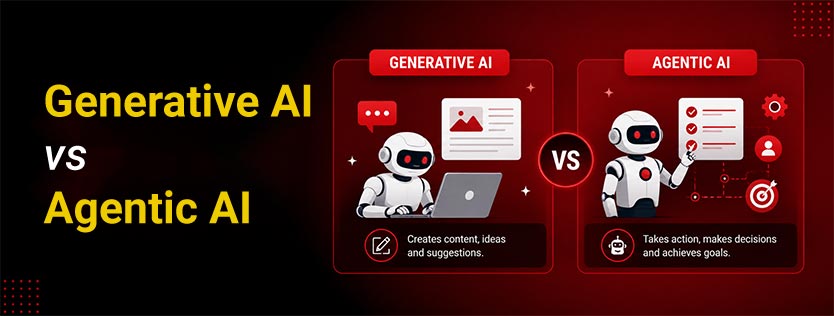
Generative AI creates content such as text, images, code, audio, and summaries based on user prompts. Agentic AI goes beyond content creation by planning, making decisions, using tools, and executing multi-step tasks with minimal human intervention. In simple terms, Generative AI helps produce outputs, while Agentic AI helps achieve goals. As AI systems become more autonomous, professionals must understand not only how these technologies work but also how to manage their security, governance, and ethical risks.
Artificial intelligence has entered a transformative era. Over the past few years, Generative AI has transformed how organizations create content, analyze information, and automate tasks. From AI-powered writing tools to code generation systems and intelligent chatbots, Generative AI has dramatically improved productivity and innovation.
However, a new paradigm is emerging in the AI ecosystem: Agentic AI.
While Generative AI focuses primarily on producing outputs in response to prompts, Agentic AI is designed to act independently, make decisions, and accomplish complex objectives with minimal human intervention. These AI systems behave more like autonomous digital agents capable of planning, reasoning, and executing multi-step tasks.
As organizations explore advanced automation and AI-driven operations, understanding the difference between Agentic AI and Generative AI has become increasingly important. In this article, we explore how these two AI paradigms differ.
Generative AI: Transforming Content Creation
Generative AI is a branch of artificial intelligence that produces new content, like text, images, videos, audio, or code, by learning patterns from large datasets.
Instead of simply analyzing data, Generative AI produces new outputs that resemble the data it was trained on.
How Generative AI Works
Generative AI models are trained using large neural networks and deep learning techniques. These models learn patterns from massive datasets and then generate new content when given a prompt.
Examples of Generative AI
- Writing articles, emails, and reports
- Generating images from text prompts
- Creating computer code
- Producing music or video content
- Assisting in research and data analysis
Because of these capabilities, Generative AI has been widely adopted in industries such as marketing, media, software development, healthcare, and education. In media and marketing specifically, Higgsfield now offers an AI Video Generator for exactly that kind of video generation work.
Common Technologies:
- Large Language Models (LLMs)
- Diffusion Models
- Transformer Architectures
Popular Tools:
- ChatGPT
- DALL·E
- Midjourney
- GitHub Copilot
Agentic AI: Moving Toward Autonomous Systems
Agentic AI refers to AI systems that can act autonomously to achieve goals by making decisions, planning tasks, and executing actions with minimal human intervention.
Unlike Generative AI, Agentic AI behaves more like a digital agent or assistant that can take initiative.
How Agentic AI Works
Agentic AI systems combine several capabilities:
- Reasoning and planning
- Goal-driven decision making
- Interaction with tools, APIs, or environments
- Memory and feedback loops
- Autonomous task execution
These systems often use LLMs combined with automation frameworks.
Examples of Agentic AI
- AI that can plan and execute a research project
- Autonomous customer support agents
- AI systems that manage workflows or operations
- Autonomous cybersecurity monitoring agents
For example, an Agentic AI system could be tasked with launching a marketing campaign. It could analyze market data, generate campaign content, schedule posts, monitor engagement metrics, and optimize the strategy over time.
Examples of Frameworks and Tools:
- AutoGPT
- LangChain
- Microsoft AutoGen
These systems behave more like intelligent agents that can take multiple steps to complete complex objectives.
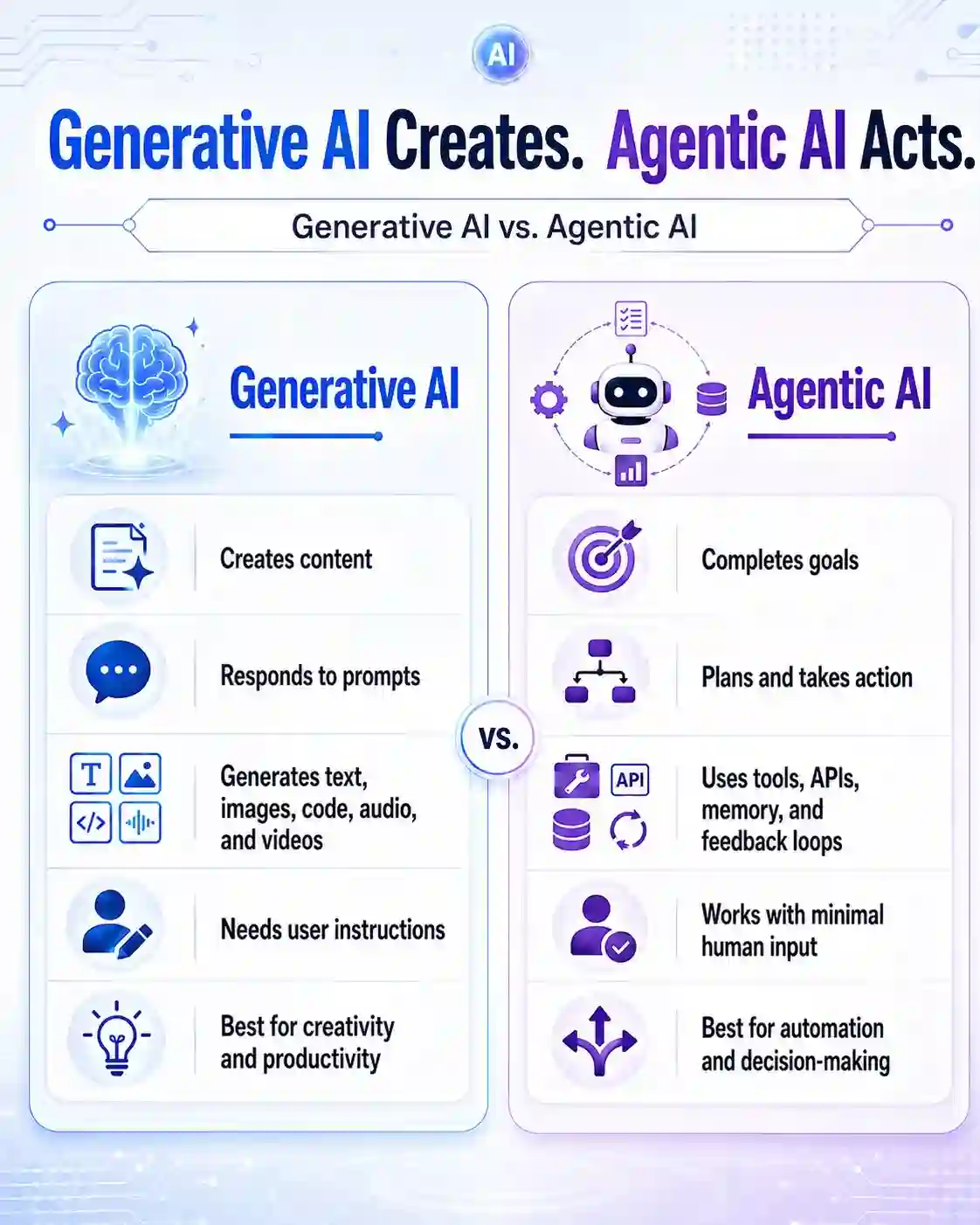
Key Differences Between Generative AI and Agentic AI
| Aspect | Generative AI | Agentic AI |
| Primary Purpose | Content generation and creative output | Autonomous task execution and goal completion |
| Core Functionality | Generates outputs such as articles, code, images, or summaries | Plans tasks, selects tools, executes actions, and adjusts strategies to achieve outcomes |
| Level of Autonomy | Low autonomy; operates mainly in response to user prompts | High autonomy; can initiate actions and make decisions independently |
| User Interaction | Requires continuous prompts or instructions from users | Can operate with minimal human intervention after receiving an objective |
| Decision-Making Capability | Limited decision-making; focuses on generating responses | Advanced decision-making with reasoning and planning abilities |
| Workflow Handling | Typically handles single-step tasks or responses | Handles multi-step workflows and complex problem-solving processes |
| Examples | AI chatbots, text generators, image generators, coding assistants | Autonomous research agents, AI copilots managing workflows, and automated cybersecurity monitoring systems |
| Use Cases | Content writing and marketing
AI chatbots and virtual assistants Code generation and debugging Graphic design and media creation |
Autonomous research assistants
AI-driven business operations Intelligent cybersecurity monitoring systems Automated financial analysis AI-powered digital workforce solutions |
| Role in AI Evolution | Represents the current wave of AI focused on creativity and productivity | Represents the next evolution toward autonomous AI systems and digital agents |
In Conclusion
Generative AI changed how we create. Agentic AI is changing how machines act. While Generative AI helps users generate content, code, images, and insights, Agentic AI goes a step further by planning actions, using tools, making decisions, and completing objectives. As businesses adopt more autonomous AI systems, understanding both technologies is essential for professionals working in cybersecurity, governance, compliance, automation, and digital transformation.
Learn With InfosecTrain
As Generative AI and Agentic AI continue to reshape business operations, cybersecurity, and automation, professionals need more than basic AI awareness. They need practical knowledge of AI risks, governance frameworks, secure implementation, and responsible AI adoption.
InfosecTrain helps professionals build this expertise through industry-focused training programs in AI-Powered Cybersecurity, AI governance, privacy, compliance, and more. Whether you are a security professional, GRC Specialist, Auditor, Risk Manager, or Technology Leader, our expert-led training can help you stay prepared for the next phase of AI-driven transformation.

TRAINING CALENDAR of Upcoming Batches For Cybersecurity AI Foundation Program
| Start Date | End Date | Start - End Time | Batch Type | Training Mode | Batch Status | |
|---|---|---|---|---|---|---|
| 14-Nov-2026 | 20-Dec-2026 | 19:00 - 23:00 IST | Weekend | Online | [ Close ] | |
| 05-Dec-2026 | 10-Jan-2027 | 09:00 - 13:00 IST | Weekend | Online | [ Open ] | |
| 09-Jan-2027 | 14-Feb-2027 | 19:00 - 23:00 IST | Weekend | Online | [ Open ] | |
| 27-Feb-2027 | 04-Apr-2027 | 19:00 - 23:00 IST | Weekend | Online | [ Open ] |

TRAINING CALENDAR of Upcoming Batches For GRC Training
| Start Date | End Date | Start - End Time | Batch Type | Training Mode | Batch Status | |
|---|---|---|---|---|---|---|
| 12-Dec-2026 | 17-Jan-2027 | 19:00 - 23:00 IST | Weekend | Online | [ Open ] | |
| 20-Feb-2027 | 21-Mar-2027 | 10:00 - 14:00 IST | Weekend | Online | [ Open ] |
Frequently Asked Questions
What is Generative AI?
Generative AI refers to artificial intelligence systems designed to create new content based on patterns learned from large datasets. These models use advanced machine learning techniques such as deep learning and transformer architectures to predict and generate outputs.
What is Agentic AI?
Agentic AI refers to AI systems that can act autonomously to achieve specific goals. Unlike traditional AI models that simply respond to prompts, Agentic AI systems can plan, make decisions, execute tasks, and adapt based on feedback.
What is the primary difference between Agentic AI and Generative AI?
The primary difference lies in capability and autonomy. Generative AI focuses on producing content based on user prompts. Agentic AI focuses on completing goals by taking actions independently. Generative AI answers questions, while Agentic AI can decide what to do next and perform actions to achieve an objective.
Is Agentic AI the next evolution of Generative AI?
Many experts believe that Agentic AI represents the next stage in AI development. While Generative AI has transformed content creation and productivity, Agentic AI aims to build systems that can autonomously perform complex workflows and decision-making processes.
Can Generative AI and Agentic AI work together?
Yes. In many modern AI architectures, Generative AI acts as the intelligence engine, while Agentic AI provides decision-making and action-taking capabilities.