What Tools and Platforms are used in GRC Auditing?
Quick Insights:
Modern GRC auditing has evolved from manual spreadsheets to powerful digital command centers. While large enterprises use comprehensive suites such as ServiceNow or Archer, smaller firms leverage automation tools like Vanta or Sprinto to speed up. With the rise of AI, new platforms like Credo AI now ensure algorithms stay ethical and compliant. Ultimately, these tools turn months of manual paperwork into real-time, always-ready audit environments.
Imagine a massive library where the rules are constantly changing, and thousands of books are being added every hour.
In the past, an auditor was like a librarian with a single flashlight and a handwritten notebook, checking every page for errors. It was slow, exhausting, and easy to miss a hidden mistake.
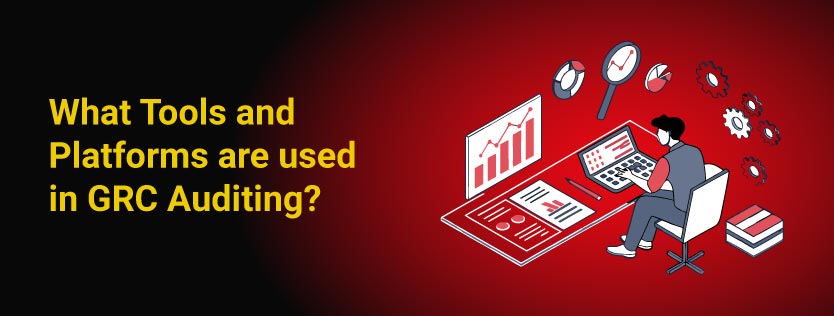
GRC tools are like turning on the stadium lights and giving that librarian a supercomputer. Instead of manual searching, these platforms act as a central command center. They automatically scan shelves, flag missing information in real time, and organize everything into a single, clear dashboard. What used to take months of digging through paper is now handled by smart software that ensures the library stays safe, organized, and perfectly compliant with a single click.
Tools and Platforms are used in GRC Auditing
1. Enterprise GRC Platforms (High Complexity)
These are comprehensive suites designed for large organizations that need to integrate risk management across multiple departments.
- ServiceNow GRC: Integrates risk, compliance, and audit into a single platform. It is popular for its ability to automate workflows and provide real-time visibility into an organization’s risk posture.
- IBM OpenPages: Uses AI to help organizations manage risk and regulatory challenges. It offers strong analytics and reporting for complex enterprise risk management (ERM).
- Archer (formerly RSA Archer): A highly customizable legacy platform known for its depth in managing various risk types, including third-party risk and incident management.
- OneTrust: While originally focused on privacy and GDPR, it has expanded into a massive GRC ecosystem that handles ethics, ESG, and vendor risk.
2. Modern Compliance Automation (Fast & Automated)
Startups and mid-market companies often use these tools to achieve and maintain certifications such as SOC 2, ISO 27001, and HIPAA.
- Vanta / Drata: These are leaders in continuous compliance. They connect to a company’s tech stack (AWS, Google Workspace, GitHub) to automatically collect audit evidence, reducing manual documentation.
- Sprinto: A smart automation platform that helps organizations identify GRC gaps and streamline the audit-readiness process through automated monitoring.
- Hyperproof: Centralizes all evidence and controls into a single source, making the audit process much faster for internal and external auditors.
3. Specialized Audit & Risk Software
- AuditBoard: Specifically built by auditors for auditors. It excels in managing SOX compliance, internal audits, and collaborative risk assessments.
- LogicManager: Provides a risk-based approach to GRC, helping organizations prioritize their most critical threats rather than just checking compliance boxes.
- Probo: A newer entrant in 2026 that focuses on decision-oriented GRC, moving away from simple documentation and toward active governance and risk ownership.
4. Open Source & Lightweight Tools
For smaller teams or those who prefer self-hosted solutions:
- CISO Assistant: A popular open-source GRC platform that simplifies risk and audit management without the heavy price tags of enterprise software.
- OpenGRC: Offers a community version for self-hosting, providing basic modules for audit management and risk tracking.
5. GRC-Integrated GRC & AI Governance Tools
As organizations adopt artificial intelligence, a new category of tools has emerged to manage the specific risks associated with machine learning and automated decision-making.
- IBM Watsonx.Governance: Specifically designed to help organizations manage AI risk, providing tools to monitor models for fairness, bias, and compliance with emerging AI regulations.
- Cranium: Focuses on the security of the AI pipeline, helping auditors track the integrity of datasets and the security of models against adversarial attacks.
- Credo AI: An end-to-end platform for AI governance that helps companies ensure their AI systems are ethical, transparent, and compliant with global standards like the EU AI Act.
Conclusion
- Unified Command Center: Consolidates all rules, risks, and checks into one dashboard, replacing messy spreadsheets.
- Efficiency & Automation: Automatically collects evidence and monitors controls, saving hundreds of hours of manual work.
- Reduced Risk: Identifies security gaps in real-time, allowing teams to fix issues before they become costly failures.
- Constant Readiness: Keeps the organization audit-ready at all times, enabling a fast, painless final certification process.
- Expert Oversight: Completing Certified GRC Auditor training with InfosecTrain equips you with the specialized skills to master these platforms and lead modern, tech-driven audit strategies.

TRAINING CALENDAR of Upcoming Batches For GRC Auditor Training
| Start Date | End Date | Start - End Time | Batch Type | Training Mode | Batch Status | |
|---|---|---|---|---|---|---|
| 30-Jan-2027 | 28-Feb-2027 | 19:00 - 23:00 IST | Weekend | Online | [ Open ] |
Frequently Asked Questions
Which GRC tool is best for a small startup?
Automation-heavy platforms like Vanta or Drata are usually best for startups. They offer out-of-the-box integrations with cloud services (such as AWS or GitHub) to quickly achieve certifications like SOC 2 with minimal staff.
Can GRC tools replace the need for a human auditor?
No. While tools automate data collection and monitoring, a human auditor is still required to interpret complex risks, verify the quality of evidence, and make subjective professional judgments that software cannot.
What is "Continuous Compliance"?
Unlike traditional auditing, which happens once a year, continuous compliance uses GRC tools to monitor your systems 24/7. If a security setting changes or a control fails, the tool alerts you immediately rather than waiting for the next audit cycle.
How does AI change GRC auditing?
AI introduces new risks, such as algorithmic bias and data privacy concerns. Specialized tools like IBM Watsonx.Governance help auditors track how AI models make decisions and ensure they comply with new laws, such as the EU AI Act.
Why should I get certified if the tools do most of the work?
Tools are only as effective as the person configuring them. Training, such as the Certified GRC Auditor program by InfosecTrain, ensures you understand the underlying frameworks and logic needed to manage these platforms and lead a successful audit strategy.