AI Powered Course
Context Engineering Training
Master Prompt Design Skills




Program Highlights
In the age of AI collaboration, mastering context is the key to precision and productivity. InfosecTrain’s Context Engineering Training is a practical, framework-driven program designed for professionals who want to communicate effectively with AI systems. Participants learn to structure intent, manage contextual data, refine prompts, and integrate real-world information to make AI outputs smarter and more aligned with business goals.
 8 Hours LIVE Instructor-led Training
  Hands-on Exercises
  Real-world Applications
  Practical Frameworks
  Prompt Design Project
  Certified Experts
  Career Guidance & Mentorship
  Dedicated Telegram Support Group
  Access to Recorded Sessions
Training Schedule
- upcoming classes
- corporate training
- 1 on 1 training
Looking for a customized training?
REQUEST A BATCHWhy Choose Our Corporate Training Solution
- Upskill your team on the latest tech
- Highly customized solutions
- Free Training Needs Analysis
- Skill-specific training delivery
- Secure your organizations inside-out
Why Choose 1-on-1 Training
- Get personalized attention
- Customized content
- Learn at your dedicated hour
- Instant clarification of doubt
- Guaranteed to run

About Course
The Context Engineering training by InfosecTrain is a specialized AI prompt design and prompt engineering course that helps professionals master how context shapes AI understanding and responses. The program covers context optimization, advanced context building, and strategic prompt refinement using practical frameworks and real-world examples. Learners develop strong context engineering skills to design smarter, context-aware AI systems that deliver accurate and relevant outputs. By the end of this course, participants will know how to structure, manage, and apply contextual data effectively across workflows for consistent, intelligent results.
Course Curriculum
- Module 1: How AI Understands You – Context & Prompts
- Learn what context is in AI and why it matters for outputs
- Distinguish between Prompt, Instruction, and Context
- Introduction to the ICE framework:
- Intent: Define what you want the AI to do
- Context: Provide relevant background information
- Expectation: Specify the format, tone, and level of detail
- Explore examples of good vs. bad prompts
- Hands-on exercise: test the same question with different prompts and contexts to see how responses vary
- Playbook activity: add initial ICE-based prompt examples
- Module 2: Diagnosing and Improving AI Responses
- Learn how to evaluate whether AI understood your context correctly
- Identify common mistakes: ambiguity, missing information, and irrelevant outputs
- Introduction to the CRISP framework:
- Clarify: Identify unclear instructions or missing context
- Refine: Adjust prompts for better clarity
- Inject: Add necessary background information
- Structure: Organize the prompt logically
- Prompt: Submit revised prompt and evaluate outputs
- Hands-on exercise:
- Compare AI outputs before and after refinement
- Create a mini “AI debugging checklist”
- Playbook activity: record CRISP checklist and refined prompt examples
- Module 3: Organizing and Managing Context
- Learn the importance of storing and reusing context for repeated tasks
- Create a Context Memory Sheet to track role, tone, goals, and references
- Understand how AI “forgets” and strategies to manage context dynamically
- Hands-on exercise:
- Build reusable prompt templates
- Create structured context tables in Notion, Google Docs, or Excel
- Playbook activity: populate Context Memory Sheet with personal examples for future AI use
- Module 4: Using Your Own Data with AI (Simplified RAG)
- Understand the concept of using AI with personal or organizational data
- Learn practical ways to use documents, notes, or FAQs to improve AI accuracy
- Demonstration of simplified, no-code RAG workflows
- Hands-on exercise:
- Integrate a short document or FAQ into an AI workflow
- Explore real-world applications: generating reports, answering questions, customer support, or knowledge
management
- Playbook activity: document examples of personal or organizational data integration
- Module 5: Real-World Application & Mini Project (1 Hour)
- Apply all frameworks and concepts in a guided mini-project
- Choose a real-life task, such as summarizing emails, drafting reports, or building a small chatbot
scenario - Apply ICE, CRISP, Context Memory Sheet, and data integration to refine outputs
- Hands-on iterative testing and improvement of AI responses
- Playbook activity: complete mini-project entry and reflect on key learnings
Target Audience
This training is ideal for:
- Students, professionals, analysts, educators, and content creators
- Anyone curious about AI and practical applications
- No coding or AI experience required
Pre-requisites
- Curiosity and willingness to experiment with AI
- Basic computer and internet skills
Course Objectives
Upon successful completion of the training, participants will be able to:
- Understand what context means in AI and why it impacts outputs
- Structure prompts effectively using the ICE framework (Intent, Context, Expectation)
- Evaluate and refine AI outputs with the CRISP framework (Clarify, Refine, Inject, Structure, Prompt)
- Organize reusable context templates for consistent results
- Integrate personal or organizational data to improve AI responses
- Apply context engineering skills in real-world tasks such as reports, summaries, and chat interactions


Vision

Goal

Skill-Building

Mentoring

Direction

Support

Success

It was a very good experience with the team. The class was clear and understandable, and it benefited me in learning all the concepts and gaining valuable knowledge.

I loved the overall training! Trainer is very knowledgeable, had clear understanding of all the topics covered. Loved the way he pays attention to details.

I had a great experience with the team. The training advisor was very supportive, and the trainer explained the concepts clearly and effectively. The program was well-structured and has definitely enhanced my skills in AI. Thank you for a wonderful learning experience.

The class was really good. The instructor gave us confidence and delivered the content in an impactful and easy-to-understand manner.

The program helped me understand several areas I was unfamiliar with. The instructor was exceptionally skilled and confident in delivering content.
The program was well-structured and easy to follow. The instructor’s use of real-life AI examples made it easier to connect with and understand the concepts.

Frequently Asked Questions
What is Context Engineering Training?
The context engineering training by InfosecTrain teaches how to design, refine, and manage AI prompts through context optimization techniques to improve communication with intelligent systems.
Who should attend the Context Engineering course?
This prompt engineering course is ideal for professionals, developers, analysts, and AI enthusiasts seeking to enhance context engineering skills for smarter and more efficient AI interactions.
Does this course require prior AI or coding experience?
No prior coding knowledge is required. The InfosecTrain AI course focuses on conceptual understanding and practical frameworks for effective AI prompt design and communication.
What skills will I learn in Context Engineering Training?
You’ll learn AI prompt strategy, context optimization, and advanced context building to structure and refine prompts for better accuracy, tone, and response quality in AI systems.
How does Context Engineering differ from Prompt Engineering?
While prompt engineering focuses on phrasing inputs, context engineering goes deeper into managing intent, background, and structure, creating more reliable and intelligent ai prompt design outcomes.
Is this course suitable for beginners and professionals?
Yes. The context engineering training caters to both beginners and professionals through step-by-step modules, practical examples, and hands-on AI training sessions.
What are the practical use cases of Context Engineering?
Learners apply context engineering skills in tasks like report generation, chatbot optimization, content summarization, and workflow automation, enhancing productivity and AI model performance.
How is this course delivered, live or self-paced?
The InfosecTrain AI course offers live instructor-led sessions with recorded access for self-paced review, ensuring flexible and effective learning.
Will I work on real-world AI prompt scenarios?
Yes. Learners engage in hands-on AI training using real-world examples to refine prompts, apply frameworks, and master AI prompt strategy for business and creative contexts.
Does the training include hands-on lab sessions?
Yes. The context engineering training features practical exercises and custom AI workshop sessions designed to help participants apply learning directly to real-world tasks.
How long does the Context Engineering course take to complete?
The prompt engineering course is compact and can be completed in 8 hours, combining conceptual learning with practical implementation exercises.
What industries benefit most from Context Engineering skills?
Professionals in tech, marketing, data analytics, and automation benefit from context optimization and AI prompt design for improved AI-driven communication and workflow efficiency.
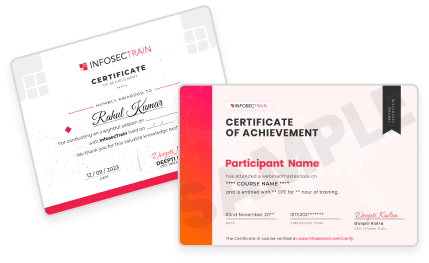
Will I receive a certificate of completion from InfosecTrain?
Yes. Participants earn an InfosecTrain AI course completion certificate recognizing their expertise in context engineering and AI prompt strategy.
How can Context Engineering improve AI model performance?
By refining intent and structure, context engineering skills enhance AI model performance, making responses more relevant, consistent, and contextually accurate.
What kind of support do learners get during and after training?
Learners receive instructor mentorship, dedicated chat support, and access to recorded sessions in this course. You can also contact our course advisors by emailing us at sales@infosectrain.com.