



Program Highlights
InfosecTrain’s Advanced Cloud Security Governance Training delivers an immersive deep dive into cloud security governance, risk, and compliance. Led by industry experts, the course features interactive sessions, real-world enterprise case studies, and hands-on governance design. Participants develop practical artifacts such as policies, frameworks, and risk registers, earn CPE credits, access recorded sessions, and receive extended post-training support with career-focused mentorship.
 48-Hour LIVE Instructor-led Training
  Learn with Real-world Scenarios
  Practical Approach
  Highly Interactive and Dynamic Sessions
  Telegram Support Group
  Learn from Industry Experts
  Career Guidance and Mentorship
  Extended Post Training Support
  Access to Recorded Sessions
Training Schedule
- upcoming classes
- corporate training
- 1 on 1 training
Looking for a customized training?
REQUEST A BATCHWhy Choose Our Corporate Training Solution
- Upskill your team on the latest tech
- Highly customized solutions
- Free Training Needs Analysis
- Skill-specific training delivery
- Secure your organizations inside-out
Why Choose 1-on-1 Training
- Get personalized attention
- Customized content
- Learn at your dedicated hour
- Instant clarification of doubt
- Guaranteed to run

About Course
The Advanced Cloud Security Governance Course from InfosecTrain provides participants with an in-depth understanding of the diverse aspects of cloud security. This comprehensive course encompasses governance, risk management, identity management, data security, compliance, incident response, network security, cloud infrastructure security, legal considerations, cost management, and more. Tailored to meet the evolving demands of the cloud security landscape, this curriculum is essential for professionals aiming to excel in cloud security governance.
Course Curriculum
- Module 1: Cloud Computing Concepts & Architecture
- Cloud Computing Overview
- Essential characteristics, benefits, and challenges
- Abstraction & Orchestration
- Cloud Service Models: IaaS, PaaS & SaaS
- Deployment Models: Public, Private, Hybrid & Community
- CSA Enterprise Architecture Model
- Cloud Security Overview
- Shared Security Responsibility Model
- Scope, Responsibilities & Models
- Threat landscape and new attack vectors in the cloud
- Module 2: Introduction to Cloud Security Governance
- Understanding cloud security governance
- Complexities in Cloud Security Governance
- Leveraging key tools for governance in the cloud & Shared Security Responsibility Model
- Building & Integrating an effective cloud governance strategy
- Analyzing cloud-specific threats and attack vectors
- Case Study: Capital One Data Breach and its Timeline
- Module 3: Cloud Risk Assessment and Management
- Identifying cloud-specific risks and threats
- Risk assessment methodologies for cloud environments
- Developing risk management strategies
- Cloud risk monitoring and continuous improvement
- Case Study: Conducting a Cloud Risk Assessment & Creating a Sample Risk Assessment Report
- CSA Enterprise Architecture Model
- Module 4: Cloud Compliance & Audit
- Cloud Compliance Program Overview
- Design & Build a Cloud Compliance Program
- Cloud-Relevant Laws & Regulations Examples
- Implementing compliance controls in cloud environments
- Compliance Inheritance
- Artifacts of Compliance
- Defining controls and evaluating effectiveness
- Audit characteristics, principles, and criteria in Cloud
- Auditing and reporting in the cloud
- Auditing standards for cloud computing
- Case Study: Enabling PCI DSS Compliance on AWS
- Module 5: Organization Management
- Organization Hierarchy Models
- Managing Organization-Level Security Within a Provider
- Considerations for Hybrid & Multi-Cloud Deployments
- Module 6: Identity and Access Management (IAM) & Zero Trust in the Cloud
- Principles of IAM in cloud environments
- Federation, Single sign-on (SSO), and multi-factor authentication (MFA) in the cloud
- Zero Trust Model (ZTMF)
- Architecting for zero trust
- LABS
- Securing AWS Root User Accounts
- Creating Users & Configuring IAM Policies
- Conditional Access
- AWS Roles & STS
- Case Study: Best Practices & Baselining Identity & Access Management in AWS
- Module 7: Cloud Data Security and Encryption
- Primer on Cloud Storage
- Data Security Tools & Techniques
- Building a proper data classification program for the cloud
- Data dispersion and resiliency
- Data Encryption and Key Management best practices
- Data retention, deletion, and archiving policies for cloud
- Data Sovereignty & Legal hold challenges and preparation
- LABS
- Configuring EBS Volume
- Encrypting an EBS Volume & Snapshot
- AWS KMS Key Management
- Scenario Discussion: Data encryption strategies, 3rd party integration, and practical architecture
- Module 8: Cloud Infrastructure & Networking
- Securing virtual networks in the cloud
- Network segmentation and isolation strategies
- Application and network-level firewalls for cloud environments
- Attack distribution and DDoS protection in the cloud
- Zero Trust for Cloud Infrastructure & Networks
- Secure Access Service Edge (SASE)
- LABS
- Configure Virtual Private Network (VPC) on AWS
- Configuring Security Groups & NACLs
- Understanding Route Tables
- AWS Inspector Overview
- Module 9: Cloud Workload Security
- Types of Cloud Workloads
- Impact on Workload Security Controls
- Securing Virtual Machines
- Securing Containers
- Securing Serverless and Function as a Service
- Securing AI Workloads
- AI-System Threats
- AI Risk Mitigation and Shared Responsibilities
- Module 10: Security Monitoring
- Cloud Monitoring
- Beyond Logs – Posture Management
- Cloud Telemetry Sources
- Collection Architectures
- AI for Security Monitoring
- LABS
- Configure Baseline Security Monitoring
- Configure CloudTrail Logs
- Alerting using EventBridge & SNS
- Open Source CSPM Tool
- Module 11: Application Security
- Secure Development Lifecycle
- Architecture’s Role in Secure Cloud Applications
- Identity & Access Management and Application Security
- DevOps & DevSecOps
- Microservices
- Module 12: Incident Response and Cloud Forensics
- Incident Response Lifecycle
- Preparation
- Detection & Analysis
- Containment, Eradication, & Recovery
- Post Incident Analysis
- Developing a cloud-specific incident response plan
- Investigating security incidents in the cloud
- Digital forensics challenges and best practices in cloud environments
- Scenario Discussion: Creating an Incident Response Runbook
- Module 13: Cloud Security Assurance and Assessment
- Cloud security assessment methodologies
- Security controls testing and validation in the cloud.
- Cloud security certifications and their significance
- CCM and CAIQ
- CCM Domains & Controls
- Architecture Relevance
- Mapping standards and frameworks
- Scenario Discussion: Creating an assessment report on Cloud-based on CCM & CAIQ
- Module 14: Cost Management and Security
- Understanding the cost implications of security decisions
- Budgeting for cloud and cloud security initiatives
- Cost optimization without compromising security
- Cost-benefit analysis and return on investment for Cloud services
- Module 15: Security Trust Assurance and Risk (STAR) Program
- CSA STAR Program
- Security & Privacy Implications of STAR
- STAR Program Components
- STAR Levels
Target Audience
This training is ideal for:
- Information Security Professionals
- Cloud Security/Architects
- Enterprise Risk Management Professionals
- Cloud Managers
- GRC Professionals
- Enterprise Security Architects
- IT & Security Leaders
- Security Architects & Engineers
- Consultants & Auditors
Pre-requisites
- Basic understanding of cloud computing and security concepts.
- Some experience in information security or risk management is beneficial but not mandatory.
Course Objectives
Upon successful completion of the training, participants will be able to:
- Master the fundamentals of cloud security and risk assessment methodologies.
- Implement compliance controls and audit principles within cloud environments.
- Designed and managed robust Identity and Access Management (IAM) solutions for the cloud.
- Develop comprehensive data security and encryption strategies to safeguard sensitive information.
- Secure cloud networks through network segmentation and advanced architectural designs.
- Prepare for incident response and conduct cloud forensics during security breaches.
- Evaluate cloud security using established methodologies and achieve recognized certifications.
- Make informed budgeting decisions while maintaining high-security standards.
- Navigate legal frameworks, contracts, and electronic discovery specific to cloud settings.
- Understand the significance of the CSA STAR Program for cloud security and its application.


Vision

Goal

Skill-Building

Mentoring

Direction

Support

Success

Projected increase in roles related to cloud security and governance over the next decade.
In Organizations adopting Advanced Cloud Security Governance
Organizations plan to hire professionals skilled in cloud security governance
Organizations committed to training existing staff on cloud security best practices and governance

Technology

Healthcare

Retail

Government

Manufacturing

Finance




Great Cloud Security Governance training session with the trainer, whose expertise and teaching style made the learning experience truly engaging and valuable.

Wonderful experience with Cloud Security Governance training! I’m grateful for the trainer’s deep knowledge of security, his patience, and his clear, precise way of teaching. The knowledge gained is already proving valuable in my daily work as an application compliance support for my team. Thank you!
Superb practical, real-world insights on Cloud Security Governance! I’m truly thankful and grateful to the trainer, and would highly recommend his training.
The trainer’s excellent teaching skills and engaging approach made the Cloud Security Governance sessions truly worthwhile. All I can say is, thank you!
The trainer’s deep expertise in Cloud Security Governance makes his training sessions invaluable, not just for certification success but also for practical, on-the-job application. His approachable nature and willingness to share knowledge are truly commendable.

The entire Advanced Cloud Security Governance course was very informative and detail-oriented, with all concepts explained through practical examples. The training at InfosecTrain was excellent, and the trainers were knowledgeable, making the learning experience great.

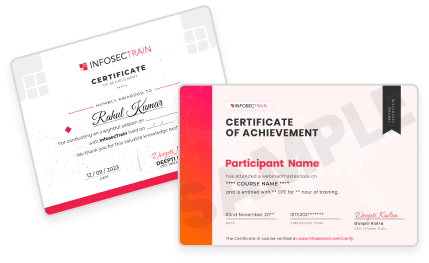
Frequently Asked Questions
What is Advanced Cloud Security Governance Training?
Advanced Cloud Security Governance Training is a comprehensive program covering cloud security governance, risk management, compliance, IAM, data protection, incident response, and enterprise cloud security practices.
Who Should Enroll in the Advanced Cloud Security Governance Training?
The training is ideal for:
- Cloud Security/Architect
- Information Security Professionals
- Enterprise Risk Management Professionals
- Cloud Managers
- GRC Professionals
What are the Prerequisites for Advanced Cloud Security Governance Training?
- Basic understanding of cloud computing and security concepts.
- Some experience in information security or risk management is beneficial but not mandatory.
What Topics Are Covered in Advanced Cloud Security Governance Training?
Cloud governance, risk assessment, compliance, IAM, Zero Trust, data security, encryption, networking, workload security, monitoring, incident response, forensics, cost management, CSA STAR program.
How Does Advanced Cloud Security Governance Training Benefit My Career?
The Advanced Cloud Security Governance Training enhances cloud governance skills, supports certifications, earns CPE credits, and prepares professionals for advanced security, GRC, and leadership roles.
What is the Duration of the Advanced Cloud Security Governance Training?
The duration of the Advanced Cloud Security Governance Training is 48 hours.
Are There Any Hands-On Labs Included in the Advanced Cloud Security Governance Training?
Yes, labs cover IAM, data encryption, network security, monitoring, and incident response in real-world cloud scenarios.
Can I Take the Advanced Cloud Security Governance Training Online?
Yes, available online with live instructor-led sessions and access to recorded content for review and revision.
Is the Advanced Cloud Security Governance Training Course Certification Recognized?
Yes, certifications from recognized institutions like InfosecTrain are widely acknowledged and respected in the industry, enhancing your professional credibility.