Festive Skills Fest:
 BUY 1 Course GET 1 FREE Limited-Time Offer

CISM Certification Training in UAE | ISACA
Read Reviews

The CISM is a management-focused certification that promotes international security practices and validates individuals' skills to manage designs, oversee, and assesses an enterprise's information security. The CISM training course in UAE at InfosecTrain helps candidates develop an understanding of risk management, information security governance, and drafting security policies and strategies to achieve the organizational goals.
Watch Intro Video

CISM Course Highlights

  • 32-Hour LIVE Instructor-Led Training
  • ISACA Premium Training Partner
  • Master Governance, Risk, Program & Incident Management
  • Apply Incident Investigation & Containment Techniques
  • Design & Implement Enterprise Security Controls
  • Build Incident Response, BCP & DR Plans
  • Delivered by Certified CISM Instructors with Industry Experience
  • Post Training Support and Telegram Group Access Till Exam
  • Access to Recorded Sessions

Accredited By

CISM TRAINING CALENDAR

Choose your Preferred Learning Mode

ON DEMAND TRAINING

Learn on Your Own Time
1-to-1 learning
Customized Solutions

Contact US

ONLINE TRAINING

Flexibility, Convenience & Time Saving
More Effective
Learning Cost Savings

Classes starting from

5th Sep: Weekend

15th Sep: Weekday

ENROLL NOW Preferred

CORPORATE TRAINING

Anytime, Anywhere – Across The Globe
Hire A Trainer
At Your Own Pace
Customized Corporate Training

Contact US For Business

you were looking for your convenient time & date

REQUEST A BATCH

CISM Course Description

The CISM certification in UAE, which is focused on management, promotes worldwide security practices and acknowledges the professional who manages, designs, oversees, and assesses an organization's information security. The CISM certification in UAE is the worldwide recognized benchmark of excellence in this field, and the demand for skilled information security management experts is on the rise.  
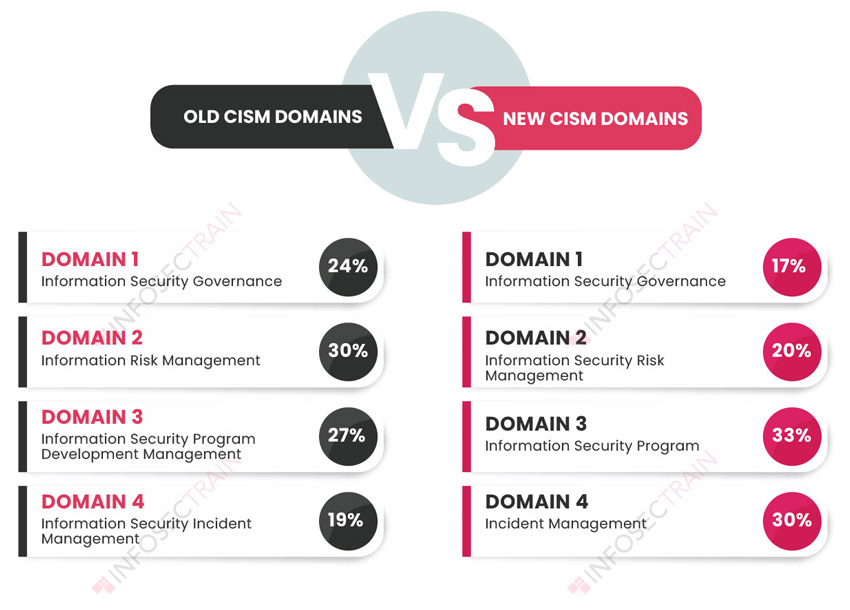
Old CISM Domains vs New CISM Domains:

Target Audience

  • Security Consultants and Managers
  • IT Directors and Managers
  • Security Auditors and Architects
  • Security Systems Engineers
  • Chief Information Security Officers (CISOs)
  • Information Security Managers
  • IS/IT Consultants
  • Chief Compliance/Privacy/Risk Officers

Pre-Requisite

To earn the Certified Information Security Manager (CISM) certification from ISACA, candidates must meet the following requirements:

  • Professional Experience:
    • A minimum of 5 years of professional work experience in information security is required. At
      least 3 years must involve information security management across three or more of the four CISM
      job practice domains.
  • Experience Period:
    • The qualifying experience must have been gained within the 10 years preceding the certification
      application date or within 5 years of passing the CISM exam.
  • Pass the CISM Exam:
    • Candidates must successfully pass the CISM certification examination.
  • Submit the Certification Application:
    • Candidates must submit an application demonstrating their relevant professional experience and
      pay the applicable processing fee.
  • Professional Ethics and CPE:
    • Candidates must agree to follow ISACA’s Code of Professional Ethics and Continuing Professional
      Education (CPE) Policy.
  • Can the Experience Requirement Be Waived?
    • ISACA allows eligible candidates to substitute certain qualifications for up to 2 years of the
      required information security experience. However, the minimum 3 years of information security
      management experience cannot be waived.
    • Candidates have 5 years from passing the exam to submit their certification application.


Note: There are no mandatory educational qualifications or prerequisites to sit for the CISM exam. The work experience requirement applies when applying for the certification, not when registering for the exam.

Exam Information

Certification Certified Information Security Manager (CISM)
Exam Duration 240 minutes
Number of Questions 150
Exam Pattern Multiple Choice
Passing Marks 450 out of 800
Languages English, Chinese Simplified, French, German, Japanese, Korean and Spanish

GET A FREE DEMO CLASS

For
Captcha*
3 + 33 =
loader-infosectrain

CISM Course Objectives

  • Establish and evaluate Information Security Governance frameworks, organizational structures, and compliance
    requirements.
  • Develop and implement Information Security Strategies aligned with business objectives and governance
    standards.
  • Identify and assess emerging risks, threats, and vulnerability deficiencies across enterprise environments.
  • Apply risk treatment strategies, including risk response, control ownership, and continuous risk monitoring.
  • Build and manage Information Security Programs covering policies, controls, frameworks, and awareness
    training.
  • Design, implement, and evaluate security controls across preventive, detective, and corrective domains.
  • Manage external service providers and third-party security risks within the information security program.
  • Develop and execute Incident Response, Business Continuity, and Disaster Recovery plans for organizational
    resilience.
  • Apply Incident Management Tools and Techniques for Investigation and Containment.
  • Conduct post-incident reviews and apply lessons learned to strengthen organizational security posture.

CISM Course Content

  • Domain 1: Information Security Governance 18%

    • Enterprise Governance
      • Organizational Purpose and Culture
      • Legal, Regulatory, and Contractual Requirements
      • Organizational Structures, Roles, and Responsibilities
    • Information Security Strategy
      • Information Security Strategy Development
      • Enterprise Architecture
      • Information Governance Frameworks and Standards
      • Strategic Planning (e.g., budgets, resources, business case)
  • Domain 2: Information Security Risk Management

    • Information Security Risk Identification and Assessment
      • Emerging Risk and Threat Landscape
      • Vulnerability and Control Deficiency Analysis
      • Risk Assessment and Analysis
    • Information Security Risk Response
      • Risk Treatment/Risk Response Options
      • Risk and Control Ownership
      • Risk Monitoring and Reporting
  • Domain 3: Information Security Program

    • Information Security Program Development
      • Information Security Architecture
      • Information Security Program Resources (e.g., people, process, technologies)
      • Information Security Industry Standards and Frameworks
      • Information Security Policies, Standards, Procedures, and Guidelines
      • Information Asset Identification and Classification
      • Information Security Control Design and Selection
      • Information Security Program Metrics Development
    • Information Security Program Management
      • Information Security Control Implementation and Integrations
      • Information Security Control Testing and Evaluation
      • Information Security Awareness and Training
      • Management of External Services (e.g., suppliers, third parties, nth parties)
      • Information Security Program Metrics, Communications, and Reporting
  • Domain 4: Incident Management

    • Incident Management Readiness
      • Incident Response Plan
      • Business Impact Analysis (BIA)
      • Business Continuity Plan (BCP)
      • Disaster Recovery Plan (DRP)
      • Incident Classification/Categorization
      • Incident Management Training, Testing, and Evaluation
    • Incident Management Operations
      • Incident Management Tools and Techniques
      • Incident Investigation and Evaluation
      • Incident Containment Methods
      • Incident Response Communications (e.g., reporting, notification, escalation)
      • Incident Eradication and Recovery
      • Post-incident Review Practices
  • Supporting Tasks
    • Identify internal and external influences to the organization that impact the information security strategy.
    • Establish and/or maintain an information security strategy in alignment with organizational goals and objectives.
    • Establish and/or maintain an information security governance framework.
    • Integrate information security governance into organizational governance.
    • Establish, communicate, and maintain information security policies to guide the development of standards, procedures, and guidelines.
    • Develop business cases to support initiatives and investments in information security.
    • Gain ongoing commitment from senior leadership and other stakeholders to support the implementation of the information security strategy.
    • Define, communicate, and monitor information security responsibilities and accountability throughout the organization.
    • Evaluate information to report on the activities, trends, and overall effectiveness of the information security program to senior leadership and other stakeholders.
    • Evaluate and report information security metrics.
    • Establish and/or maintain the information security program in alignment with the information security strategy.
    • Align the information security program with operational objectives of other business functions.
    • Integrate information security into operational functions of respective business units.
    • Ensure alignment of security architecture to enterprise architecture.
    • Update security architecture in accordance with changes to technology landscape.
    • Establish and maintain information security processes and resources to execute the information security program.
    • Establish, communicate, and maintain organizational information security standards, guidelines, procedures, and other documentation.
    • Establish, promote, and maintain an information security awareness training program.
    • Integrate information security requirements into organizational processes.
    • Integrate information security requirements into contracts and activities of external parties.
    • Monitor external parties’ adherence to established security requirements and address security concerns.
    • Define and monitor management and operational metrics specific to the information security program.
    • Establish and/or maintain a process for information asset identification and classification.
    • Monitor technology landscape to identify potential impacts from emerging technologies.
    • Establish and maintain a regulatory landscape (e.g., legal, regulatory, compliance).
    • Participate in and/or oversee the information security risk management life cycle.
    • Participate in and/or oversee the vulnerability management process.
    • Participate in and/or oversee threat management process (e.g., intelligence and modeling).
    • Identify, recommend, or implement appropriate risk treatment and response options to manage risk to acceptable levels based on organizational risk appetite.
    • Determine whether information security controls are appropriate and effectively manage risk to an acceptable level.
    • Facilitate the integration of information security risk management into business and IT processes.
    • Monitor for internal and external factors that may require reassessment of risk.
    • Establish and maintain a security exception process (e.g., noncompliance and changes in information risk).
    • Establish and/or maintain an incident response plan, in alignment with the business continuity plan and disaster recovery plan.
    • Establish and maintain an information security incident classification and categorization process.
    • Develop and implement processes to ensure the timely identification of information security incidents.
    • Establish and maintain processes to investigate and document information security incidents in accordance with legal and regulatory requirements.
    • Establish and maintain incident handling process (e.g., SOAR, playbooks, UEBA), including containment, notification, escalation, eradication, and recovery.
    • Organize, train, equip, and assign responsibilities to information security incident response teams.
    • Contribute to incident communication plans and processes for internal and external parties.
    • Test and review incident management plans (e.g., table-top, simulation exercises, and walk-through) at planned intervals.
    • Conduct post-incident reviews to facilitate continuous improvement, including root-cause analysis, lessons learned, corrective actions, and reassessment of risk.

    Need customized curriculum Talk to Advisor

    CISM Course Benefits

    Here What people are saying about InfosecTrain

    Why InfosecTrain

    Guaranteed* to run Courses

    4 hrs/day in Weekday/Weekend

    Customized Training

    Technical Support Post Training

    Access to the recorded session

    Accredited Instructors

    CISM FAQs

    1. How long is the CISM Exam?
    The CISM examination is a four-hour (240 minutes) exam consisting of 150 multiple choice questions.
    2. Where can I take the CISM Exam?
    • Computer-Based Testing Locations
    • CISM exams are administered at 1,300 PSI locations across the world and in ten languages.

    Please visit https://www.isaca.org/credentialing/cism/cism-exam to search the suitable exam site. ISACA keeps adding the new PSI locations.

    3. Can I review answers before the end of the test?
    Yes. Answers can reviewed.
    Flag questions you want to review before your exam time is over.
    4. When will I receive my exam results?
    • Preliminary result (pass or not pass) is available on the screen immediately after the completion of your exam.
    • Official score will be emailed and available online within 10 business days from the date that candidates take the exam.
    • Successful candidates receive details on how to apply for certification.
    • Result is not available on phone or fax to maintain the privacy.
    5. Do I need to apply for another exam voucher if I need to retake the exam?
    Yes, but candidates do not need to go through the eligibility application process again.
    6. What are the eligibility requirements for CISM Certification?
    • Pass the CISM Exam within the last 5 years.
    • Work experience must be gained within the 10-year period preceding the application date for certification or within five years from the date of initially passing the exam.
    • Three of the five years of work experience must be gained performing the role of an information security manager.
    • Submit the CISM Certification Application including Application Processing Fee.

    For more information please visit https://www.isaca.org/credentialing/cism

    7. What qualifications are required to earn the CISM Certification?
    • Pass the CISM examination
    • Submit an application for CISM certification
    • Adherence to the Code of Professional Ethics
    • Adherence to the Continuing Professional Education Program
    • Compliance with the Information Systems Auditing Standards
    8. Who is eligible to become CISM Certified and what makes CISM unique?
    • CISM certification is a unique management-focused certification.
    • It has been designed is for the individual who manages, designs, oversees and assesses an enterprise’s information security.
    • it validates your managerial, designing, overseeing skills and expertise.
    • It brings the best opportunities for anyone in the infosec with an interest in the managerial aspects of information security, in contrast to the technical aspects.
    • Any professional with the required experience can apply for the certification.
    9. How much is the exam fees?
    • Member: US$575
    • Non Member Fee: US$760
    10. How is the CISM exam scored?

    On 200-800 point scale, ISACA has set 450 as the passing mark for the exams.

    • A scaled score is a conversion of the raw score on an exam to a common scale.
    • Please note that the exam score is not based on an arithmetic or percent average. For example, if all 150 questions are answered correctly, the scaled score is 800, a perfect score; a scaled score of 200 is the lowest score possible when only a small number of questions are answered correctly.
    • A score of 450 represents a minimum consistent standard of knowledge as established for the exam by the respective ISACA Certification Committee.
    • Scaled score of 450 or higher must be achieved to pass the exam.
    11. Are there any fees to apply for CISM Certification?
    • A US$50 application processing fee is required for all
    • submissions.
    • The application fee is a one-time, non-refundable payment.

    Payment can be made on https://www.isaca.org/credentialing/cism/get-cism-certified

    12. Can I take the CISM, CRISC, CISA and CGEIT exams in the same exam window?
    • Yes, candidates are allowed to take one each of CISM, CRISC, CISM and CGEIT within the same window.
    • Candidates may NOT take the same certification exam more than one time within a window
    13. Where can I find the application for CISM certification?

    CISM application is available on ISACA website
    https://www.isaca.org/credentialing/cism/get-cism-certified

    14. What are the requirements to maintain CISM Certification? What does CISMs continuing professional education policy require?
    • Maintaining your CISM Certification means maintaining an adequate level of current knowledge and proficiency in the field of information systems audit, control and security.
    • The CISM CPE policy requires the attainment of CPE hours over an annual and three-year certification period. CISMs must comply with the following requirements to retain certification:
    • Earn and report an annual minimum of twenty (20) CPE hours. These hours must be appropriate to the currency or advancement of the CISM’s knowledge or ability to perform CISM-related tasks. The use of these hours towards meeting the CPE requirements for multiple ISACA certifications is permissible when the professional activity is applicable to satisfying the job-related knowledge of each certification.
    • Earn and report a minimum of one hundred and twenty (120) CPE hours for a three-year reporting cycle period.
    • Pay the CISM annual maintenance fee
    • Comply with the annual CPE audit if selected
    • Comply with ISACA’s Code of Professional Ethics
    • Abide by ISACA’s IT auditing standards

    Failure to comply with these certification requirements will result in the revocation of an individual’s CISM designation. In addition, as all certificates are owned by ISACA, if revoked, the certificate must be destroyed immediately.

    15. How can I schedule the exam for CISM?
    • Candidates can register online anytime for the CISM certification exam.
    • Registration and payment will be valid for 365days/12 months from the date of online registration.
    • Payment is mandatory before scheduling the exam.
    • Candidates can schedule their exam for any available date/time/location within their 365-day eligibility period.
    • Exam can be rescheduled within 365 days eligibility period. But it must be done more than 48 hours prior to the original scheduled testing appointment.
    • Candidates must take the exam if they are within 48 hours of scheduled testing appointment or their registration fee will be forfeited.
    16. What Are The Pre Requisites For CISM Certification

    To earn CISM certification, candidates need to:

    • Submit the complete application within five years from the date of initially passing the examination
    • Get all the listed experience verified by the employers.
    • The experience should have been gained within the 10-year period preceding the date of application, or within five years of passing the examination.
    • A minimum of 5-years of professional information systems auditing, control or security work experience – as described in the CISM job practice areas – is required for certification.
    17. Is there any waiver for 5years experience required for CISM Certification?

    To help candidates meet the CISM work experience requirements, ISACA allows candidates to substitute up to 2years of the CISM work experience requirement of 5 years with various options.
    to know the details of the waivers available, please visit https://www.isaca.org/credentialing/cism/get-cism-certified

    18. Will CISSPs and other security credential holders qualify for CISM?
    Yes, CISSPs receive a two-year general information security experience waiver. Other security credential holders are also considered as professionals with knowledge and experience in information security management.
    19. What Is The Best Way To Prepare For The Exam
    • CISM Review Manual offered by ISACA, has all the relevant course content good enough to help the aspirants to crack CISM exam. Make a habit to read it religiously. This Manual is treated as the best guide for self study.
    • Practice questions can easily be picked up from ISACA’s Review Questions Database. It is an online source which not only has questions but also answers and explanation of those answers.
    • In addition to these candidates can join boot camps/ online training offered by Infosec Train for CISM Certification exam.
    TOP