Your Path to Cybersecurity Excellence
Certified Ethical Hacker v13
CEH Certification Training


Training Highlights

40-Hour Instructor-led Online Training

EC-Council Authorized Partner

Median Salary of Cybersecurity Professionals

Access to Recorded Sessions

98% Pass Rate

24x7 Post-Training Support

CEI Certified Trainers

Scenario-based Learning

CEH - An Overview
The EC-Council’s Certified Ethical Hacker (CEH v13) Training program will enhance your knowledge of essential security fundamentals. Certified Ethical Hacker (CEH v13) certification course is one of the most sought-after security qualifications in the world. This internationally recognized security course validates your ability to discover weaknesses in the organization’s network infrastructure and aids in the effective combat of cyber-attacks.
The C|EH v13 program is a specialized, one-of-a-kind training program that teaches everything about ethical hacking with hands-on training, labs, assessment, a mock engagement (practice), and a global hacking competition.
Course Curriculum
Module 1: Introduction to Ethical Hacking
- Information Security Overview
- Hacking Concepts
- Ethical Hacking Concepts
- Hacking Methodologies and Frameworks
- Information Security Controls
- Information Security Laws and Standards
Module 2: Footprinting and Reconnaissance
- Footprinting Concepts
- Footprinting through Search Engines
- Footprinting through Internet Research Services
- Footprinting through Social Networking Sites
- Whois Footprinting
- DNS Footprinting
- Network and Email Footprinting
- Footprinting through Social Engineering
- Footprinting Tasks using Advanced Tools and AI
- Footprinting Countermeasures
Module 3: Scanning Networks
- Network Scanning Concepts
- Scanning Tools
- Host Discovery
- Port and Service Discovery
- OS Discovery (Banner Grabbing/OS Fingerprinting)
- Scanning Beyond IDS and Firewall
- Source Port Manipulation
- Network Scanning Countermeasures
Module 4: Enumeration
- Enumeration Concepts
- NetBIOS Enumeration
- SNMP Enumeration
- LDAP Enumeration
- NTP and NFS Enumeration
- SMTP and DNS Enumeration
- Other Enumeration Techniques
- Enumeration Countermeasures
Module 5: Vulnerability Analysis
- Vulnerability Assessment Concepts
- Vulnerability Scoring Systems and Databases
- Vulnerability-Management Life Cycle
- Vulnerability Research
- Vulnerability Scanning and Analysis
- Vulnerability Assessment Tools
- Vulnerability Assessment Reports
Module 6: System Hacking
- Gaining Access
- Escalating Privileges
- Maintaining Access
- Clearing Logs
Module 7: Malware Threats
- Malware Concepts
- APT Concepts
- Trojan Concepts
- Viruses and Worms
- Fileless Malware Concepts
- AI-based Malware Concepts
- Malware Countermeasures
- Anti-Malware Software
Module 8: Sniffing
- Sniffing Concepts
- Sniffing Technique
- Sniffing Tools
- Sniffing Countermeasures
Module 9: Social Engineering
- Social Engineering Concepts
- Human-based Social Engineering Techniques
- Computer-based Social Engineering Techniques
- Mobile-based Social Engineering Techniques
- Social Engineering Countermeasures
Module 10: Denial-of-Service
- DoS/DDoS Concepts
- Botnets
- DDoS Case Study
- DoS/DDoS Attack Techniques
- DoS/DDoS Attack Countermeasures
Module 11: Session Hijacking
- Session Hijacking Concepts
- Application-Level Session Hijacking
- Network-Level Session Hijacking
- Session Hijacking Tools
- Session Hijacking Countermeasures
Module 12: Evading IDS, Firewalls, and Honeypots
- Intrusion Detection/Prevention System (IDS/IPS) Concepts
- Firewall Concepts
- IDS, IPS, and Firewall Solutions
- Evading IDS/Firewalls
- Evading NAC and Endpoint Security
- IDS/Firewall Evading Tools
- Honeypot Concepts
- IDS/Firewall Evasion Countermeasures
Module 13: Hacking Web Servers
- Web Server Concepts
- Web Server Attacks
- Web Server Attack Methodology
- Web Server Attack Countermeasures
- Patch Management
Module 14: Hacking Web Applications
- Web Application Concepts
- Web Application Threats
- Web Application Hacking Methodology
- Web API and Webhooks
- Web Application Security
Module 15: SQL Injections
- SQL Injection Concepts
- Types of SQL Injection
- SQL Injection Methodology
- Evasion Techniques
- SQL Injection Countermeasures
Module 16: Hacking Wireless Networks
- Wireless Concepts
- Wireless Encryption
- Wireless Threats
- Wireless Hacking Methodology
- Wireless Attack Countermeasures
Module 17: Hacking Mobile Platforms
- Mobile Platform Attack Vectors
- Hacking Android OS
- Hacking iOS
- Mobile Device Management
- Mobile Security Guidelines
- Mobile Security Tools
Module 18: IoT Hacking & OT Hacking
- IoT Hacking
- IoT Concepts and Attacks
- IoT Hacking Methodology
- OT Hacking
Module 19: Cloud Computing
- Cloud Computing Concepts
- Container Technology
- Serverless Computing
- Cloud Hacking
- Cloud Hacking Methodology
- AWS Hacking
- Microsoft Azure Hacking
- Google Cloud Hacking
- Container Hacking
- Cloud Security
Module 20: Cryptography
- Cryptography Concepts and Encryption Algorithms
- Applications of Cryptography
- Cryptanalysis
- Cryptography Attack Countermeasures
Download Brochure
Course Objectives
- Ethical hacking fundamentals, cyber kill chain concepts, an overview of information security and security measures with AI-enhanced threat detection and response.
- Concepts, methodologies, and tools of footprinting using AI for automated information gathering and reconnaissance.
- Concepts of vulnerability assessment, its categories and strategies, and AI-driven exposure to technologies used in the industry.
- Social engineering concepts and terminologies, including identity theft, impersonation, insider threats, social engineering techniques, and AI-based countermeasures.
- Operational Technology (OT) essentials, threats, attack methodologies, and AI-powered attack prevention.
- Recognizing vulnerabilities in IoT and ensuring the safety of IoT devices using AI-based security solutions.
- Encryption algorithms, Public Key Infrastructure (PKI), cryptographic attacks, cryptanalysis, and enhanced cryptographic defense.
- Cloud computing, threats and security, AI-driven container technology, and serverless computing security measures.
Tools Covered
Footprinting Tools
- Maltego
- Foca
- Recon-ng
- Google Dorks
- Whois
- theHarvester
- Shodan
- Dnsrecon
- Grecon
- Photon
- Sherlock
- Spiderfoot
- holehe
Scanning Tools
- Nmap
- Rustscan
- sx-Tool
- Colasoft Packet Builder
- Nessus
- OpenVAS
- QualysGuard
- Nikto
- Angry IP Scanner
- Hping3
Enumeration Tools
- Netcat
- SNMPCheck
- SNMPEnum
- Enum4Linux
- NbtScan
- SuperEnum
- RPCScan
- Dnsrecon
Vulnerability Assessment Tools
- Nessus
- OpenVAS
- QualysGuard
- Nikto
- Burp Suite
- W3af
System Hacking Tools
- Metasploit Framework
- Msfvenom
- Cain & Abel
- John the Ripper
- Hydra
- Medussa
- Hashcat
- RainbowCrack
- Havoc
- PowerSploit
- Reverse-shell-generator
- L0pthCrack
- Winrtgen
- pwdump7
- Tanium Endpoint Management
Sniffing Tools
- Wireshark
- Tcpdump
- Ettercap
- Dsniff
- MITM
- Cain & Abel
- Macchanger
Social Engineering Tools
- Social-Engineer Toolkit (SET)
- Dark-Phish
- Shellphish
Denial of Service Tools
- Slowloris
- LOIC
- HOIC
- UltraDDoS
- pyDDoS
- PyFlooder
Session Hijacking Tools
- CAIDO
- Hetty
- OWASP ZAP
Evading IDS, Firewall, and Honeypots Tools
- Nmap
- Tcpreplay
- Snort
- Hping3
- Pfsense
Hacking Web Server Tools
- Ghost_eye
- Impacket
- Ncat
- NMAP
- Httprecon
- ID Serve
Web Application Hacking Tools
- OWASP ZAP
- Burp Suite
- SQLmap
- Wapiti
- Nikto
- DirBuster
- Wpscan
- Skipfish
- PwnXSS
- Dirsearch
- ClickjackPOC
SQL Injection Tools
- DSSS
- ghauri
- SQLmap
Hacking Wireless Networks Tools
- Sparrow-wifi
- Airodump-ng
- Aircrack-ng
Hacking Mobile Platforms Tools
- AndroRAT
- PhoneSploit-Pro
- LOIC
IoT and OT Tools
- Bevywise IoT Simulator
AI Tools
- ShellGPT
- Tranis AI
- Malware.AI
- ChatGPT
- DeepfakeVFX
- SmartScanner
- OSS Insight
- DeepExploit
- Hoodem
Target Audience
This course is ideal for:
- Security Analysts
- Ethical Hackers
- System Administrators
- Network Administrators
- Network and Security Engineers
- Cyber Security Managers
- Information Security Auditors
- Security Professionals
Pre-requisites
- Basic understanding of network essentials and core concepts, including server and network components.
Exam Details
| Certification Name | C|EH v13 (MCQ Exam) | C|EH v13 (Practical Exam) |
| Exam Format | Multiple Choice Questions | iLabs Cyber Range |
| Number of Questions | 125 Questions | 20 Questions |
| Exam Duration | 240 Minutes | 360 Minutes |
| Passing Score | 60% to 85% | 60% to 85% |
| Exam Delivery | VUE / ECCEXAM | – |

CEH Training Calendar

Can't Find a Suitable Schedule? We Can Help You Customize
Choose Your Preferred Learning Mode

1-TO-1 TRAINING
- Customized Schedule
- Learn at Your Dedicated Hour
- Instant Clarification of Doubts
- Guaranteed to Run

ONLINE TRAINING
- Flexible, Convenient & Time Saving
- Highly Interactive
- Affordable Yet Effective
- Guaranteed to Run

CORPORATE TRAINING
- Anytime, Anywhere - Across The Globe
- Hire a Trainer
- Your Schedule, Your Pace
- Customized for Your Team

Our Expert Course Advisors




Why Choose InfosecTrain?

Learn from certified trainers and industry experts

Practice with labs, regular assessments, and case studies

Get immersed in scenario-based learning

Best Quality Training with Best Price Guarantee

Prepare to excel with mock tests, exam tips, and real-world examples

Conquer the exam and achieve success in the very first attempt

Updated curriculum aligned with CEH version 13

Choose our Flexible Learning schedule on weekdays or weekends
Benefits of CEH Certification

Get global recognition

Maximize your earning potential

Earn the status of a cybersecurity expert

Advanced career growth

Become a part of an esteemed community
Average salary range for different Cybersecurity profiles

Confused if this is the right course for you
Words Have Power
I had a truly enriching experience with the CEH Course from InfosecTrain. The course was meticulously crafted, and the trainer’s teaching approach was exceptional. I am completely content with the course.

Aditya Vivek Kulkarni
UAEReflecting on my experience with the CEH Course from InfosecTrain, it was truly exceptional. Throughout the course, I gained a wealth of ideas and knowledge. The trainer’s expertise in CEH and the security sector was remarkable, and his approachability and friendliness made the learning experience even more enriching. I look forward to participating in more of his classes in future courses offered by InfosecTrain.

Nizamuddin ck
UAEI’m grateful for the opportunity to have learned with your team through the CEH Course offered by InfosecTrain. The course provided valuable practical learning experiences, enhancing my understanding and skills in cybersecurity.

Fernando Guerra
ChileMy learning journey with the CEH Course from InfosecTrain was truly remarkable. The course delivered excellent explanations and practical lab exercises. Overall, I am highly satisfied with both the team and the trainer. Their clear explanations and engaging lab sessions significantly enhanced my understanding and skills.

Dr Surya Prakash Okhrabo
NepalThe CEH Course provided by InfosecTrain was highly informative, and the overall experience was commendable. The training was thorough and well-structured, contributing to a positive learning experience.

Shivam Chandra
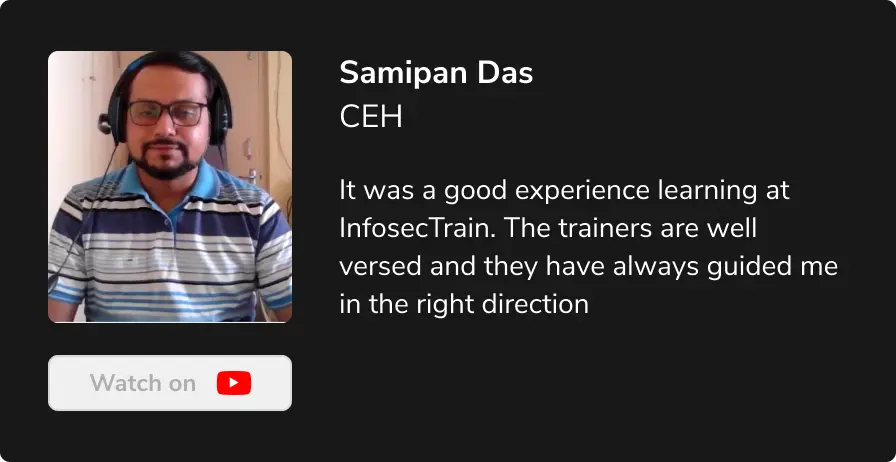
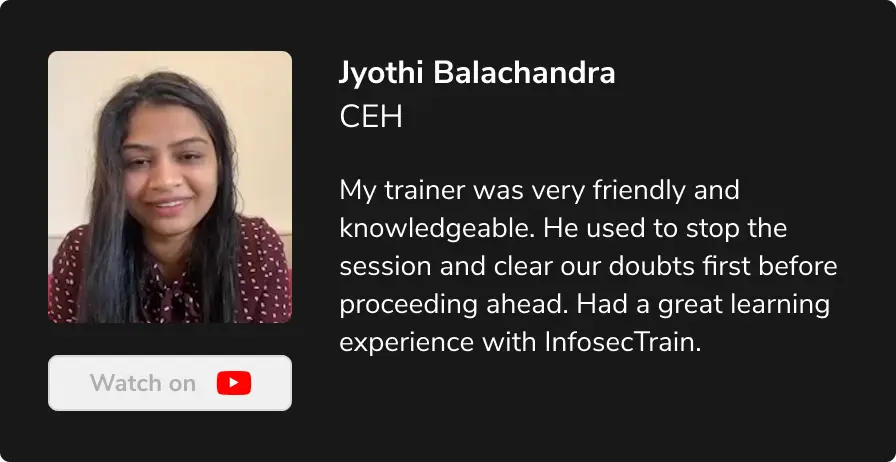
IndiaReal Stories, Real Success




Frequently Asked Questions
What is the CEH v13 course?
How does CEH v13 differ from v12?
Which is the best ethical hacking certification?
What are the prerequisites for doing CEH certification?
What is the qualification for an Ethical Hacker?
How many questions are on the CEH exam?
What is the pass rate for CEH?
Who can register for this CEH Certification training course?
What are the career opportunities after CEH?
Career opportunities after CEH:
- Security Analyst
- Penetration Tester
- Malware Analyst
- Cybersecurity Consultant
- Cloud Security Expert
- AI Security Specialist
- IoT Security Specialist
How long is the CEH v13 Certification training course?
Where can I enroll in the CEH Certification training course?
Enroll in the CEH Certification Training at InfosecTrain:
- Visit the InfosecTrain website, www.infosectrain.com, and navigate the CEH Certification training page.
- Fill out the registration form.
- You will get a confirmation email with further instructions.
- Book your free demo with Expert.
You can also directly drop mail with your requirements at sales@infosectrain.com