Develop Real-World IT Audit & Compliance Expertise
GRC IT Audit Practical Approach Training


Training Course Highlights

40-Hour LIVE Instructor-led Training

Learn from Industry Experts

Designed for CISA, CISM, CISSP professionals transitioning to GRC Audit

Practical Approach

Mock Interview Tips and Techniques

Industry Case Studies

Career Guidance and Mentorship

Extended Post Training Support & Access to Recorded Sessions


* Conditions Apply
GRC IT Audit Practical Approach Training - An Overview
The GRC IT Audit Practical Approach Training from InfosecTrain is tailored for IT professionals, Auditors, and Governance Specialists who aim to enhance their expertise in auditing IT systems, controls, and governance frameworks. The curriculum offers a detailed exploration of IT auditing processes covering the entire lifecycle of audits and the application of audits to validate controls that are used to safeguard organizational assets. With practical insights into essential tools and techniques, the course prepares candidates to effectively plan audits, assess risks, and ensure organizational compliance with global standards like ISO 27001, ISO 22301, and ISO 27701.
Through real-world examples and practical exercises, participants will learn to audit critical areas such as access management, change and configuration management, business continuity, and data management. The course also includes guidance on preparing comprehensive audit reports and interview techniques to excel as a certified GRC auditor.
Course Curriculum
- MODULE 1: Foundations of IT & GRC Auditing (Why Audits Exist)
Objective: Build an audit mindset before tools & controls
- Overview of IT Audit
- Types of IT Audits
- ITGC Audit
- SOX Audit
- IS Audit
- Role of GRC in organizations
- Auditor vs Consultant vs Risk Manager (implicit understanding)
- How experienced professionals fail in audits?
- Common Audit Misconceptions Among Certified Professionals
- MODULE 2: Governance and Risk Auditing (How Organizations Are Structured and How Risks Are Managed)
Objective: Understand the environment being audited
- Auditing Governance Structures
- Auditing Risk Registers (Sample Risk register shared)
- Importance of:
- RCM (Risk Control Matrix)
- Observation Sheets
- MODULE 3: Audit Planning (How Audits Are Designed)
Objective: Teach thinking before testing
- How to Develop an Effective Audit Plan (Sample Plan to be created)
- Identifying and Assessing Audit Risks
- Key considerations for Risk based audit planning
- Audit scope definition & prioritization
- MODULE 4: Core Audit Execution Techniques (How Audits Are Performed)
Objective: Build strong execution fundamentals
- Audit techniques:
- Walkthroughs
- Inquiry
- Observation
- Inspection
- Reperformance
- Design Effectiveness vs Operating Effectiveness
- Sampling Basics:
- Population
- Period
- Sample size
- Selection methods
- Audit Evidence:
- Sufficiency & appropriateness
- What evidence can be accepted / rejected
- Screenshot pitfalls
- Timestamp validation
- Fabricated evidence detection
- Audit techniques:
- MODULE 5: Auditing Core IT General Controls (ITGC)
Objective: Hands-on audit exposure (What would you test? What would fail? What evidence is sufficient?)
-
Access & Identit
- Auditing User Access Management (UAM)
- Auditing Logical Access Controls
- Auditing Password Controls
- Auditing Privileged Access (PIM / PAM)
- Auditing HR Security Controls
- Auditing Change Management Controls
- Auditing Configuration Management
- Auditing Patch Management Controls
- Auditing Incident Management Controls
- Auditing Problem Management Controls
Change & Operations
IT Service Management
- MODULE 6: Resilience, Continuity & Infrastructure Controls
Objective: Cover availability & operational risk
- Auditing Business Continuity Management (BCM)
- Auditing BIA, BCP, and DR
- Design vs Operational effectiveness difference in BCM
- Auditing Backup and Restoration Controls
- Auditing Physical and Environmental Controls
- MODULE 7: Data Protection, Privacy & Third-Party Risk
Objective: Address modern regulatory and cyber risk
- Reviewing Information Security Policies
- Auditing Data Privacy Controls
- Auditing Vendor Management & Outsourcing Practices
- Cybersecurity Control Audits:
- Data Protection Governance
- Endpoint Security
- Mobile Device Management (MDM)
- MODULE 8: Standards & Framework Orientation
Objective: Teach how to use standards, not quote them
- Brief Overview of:
- ISO 27001
- ISO 22301
- ISO 27701
- SOC 2 Trust Criteria
- How auditors map controls to standards (conceptual)
- Practical hands-on Cross-framework harmonization by taking few controls
- Brief Overview of:
- MODULE 9: SOC 2 Deep Dive
Objective: Job-ready SOC 2 capability
- What is SOC 2 & Why it Matters
- SOC 2 Type I vs Type II vs Type III
- Five Trust Service Criteria
- Key Control Areas
- Audit Readiness Phases
- Key Documents to Prepare
- Common SOC 2 Gaps
- MODULE 10: Audit Reporting & Stakeholder Management
Objective: Convert findings into value
- Structure of an Audit Finding:
- Condition
- Criteria
- Cause
- Impact
- Recommendation
- Rating Issues:
- High / Medium / Low
- Remediation & Management Action Plans
- How to Draft Audit Observations
- Preparing a Comprehensive Audit Report
- How to talk to IT teams without conflict
- How to ask for evidence professionally
- Mini End-to-End Audit Simulation
- Structure of an Audit Finding:
- MODULE 11: Career & Interview Readiness (Outcome-Focused)
Objective: Convert learning → employability
- How to transition from GRC / Technical role to IT Audit
- Key Areas to Focus on for IT Audit Interviews
- Mock Interview Tips & Techniques
- How to write CV for IT Audit roles
- How to answer scenario-based questions
Course Objectives
Upon successful completion of the training, participants will be able to:
- Understand the Strategic Purpose of IT Audits
- Understand how audits safeguard organizational resilience, ensure compliance, and build stakeholder
trust.
- Understand how audits safeguard organizational resilience, ensure compliance, and build stakeholder
- Define Scope & Elevate Importance
- Pinpoint audit boundaries while highlighting their role in risk management, governance, and business
continuity.
- Pinpoint audit boundaries while highlighting their role in risk management, governance, and business
- Design Structured Audit Plans
- Build efficient, risk-based audit programs that prioritize critical systems, processes, and controls.
- Master Validation of Control Application
- Apply governance, security, and operational controls effectively linking them to risk registers,frameworks, and policies.
- Execute Audit Essentials with Precision
- Develop impactful Document Requests, robust RCMs (Risk Control Matrices), and concise, insight-driven reports.
- Focus on Core IT Control Domains
- Strengthen oversight in access management, change control, problem management, patching, and BCM (Business Continuity Management).
- Embed Cybersecurity & Privacy Controls
- Audit for resilience in data privacy, vendor risk, and asset management, aligning with global best practices.
- Align with International Standards
- Conduct high-level reviews against ISO 27001 (Information Security), ISO 22301 (Business Continuity),and ISO 27701 (Privacy) to ensure audit relevance and compliance.
- Deliver Actionable Audit Insights
- Communicate findings with clarity, impact, and executive-ready recommendations that drive decision-making.
Target Audience
This course is designed for working professionals who want to build or strengthen hands-on GRC / IT Audit capability.
- Ideal participants include:
- GRC, Technology Risk, or Compliance professionals
- Cybersecurity professionals transitioning into audit/assurance roles
- Professionals preparing for Senior Auditor / Consultant roles
- Certified Information Systems Auditor (CISA)
- Certified Information Security Manager (CISM)
- Certified Information Systems Security Professional (CISSP)
- ISO/IEC 27001 Lead Implementer
Pre-requisites
- Basic understanding of IT systems, applications, and networks
- Familiarity with frameworks like ISO 27001, SOC 2, SOX, or ITIL (awareness level sufficient)
- Prior experience or certification, such as CISA, CISM, CISSP, or ISO 27001 Lead Implementer, is highly recommended
- Ideal for professionals transitioning into the GRC and IT Audit roles
GRC IT Audit Practical Approach Training Calendar

Can’t Find a Suitable Schedule? Talk to Our Training Advisor!
Choose Your Preferred Learning Mode
 1-TO-1 TRAINING
- Customized Schedule
- Learn at Your Dedicated Hour
- Instant Clarification of Doubts
- Guaranteed to Run
 ONLINE TRAINING
- Flexible, Convenient & Time Saving
- Highly Interactive
- Affordable Yet Effective
- Guaranteed to Run
 CORPORATE TRAINING
- Anytime, Anywhere - Across The Globe
- Hire a Trainer
- Your Schedule, Your Pace
- Customized for Your Team

Our Expert Course Advisors
Why Choose InfosecTrain?

Learn from certified trainers with industry experience

Immerse in scenario-based learning

Best Quality Training with Best Price Guarantee

Updated curriculum aligned with the latest industry standards

Learn IT auditing through real enterprise scenarios

Master ISO, SOC 2, and GRC frameworks

Practice control testing with real audit evidence

Choose options, Flexible Learning including weekend batches
Benefits of Advanced GRC IT Audit Practical Approach Training

Get global recognition

Maximize your earning potential

Earn the status of an IT Auditor

Advanced career growth

Become a part of an esteemed community
Average Salary Range for IT Audit & GRC-Related Roles

Confused if this is the right course for you?
Words Have Power
The GRC IT Audit Practical Approach Training was highly informative and very useful, especially for preparing for IT audit interviews. The instructor explained key concepts clearly and shared practical insights that enhanced my understanding. I feel grateful to be part of this course, as it has strengthened my confidence and overall readiness.

Anusha Arumugam
IndiaThe GRC IT Audit Practical Approach Training was well structured and engaging. The content was relevant and easy to understand, supported by practical examples that enhanced learning. Overall, it was an informative and beneficial session that provided valuable insights and helped strengthen my understanding of key GRC concepts.

Anwar Hussain
IndiaI recently completed the GRC IT Audit Practical Approach Training at InfosecTrain and found it very valuable. The instructor explained complex GRC concepts clearly using practical examples, making them easy to relate to real-world scenarios. The sessions were interactive and well structured, leaving me more confident in applying these concepts professionally.
Bhavik thakkar
CanadaI enrolled in the GRC IT Audit Practical Approach Training to build my knowledge, as I am not currently working in audit but aim to move into GRC Audit in the future. The course provided a clear understanding of key concepts and has helped me feel more prepared and confident about pursuing this career path.
Muhammad Salman Zahid
Saudi ArabiaThe instructor did an excellent job teaching the GRC IT Audit Practical Approach Training. Complex topics were explained clearly, and the sessions were engaging with relevant real-world examples. I truly appreciate the expertise and continuous support provided throughout the course, which made the overall learning experience valuable and insightful.
Abhinav
United KingdomSuccess Speaks Volumes

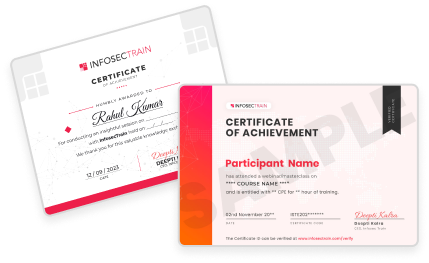
Get a Sample Certificate
Frequently Asked Questions
What is the Certified GRC Auditor Training Course?
Who can join the Certified GRC Auditor Training?
What topics are covered in the Certified GRC Auditor Course?
Are there prerequisites for the Certified GRC Auditor Certification?
Is the Certified GRC Auditor Training available online?
What is the duration of the Certified GRC Auditor Training?
Does this GRC Auditor Course include hands-on practice?
Will I get a Certified GRC Auditor Certification after training?
How does this Certified GRC Auditor Course help my GRC career?
Can this GRC Auditor Training improve my job prospects?
What are the benefits of a Certified GRC Auditor Certification?